Differential Diagnosis: Wilson Disease
 Christoff Trüter
Spousal caregiver
Christoff Trüter
Spousal caregiver
Around 1912, British neurologist Samuel Wilson described a condition he termed progressive lenticular degeneration, linking liver disease with neurological symptoms; this would later come to be known as Wilson disease.
- Tremors (resting or intention)
- Dysarthria (slurred speech)
- Dystonia (involuntary muscle contractions)
- Parkinsonism (rigidity, bradykinesia)
- Gait disturbances and clumsiness
- Cognitive decline and memory problems
- Behavioural and psychiatric changes (depression, anxiety, psychosis)
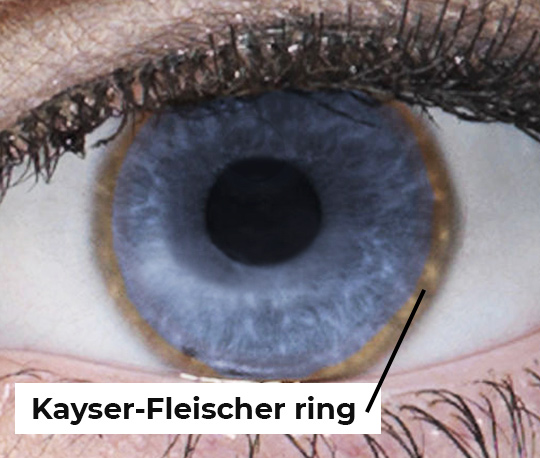
Initially thought to be purely neurological, around 1948, British neuropathologist John Cumings analysed brain and liver tissue from affected patients and identified excessive copper accumulation, demonstrating that the disorder stems from disrupted copper metabolism.
Wilson disease was originally diagnosed by clinical symptoms, eye examination for Kayser-Fleischer rings, and post-mortem tissue copper analysis before biochemical and genetic tests were available.
Today, the gold standard for diagnosing Wilson disease is ATP7B genetic testing, supported by liver biopsy copper quantification, low serum ceruloplasmin, elevated 24-hour urinary copper, and slit-lamp examinations for Kayser-Fleischer rings are still used today.
The neurologist who first began investigating my wife's condition, a doctor I deeply respect for his honesty and genuine humanity, recommended liver and copper testing
after we mentioned a family history of liver dysfunction and cancer. Unfortunately, this occurred during the COVID period when hospitals were overwhelmed, so we had to
travel over 800 km to see him and then return home to arrange for the tests locally.
The frightening part was discovering a small lesion on her liver during a CT scan, which was ruled benign. However, both copper urine and copper DU tests showed abnormally high copper levels (raising the question if the lesion was truly benign given these findings). He recommended that a local neurologist continue investigating, but it took another three months before we could get an appointment.
Now this is where things started falling apart.
Here is an excerpt from her medical history during that period.
What stands out is that instead of pursuing further investigations into the abnormalities found, the local neurologist briefly reviewed her extensive medical file, dismissed the copper test results, and confidently declared he was 99% sure she had Functional Neurological Disorder (FND).
It was also at this point, as we left his office, that he told my wife she was going to "think herself better", presumably referring to treatments like CBT or hypnosis.
Dear reader, don't you feel that it is a bit reckless to ignore crucial diagnostic evidence like this?But from that point on every symptom suggestion or question was dismissed with his constant mantra "It's still functional it's still functional it's still functional" effectively shutting down every possible avenue for diagnosis even ignoring mechanical proof.
It took more than a year and a 1200 km trip to see another neurologist who revisited the copper findings. By then, the levels had returned to normal, raising the question: why were they elevated initially? Especially given her family history of liver disease, this is not something that should be casually ignored.
Even if Wilson's disease is probably not the cause in this case, it definitely requires ongoing review and monitoring. However, this is not something doctors will do automatically; we will need to insist and advocate for ourselves.
Observe the following chart:
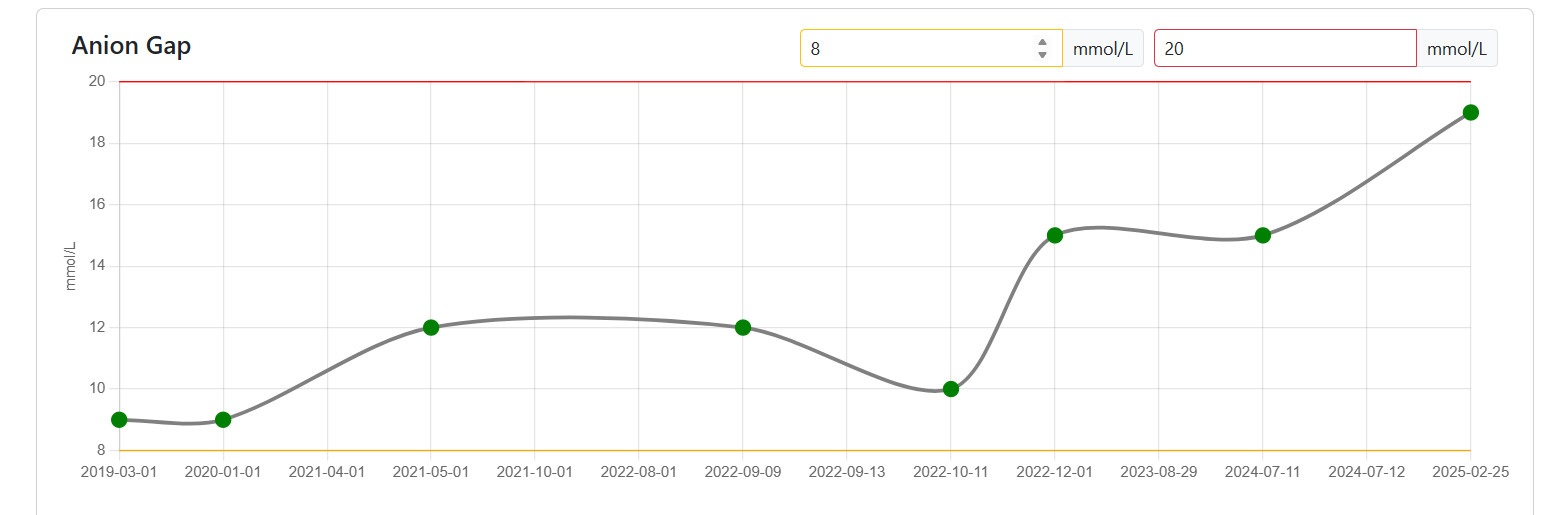
The anion gap is a value calculated from blood tests that helps doctors determine if there’s too much acid in the body. It reflects how well organs like the kidneys, lungs, and liver manage acid levels. Although this value is currently within normal limits, there is a slight upward trend year to year, which is concerning and needs close monitoring.
In a medical system prone to premature conclusions, we must be vigilant and notice subtle details. Some findings may seem harmless, but they can form a pattern that needs attention, not dismissal.
