When an Unexplained Gait Became Conversion Disorder: A Huntington’s Disease Case
 FND Nope
Moderator
FND Nope
Moderator
A 65-year-old woman with an abnormal gait, cognitive decline and psychiatric symptoms was diagnosed with conversion disorder after inconclusive neurological investigations. Years later, genetic testing confirmed Huntington’s disease—raising a difficult question: what positive evidence had established conversion disorder in the first place?
When FND Overshadowed an Axonal Neuropathy: A Case of AMSAN
FND Nope
Moderator
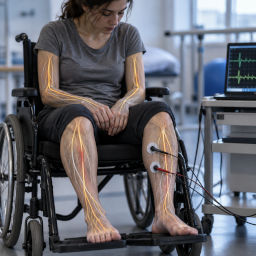
A 22-year-old woman entered rehabilitation with FND as her primary diagnosis while an underlying acute motor and sensory axonal neuropathy (AMSAN) remained unrecognised. EMG and nerve conduction studies later demonstrated extensive axonal damage, leading to IVIG treatment and improved rehabilitation progress. The authors explicitly describe the case as diagnostic overshadowing.

When Suppressible Movements Were Called Functional: A Genetic PKD Case
FND Nope
Moderator
A 14-year-old boy was diagnosed with a functional movement disorder after presenting with suppressible involuntary movements and psychiatric comorbidity. Further investigation identified monogenic paroxysmal kinesigenic dyskinesia (PKD), while the authors noted that specific positive features supporting the original functional diagnosis had been absent.
FND, Then Genetic Dystonia: A Pediatric DYT-TOR1A Case
FND Nope
Moderator
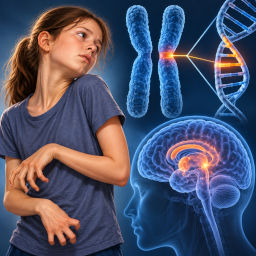
A pediatric patient diagnosed with Functional Neurological Disorder was later found to have DYT-TOR1A dystonia and responded well to deep brain stimulation. The authors retained FND as a coexisting diagnosis, raising an important question: once a genetic disorder capable of producing the movements was identified, what evidence determined which symptoms remained functional?

Differential Diagnosis: Multiple Sclerosis (MS)
 Christoff Trüter
Spousal caregiver
Christoff Trüter
Spousal caregiver
When my wife's condition initially began to escalate, one of the first diseases considered was Multiple Sclerosis (MS). The neurologist at the time quickly concluded it was functional, ruling out MS due to the absence of appropriate MRI lesions and stating that the clinical signs were insufficient for a definitive MS diagnosis.
Differential Diagnosis: Vitamin B12
FND Nope
Moderator
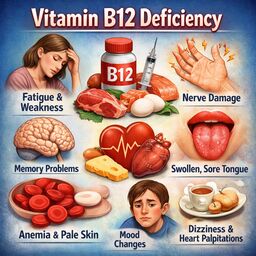
B12 enables myelin production and nerve signalling; without it, nerves become damaged, causing neurological symptoms. As Dr J Stone acknowledges, testing for vitamin B12 levels should really be a routine part of a neurological investigation, something even a trainee should be aware of.

Differential Diagnosis: Psychopharmacology
Christoff Trüter
Spousal caregiver
Interestingly psychopharmacological influences (how drugs affect the mind and behaviour) are known to produce neurological symptoms.
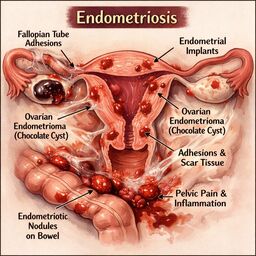
Differential Diagnosis: Endometriosis
Christoff Trüter
Spousal caregiver
Ironically although doctors present the FND framework as a more evolved replacement for outdated concepts like hysteria, conditions such as endometriosis may still be wrongly attributed to FND, echoing the same historical misattributions that labelled unexplained female symptoms as psychological rather than physiological.
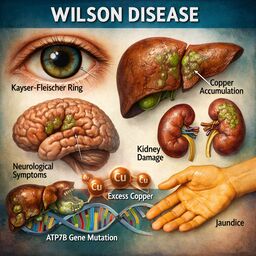
Differential Diagnosis: Wilson Disease
Christoff Trüter
Spousal caregiver
Around 1912, British neurologist Samuel Wilson described a condition he termed progressive lenticular degeneration, linking liver disease with neurological symptoms; this would later come to be known as Wilson disease.
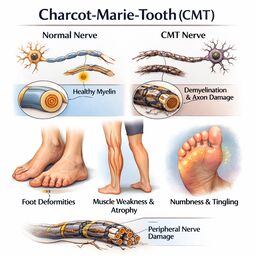
Differential Diagnosis: Charcot-Marie-Tooth (CMT)
Christoff Trüter
Spousal caregiver
Charcot-Marie-Tooth (CMT) is a hereditary (genetic) disorder, not dental related as the name might suggest, that impacts the peripheral nerves, that is motor (movement) and sensory (sensation) nerves in the arms, legs, hands, and feet.