When the Presentation Becomes the Disease
 FND Nope
Moderator
FND Nope
Moderator
For thousands of years, dating back to the ancient Sumerians, physicians recorded a condition characterised by the visible accumulation of fluid. Egyptian and Greek physicians also described and treated this readily recognisable clinical problem.
Although physicians interpreted the condition according to the medical theories of their time, they did not understand its underlying mechanisms or the range of diseases capable of producing it. Nevertheless, they devised numerous treatments in an effort to help their patients.
The condition was given the rather juvenile sounding name “dropsy”, which sounds like something a four year old might have invented.
The diagnosis was not imaginary. The swelling was real, often severe and easily recognisable on clinical examination. What physicians could see was genuine. What they could not yet explain was why it was happening.
Historical treatments for dropsy
- Bloodletting
- Leeches
- Purgatives and laxatives
- Vomiting agents
- Sweating treatments and hot baths
- Fluid restriction
- Salt restriction
- Dietary changes
- Herbal preparations, including squill
- Mercury based medicines
- Digitalis derived from foxglove
- Draining accumulated abdominal fluid with a needle or incision
These treatments developed across different historical periods, often without any real understanding of the diseases responsible for the fluid accumulation.
The presentation had effectively become the disease. It described what was happening, but neither identified nor explained what was causing it.
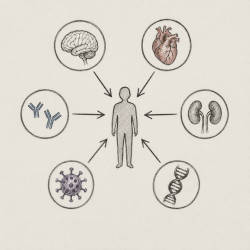
As medical knowledge advanced, physicians discovered that dropsy was never a single disease. It was a shared clinical manifestation of many different conditions, including:
- Heart failure
- Kidney disease
- Liver disease
- Malnutrition
- Venous disorders
- Lymphatic disorders
This history demonstrates that medicine can correctly recognise a clinical pattern while remaining wrong, incomplete or overconfident about what produces it.
Looking back, some historical treatments accidentally targeted fluid retention and provided temporary relief. Salt restriction, fluid management, drainage and digitalis could help certain patients under particular circumstances. However, these treatments were often little more than informed shots in the dark because the underlying pathology was unknown.
Without knowing whether the swelling originated from the heart, kidneys, liver or another cause, the same treatment could help one patient, do nothing for another and seriously harm a third. Improvement following treatment did not prove that dropsy was one disease. It only showed that a treatment had affected part of the visible presentation.
Dropsy disappeared as a diagnosis not because the symptoms disappeared, but because the category was medically outgrown. Today, the fluid accumulation is called oedema and is recognised as a common clinical manifestation of many different underlying diseases.
The modern parallel of IBS
A possible modern parallel is irritable bowel syndrome.
IBS is an umbrella diagnosis based on a shared pattern of abdominal pain and altered bowel habits. This does not necessarily mean that every patient given the diagnosis has the same underlying disease or biological mechanism.
Different patients may have distinct causes that medicine has not yet identified or separated into their own diagnostic categories. In some patients, a more specific condition, such as small intestinal bacterial overgrowth, may provide a better explanation for symptoms previously attributed to IBS. Other subgroups may involve post infectious processes, altered intestinal motility, microbial disruption, immune activity or entirely different mechanisms.
A more precise diagnosis does not automatically invalidate IBS in every individual, nor does every proposed mechanism have equal supporting evidence. The broader point is that IBS may represent a temporary grouping of patients who share a similar clinical presentation but not necessarily the same pathology.
Researchers associated with Cedars Sinai have argued that identifying these biological subgroups could eventually cause IBS to disappear as a single diagnostic entity. It may instead be divided into several narrower and more biologically precise diagnoses.
In that sense, IBS may occupy a position similar to dropsy before medicine learnt to distinguish its underlying causes.
Could FND follow the same path?
This brings us to functional neurological disorder and the idea explored in our common phenotypes article.
Weakness, tremor, dystonia, seizure like episodes and difficulty walking can each occur in many different neurological conditions. FND currently groups a broad range of these presentations under a single diagnostic framework, usually on the basis of positive clinical signs interpreted as evidence of altered neurological functioning rather than structural disease.
It is also possible that FND merely groups patients by recurring symptom patterns while the actual causes remain unidentified. At least some patients may have conditions that current medicine cannot yet detect, while others may be in the subtle early stages of known diseases that existing tests or clinical assessments fail to recognise.
FND may therefore prove to be an umbrella covering several distinct mechanisms rather than one disorder with one shared cause. As those mechanisms become better understood, some patients may move into more precise diagnostic groups. FND could become progressively narrower, change substantially or eventually be medically outgrown.
This does not mean that the symptoms are imaginary. The swelling of dropsy was not imaginary either. The question is whether recognising and naming a recurring clinical pattern is being mistaken for explaining it.
Is FND one disorder, or has medicine mistaken a collection of common neurological patterns for an explanation?
References
- A history of oedema and its management, including early Sumerian, Babylonian, Egyptian and Greek accounts
- Bloodletting as a treatment for dropsy and heart failure throughout medical history
- The historical diagnosis of dropsy and its later recognition as a sign of underlying heart, liver, kidney or nutritional disease
- Rome IV review of functional gastrointestinal disorders, their diagnostic criteria and proposed mechanisms
- Rome Foundation report on post-infection IBS and the different mechanisms that may follow gastrointestinal infection
- Cedars-Sinai research into IBS, SIBO, post-infectious autoimmunity, intestinal motility and the microbiome
- Functional neurological disorder: new phenotypes, common mechanisms, and the range of conditions currently included within FND
- Review describing FND as a heterogeneous disorder requiring individualised assessment and treatment
- Review of positive clinical signs used across different FND presentations and subtypes