
Resume drafts Unsaved story and dashboard drafts
Comment drafts Unsaved comment drafts
Quackademic profile picture
Personal Space

Quackademic’s Space

Peer-reviewing the absurdity of medical certainty.

Welcome

Welcome to Quackademic, where questionable clinical reasoning meets inconvenient evidence and the occasional dose of sarcasm. Here we examine diagnostic overconfidence, medical dogma, professional double standards, and the extraordinary things that sometimes pass for clinical certainty. From diagnosing strangers on social media to treating ordinary patient behaviour as suspicious, nothing is automatically beyond criticism. The articles may be satirical, but the questions behind them are serious. What evidence supports the claim? What has been overlooked? And what happens to patients when confident assumptions turn out to be wrong? Professional titles don't make arguments immune to scrutiny. Evidence matters. Patients matter. Egos are optional.

The Boeing 747 School of Neurology: Shut Up, I'm the Pilot

Apparently, FND has neurological characteristics found nowhere else in medicine. Which ones? Excellent question. Unfortunately, instead of an answer, we've been offered a lecture about pilots, professional qualifications and AIDS denialism. Welcome aboard. Scientific evidence is apparently not included in the ticket price.
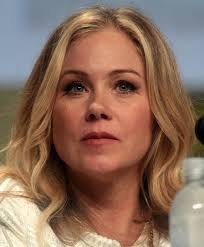
Christina Applegate's MS Diagnosis Was Wrong. Five Years Later, She Still Has No Answers

Christina Applegate reveals that doctors have withdrawn her multiple sclerosis diagnosis after five years of debilitating symptoms. Her disability remains, her condition has reportedly worsened, and the search for an explanation starts again. The case raises questions about neurological misdiagnosis and the danger of replacing one incorrect diagnosis with another.

10 Suspicious Things You Apparently Shouldn't Do Around an FND Specialist

Sunglasses, wheelchairs, handwritten notes, music and even office chairs have all found their way into medical discussions of functional neurological symptoms. The real problem isn't that these observations necessarily diagnose FND, but that they can influence the wider clinical picture. A sarcastic, referenced tour of ten examples where ordinary behaviour risks becoming suspicious.

When Defending FND Means Missing the Point

David Healy's warning that drug toxicity can disappear behind an FND diagnosis has provoked predictable criticism. But much of the response confuses how FND is supposed to be diagnosed with how it is actually diagnosed. The literature itself shows misdiagnosis, overdiagnosis and diagnostic overshadowing occur. You can dislike Healy's language. You still have to answer his argument.

Inside the Reasoning of an FND Professional

We examined repeated public claims about FND made by an allied health professional who treats the disorder for a living. Some are supported by the literature. Others go much further than the evidence allows. The recurring problem is simple: evidence seems much better at confirming FND than disproving it.

The Diagnosis of the Gaps: FND and the Problem of Phenotype Overlap

Davenport et al.’s comparison of Long COVID, ME/CFS and FND has drawn criticism, but some apparent errors expose a deeper problem: when FND can resemble almost every common neurological phenotype, definitions can determine the answer before the differential even begins.

When Nursing Education Reinforces a Diagnosis

Does this nursing guide teach observation, or does it teach reinforcement of a diagnosis? A critical examination of how skepticism, alternative diagnoses, and diagnostic uncertainty are presented to nursing staff.