When “Functional” Signs Mislead: GSS Misdiagnosed as Conversion Disorder
 FND Nope
Moderator
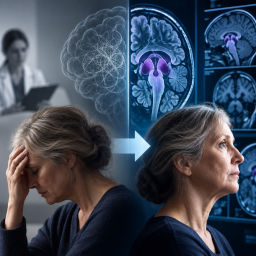
A 2019 case report describes a 40-year-old man whose progressive neurological illness was ultimately found to be Gerstmann-Sträussler-Scheinker syndrome (GSS), a rare inherited prion disease. Before that diagnosis was established, however, his symptoms had been interpreted as conversion disorder, the terminology commonly used at the time for what would now fall within Functional Neurological Disorder.
The case is particularly important because the functional diagnosis was not based simply on normal investigations. Clinicians believed there were positive clinical reasons to support it. His abnormal movements and neurological findings were described as variable, distractible and inconsistent, and those observations were interpreted as evidence of a functional movement disorder. The later diagnosis showed that the observations themselves may have been genuine, while the explanation attached to them was wrong.
The initial presentation
The patient developed a combination of behavioural and neurological symptoms, including paranoia, irritability, abnormal jerking movements, gait instability and repeated falls. His neurological examination initially demonstrated increased muscle tone, abnormal movements and significant difficulty walking.
Extensive investigations followed. These included brain and spinal MRI, CT myelography, PET imaging, cerebrospinal fluid testing and a broad range of infectious, inflammatory and metabolic investigations. Despite the severity of his symptoms, these tests failed to provide a clear explanation.
His first movement-disorder assessment resulted in a diagnosis of corticobasal syndrome because of features including rigidity, poor coordination and gait disturbance. That diagnosis was later reconsidered when clinicians noted that some of his neurological findings appeared to vary between examinations.
Why clinicians thought the symptoms were functional
The authors report that the patient's abnormal movements were considered variable, distractible and inconsistent. Video monitoring during another admission was also said to demonstrate inconsistencies in his neurological examination. Together with depression, chronic back pain and the absence of an identified structural explanation, these findings led clinicians to revise the diagnosis to conversion disorder.
This is what makes the case more significant than a simple story of normal tests followed by a missed diagnosis. The conversion disorder diagnosis was supported by clinical findings that were being treated as positive evidence. The authors later suggested that the variability may instead have reflected dystonia related to the underlying neurodegenerative disease.
In other words, the clinical observations were not necessarily false. What ultimately proved unreliable was the inference drawn from them. Variability, distractibility and inconsistency were treated as evidence that the symptoms were functional, but the patient was in fact developing a progressive prion disease.
What happened after the conversion disorder diagnosis
The patient's neurological condition continued to deteriorate. He repeatedly presented to emergency departments because of worsening gait and falls, but the case report notes that his symptoms continued to be interpreted as psychogenic because of the established conversion disorder diagnosis.
Psychiatry subsequently diagnosed major depressive disorder. He was treated with multiple antidepressants and eventually underwent electroconvulsive therapy, but his neurological condition did not improve. His functional ability declined to the point that he eventually required placement in a skilled nursing facility.
Approximately 20 months after the onset of his neurological symptoms, he was admitted again with severe deterioration. By then he had dementia, dysarthria, dysphagia, profound rigidity and bradykinesia, diffuse myoclonus and was no longer able to walk.
What finally changed the diagnosis
Repeat brain MRI eventually showed progressive diffuse cerebral volume loss compared with his earlier imaging. At that point, clinicians began to consider that he was suffering from a rapidly progressive neurodegenerative disease rather than a psychogenic disorder.
Prion disease and other neurodegenerative conditions entered the differential diagnosis. Even then, testing did not immediately provide the answer. Cerebrospinal fluid 14-3-3 protein was negative and tau levels were normal. Because the 14-3-3 result was negative, RT-QuIC testing was not automatically performed.
His condition continued to worsen. He developed recurrent aspiration, required a feeding tube and was eventually placed in hospice care. He died from aspiration pneumonia at the age of 43, approximately three years after the onset of his symptoms.
The diagnosis came after death
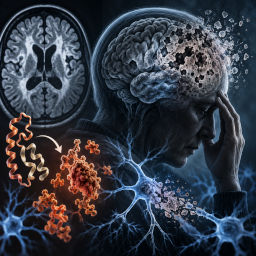
Postmortem neuropathological examination revealed widespread multicentric prion-protein amyloid plaques, a characteristic finding of Gerstmann-Sträussler-Scheinker syndrome.
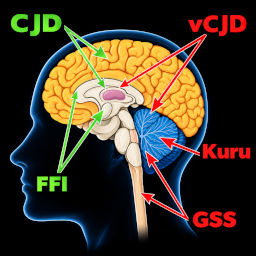
Genetic testing performed on brain tissue then identified a pathogenic A117V variant in the PRNP gene, confirming an inherited prion disease. GSS is an extremely rare neurodegenerative condition that can produce movement abnormalities, gait dysfunction, cognitive decline, behavioural changes and psychiatric symptoms.
The absence of a clear family history had also not excluded the diagnosis. The authors noted that the patient's mother had died at a relatively young age and may therefore have carried the same mutation without surviving long enough to develop the disease.
Why this case matters
The lesson from this case is not simply that a rare disease was initially missed. Rare diseases are difficult to diagnose, particularly when early investigations are unrevealing. The more important issue is what happened once the functional interpretation acquired explanatory authority.
The patient's variability and inconsistency were interpreted as evidence for conversion disorder. His depression and behavioural abnormalities appeared to reinforce that interpretation. Once the diagnosis was established, later falls and progressive neurological deterioration continued to be viewed through the same psychogenic framework.
Yet the very clinical features that helped support the functional diagnosis were ultimately reinterpreted by the authors as manifestations of neurological disease. That exposes an important epistemic limitation: a clinical observation can be real without its proposed explanation being uniquely established.
Variability, distractibility and inconsistency are observations. The conclusion that those observations demonstrate a distinct functional disorder is an additional inference. In this case, that inference was wrong.
Because the conversion disorder diagnosis was treated as explanatory rather than provisional, it continued to shape the interpretation of the patient's deterioration while a fatal neurodegenerative disease progressed underneath it.
The authors themselves presented the case as Gerstmann-Sträussler-Scheinker syndrome misdiagnosed as conversion disorder. This is therefore not merely a retrospective claim by a patient or family member. It is a published clinical case in which the alternative diagnosis was ultimately established through neuropathology and genetic testing.
Read the full case report on PubMed Central.