Kairos moment: Gastrointestinal system
 Christoff Trüter
Spousal caregiver
Christoff Trüter
Spousal caregiver
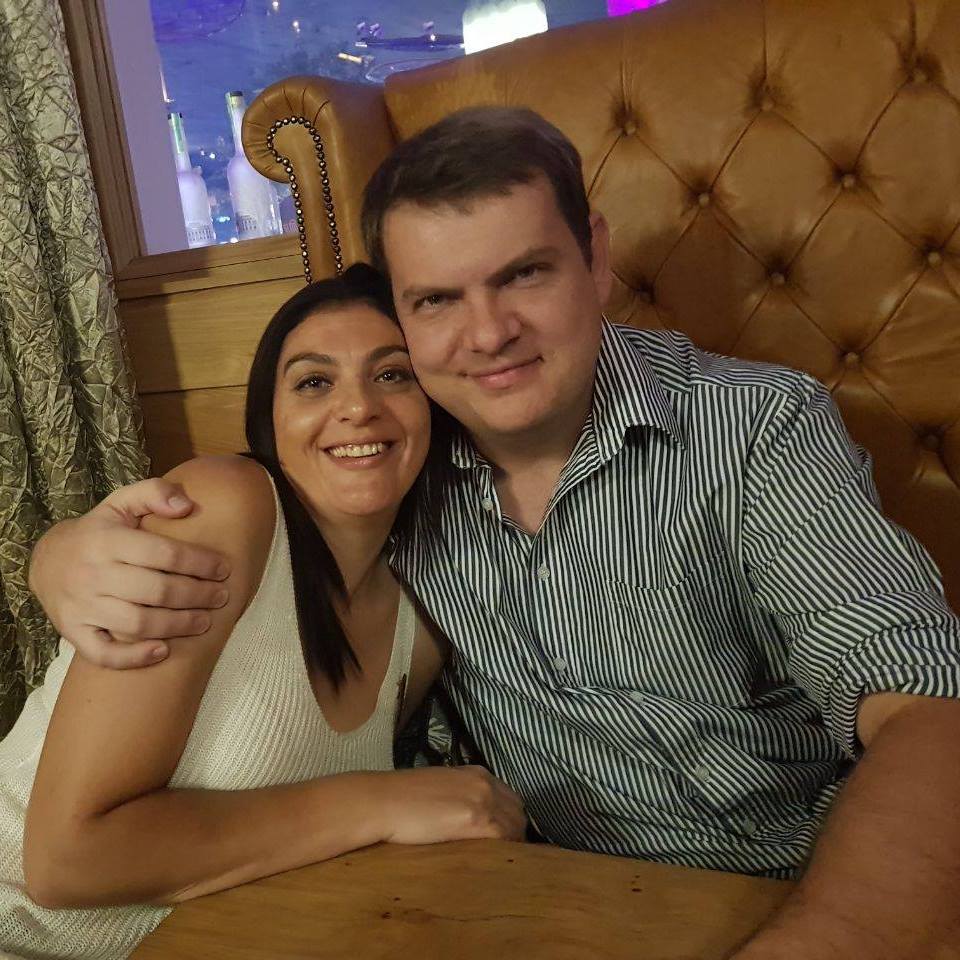
Back in 2018, my wife and I moved from the big city to a very small town in the Klein Karoo. Around early 2019, we went out to visit some friends. As the evening went by, my wife's abdomen suddenly started to bloat up to the point where she looked a few months pregnant.
We rushed her to the closest hospital in a larger town about 50 km down the road. This was around 1 AM, and the attending doctor was stumped by what he saw and wasn’t sure what to make of it. He phoned a doctor in a nearby small city, who suggested that we rush through.
So we rushed over the mountain, dodging kudus (large African antelope) and Cape porcupines (massive 30 kg ones), and drove another 100 km. At 3 AM, she was booked in. The doctor (a general surgeon) immediately ordered a CT scan of her abdomen and ran a few blood tests (which revealed some inflammation but were mostly clear).
He was quite puzzled as well. I recall that at the time, I immediately considered what had changed in our lives. Obviously, as previously mentioned, the outlier was that we had recently moved from the big city to a small town.
Incidentally, it was a small town with no water treatment. The rationale was simple: perhaps the cause was some kind of parasite, like giardiasis or Escherichia coli or something similar. After all, several people in town reported some gastrointestinal issues around that time as well.
One would have thought that being referred to a gastroenterologist would probably have been the next step, just to be safe, right?
Nope. The doctor just smirked and sent her home with a bunch of antibiotics.
In the following months, she suddenly started gaining a lot of weight, all without any changes to her diet. She was quite active at the time as well, playing netball for a local team. Over that time, she also suddenly developed lactose intolerance, but at least over the weeks, her bloating started to go down.
Then, the following year, just like previously, her abdomen bloated again to the point where she looked like a severely pregnant woman. This time, we made sure to get a gastroenterologist involved at another hospital.
Again, a bunch of blood tests were performed, again showing some kind of inflammation, and in addition, an endoscopy was performed. All results came back clear. At this point, the "Rome criteria" came into play, and she was diagnosed with her first functional disorder: IBS (a functional gastrointestinal disorder)
And again, she was sent home with some antibiotics, and that was it.
As the years went on, the unexplained weight gain continued (and neurological symptoms also started to appear). In addition to the previous lactose intolerance, she suddenly developed gluten sensitivities as well, along with intolerance towards red wine. From time to time, the bloating would flare up again.
Now, unlike FND belief, most doctors are at least honest about what IBS is and what IBS is not. But like FND, investigations often conclude prematurely. In the case of IBS, some studies estimate that the underlying cause is likely related to SIBO, somewhere between 30 to 80 percent
SIBO is just small intestinal bacterial overgrowth, which can cause all kinds of issues in the body, including symptoms that can be interpreted as neurological, like brain fog, short-term memory issues, mood disturbances, dizziness, etc.
Bacterial endotoxins and inflammatory compounds can also cross the blood-brain barrier, triggering a neuroinflammation response
The bigger question, however, is: what caused the overgrowth in the first place?
Sure, contaminated water is a possibility (long term though?), but so is autonomic or immune dysregulation, brainstem signaling disruption, and neurotransmitter imbalance (e.g., serotonin issues, which is mostly made in the gut)
Given this neurological aspect, it is no wonder that IBS is often linked to neurological disorders. In our case, this might be an early indicator of the neurological issues that we are seeing.
It leaves me wondering: did her gut issues trigger the neurological symptoms we’re seeing, did her central nervous system trigger the gastrointestinal problems, or is it all just coincidental?”
References
- Drossman DA. Functional Gastrointestinal Disorders: History, Pathophysiology, Clinical Features and Rome IV. Gastroenterology. 2016;150(6):1262-1279.
- Experts estimate 30–80% prevalence of SIBO in IBS
- Small Intestinal Bacterial Overgrowth-Pathophysiology and Its Implications for Definition and Management
- Role of Blood-Brain barrier in bacterial translocation
- Mayer EA, Knight R, Mazmanian SK, Cryan JF, Tillisch K. Gut Microbes and the Brain: Paradigm Shift in Neuroscience. J Neurosci. 2014;34(46):15490-15496.