A Tale of Four Neurologists
 Christoff Trüter
Spousal caregiver
Christoff Trüter
Spousal caregiver
Recently, I've been reading a lot of social media discussions by individuals newly diagnosed with FND. You might think that I would immediately call BS on the diagnosis, and honestly, in some cases, I might consider doing that, seeing that I cannot buy into this philosophy at all.
Personally, using FND as a diagnosis somewhat disturbs me, since I feel that it is dangerous to treat something that was philosophically dreamt into existence as a concrete diagnosis.
But in the same breath, I can also see value in the construct itself.
We do, however, only reach that point when doctors have performed all their diligence and meticulously searched for answers, and when we arrive at an impasse on the fringes of understanding, a multidisciplinary approach can be beneficial, provided they are not blindly passing the buck to psychiatrists and psychologists.
Let’s not avoid or stand in the way of treatment when the treatment is reasonable, while pushing doctors to be more thorough, more open, and to consider that the answers might not even be found within their own field.
Over the years, navigating my wife's extremely complex medical journey, we have met a lot of doctors along the way: some great, some mediocre, and some negligent. Looking back retrospectively, there are a lot of things I wish we had done differently (I especially wish that I were more knowledgeable at the time).
We put a lot of trust in doctors over the years. We are, after all, not medical professionals ourselves, which means we are very
dependent on the input and subsequent treatment of those who studied the various medical fields involved.
Obviously, there is a lot of reverence and respect towards doctors, even among doctors themselves, but we have to acknowledge the human factor. I often feel that I may have expected too much from doctors over the years. Being a doctor does not automatically mean you're a subject expert in your field. You might not even be a particularly good doctor in your own field, having barely scraped through college.
Additionally, the medical profession often carries arrogance, which leads to dismissing patient concerns, missing crucial diagnoses. Being considered a particularly good doctor can also sometimes lead to authority biases from those around you,
which can cloud the judgment of everyone involved.

Quite a number of specialists were involved in my wife's treatment. Some are still involved on a regular basis, while others were just pit stops along the way. Gastroenterologists, ophthalmologists, gynaecologists, various GPs, and neurologists.
Up to the time of writing this post, we have seen four neurologists (there are only about 150 in the entire country). Technically, only one of these consultations counted as a second opinion.
As with all the posts on this website, I am not going to use the real names of any of the doctors in question, since it is not up to me to judge or shame anyone. Nonetheless, I hope that talking about our experiences might help someone in the future to know how to approach doctors.
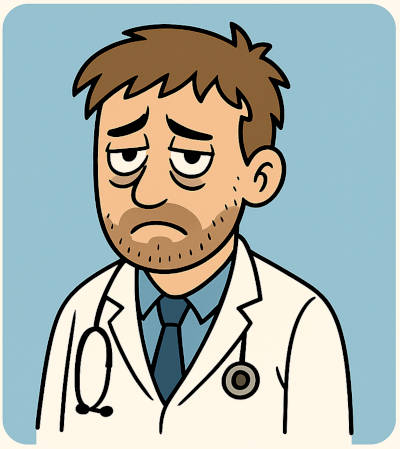
Dr TiredAF
The first neurologist — let's call him Dr TiredAF — was called in as an emergency consult when my wife was admitted to the hospital with her first episode. This poor guy is fully booked for at least the next 5000 years and barely has the time to spend with patients.
Dr TiredAF barely spent 10 minutes with my wife and did a few basic examinations. He noted that my wife's tremors seemed Parkinsonian in nature, but was unsure. He suspected some kind of neuropsychiatric condition.
From that point forward, it was impossible to contact him again for a future consult. His office simply stated that his “restaurant” was not taking in any patrons anymore. Our only other option in our own city was to book an appointment with Dr HitAndRun, but unfortunately, the earliest appointment available was seven months later. We opted to find another doctor in another city.
Retrospect: Is it probably ill-advised to consult with a doctor who is so busy that he barely has time to go to the bathroom, and never mind investigating a complex medical situation?
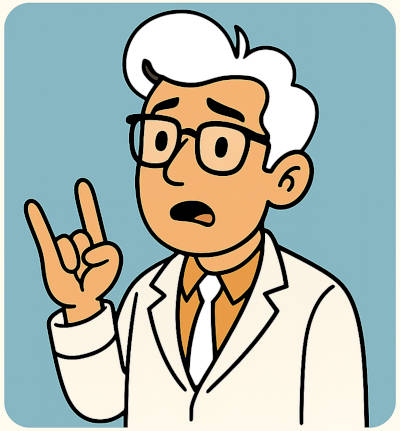
Dr Honesto Bedless
A few months later, we managed to see Dr Honesto Bedless in another city, who did quite a thorough examination. This was around the early COVID years, and he didn't have any hospital beds available to admit my wife. He was quite confused about her condition, suspecting that she likely had some kind of rare disease that he might be unable to diagnose. He ordered several tests to rule out common possibilities.
He suggested that we return to our home city and have all the tests done locally, as it was likely going to require a long-term diagnostic process. He added that he would review the results and recommended that we continue our investigations closer to home with Dr HitAndRun in the future.
Not ideal, but at least he was willing to do investigations, and some of the tests did come back with odd results.
Retrospect: Though limited by hospital resources, Dr Honesto showed thoroughness and a genuine willingness to investigate, which was reassuring in a difficult situation. He was the only neurologist who truly took things seriously..
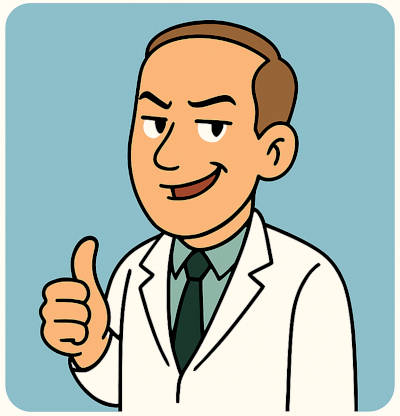
Dr HitAndRun
Unfortunately, when we finally managed to get a consultation with Dr HitAndRun, he already seemed to have a diagnosis in mind before even seeing us. He quickly dismissed all of my wife's symptoms as functional, without taking much note of the strange blood tests or considering her family or medical histories (possible liver reaction observed, along with family history of liver cancer – ignored).
He had recently (at that time) attended a conference where Dr J. Stone delivered a seminar on FND, which, of course, made Dr HitAndRun a subject expert on the matter.
This guy was not interested in any dialogue. Any concerns were quickly dismissed, and as we walked out, he told my wife that she was going to think herself better.
Retrospect: We had been warned by others and by online reviews that this doctor was extremely arrogant and prone to taking the quick diagnostic route, but out of desperation, we went to him anyway. We didn’t trust his conclusions at all, which pushed us to seek a second opinion.

Dr Grin-and-Scan
Even though the next doctor was willing to take a deeper look, in retrospect, I feel we should not have informed him about the last diagnosis (FND) since it felt from day one that the previous diagnosis guided his actions.
Dr Grin-and-Scan definitely humoured me, at least, ordering tests and even suggesting that he would be willing to order any future tests I requested.
While that was helpful, it would have been great if he had provided a better plan for monitoring the situation instead of telling my wife that her symptoms were only temporary. I'm not quite sure how he determined that, considering she has been suffering for seven years.
Retrospect: Although more open and thorough than the previous neurologist, Dr Grin-and-Scan's lack of a clear monitoring plan (given his FND bias, he probably didn't feel monitoring was needed) and his premature reassurance left us wanting more clarity and support.
Looking back, every neurologist taught us something different — even if it was only what not to do. We learnt that:
- A rushed consultation can miss crucial clues.
- A thorough approach matters more than immediate answers.
- Arrogance and quick labels like FND can close doors to real investigation.
- Even the most agreeable doctor can fail if there's no clear plan or follow‑up.
The strangest part is that none of these doctors suggested involving an otologist or an ophthalmologist, which is surprising given that we mentioned vestibular involvement from the very first presentation of her illness. When seeking a second or third opinion, it’s worth considering other specialities too, as neurological symptoms can sometimes be manifestations of issues elsewhere in the body.
The biggest lesson? No single doctor holds all the answers. Keep questioning, seek multiple perspectives, and don’t be afraid to involve other specialities — especially when symptoms cross boundaries.