Resume drafts Unsaved story and dashboard drafts
Comment drafts Unsaved comment drafts
FND Nope profile picture
Personal Space

FND Nope’s Space

Moderator

Questioning FND. Challenging dogma. Putting patients first.

Welcome

Welcome to FND Nope's official space. This is where we share updates, investigations, research, and reflections on Functional Neurological Disorder, with a particular focus on diagnostic practices, medical dogma, patient safety, and accountability. We question assumptions, challenge established narratives, and believe no diagnosis should be beyond scrutiny. You don't have to agree with us. In fact, we welcome opposing perspectives. What matters is evidence, open discussion, and the willingness to ask difficult questions.

When Stress-Sensitive Stiffness Was Diagnosed as Conversion Disorder

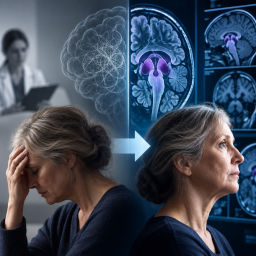
A 52-year-old woman developed progressive leg stiffness, spasms and severe gait impairment that worsened with stress and fatigue. After multiple evaluations, she was diagnosed with conversion disorder. A year later, markedly elevated anti-GAD antibodies and characteristic EMG abnormalities supported stiff-person syndrome, with significant improvement following IVIG.
When Conversion Disorder Was Actually a Rare Prion Disease

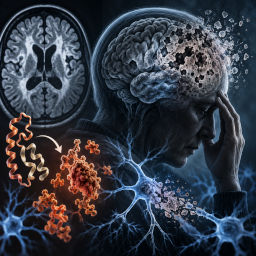
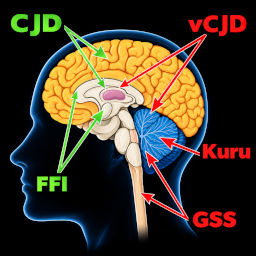
A woman with tremor, speech problems and slowed movements was diagnosed with conversion disorder after early neurological investigations were unrevealing. As her condition progressively deteriorated, genetic testing ultimately confirmed Gerstmann–Sträussler–Scheinker disease caused by a rare PRNP mutation.

When “Functional” Signs Mislead: GSS Misdiagnosed as Conversion Disorder

A man whose variable, distractible and inconsistent neurological findings contributed to a diagnosis of conversion disorder continued to deteriorate for years. After his death, neuropathology and genetic testing confirmed Gerstmann-Sträussler-Scheinker syndrome, showing how genuine clinical observations can support the wrong diagnostic interpretation.

The FND Dualism Debate May Be Starting With the Wrong Question

A debate over whether FND is best understood through psychiatric, neurological or integrated explanations may be skipping a more fundamental question: what evidence establishes FND as a single underlying disorder rather than a recurring clinical phenotype?

A Case of Sporadic Creutzfeldt-Jakob Disease Presenting as Conversion Disorder

A 64-year-old woman was diagnosed with a functional neurological movement disorder after clinicians observed distractibility, variability and entrainment. Within weeks, worsening symptoms and newly abnormal EEG and MRI findings reopened the investigation, and a brain biopsy confirmed sporadic Creutzfeldt-Jakob disease.

A Case Report of Headache and Weakness Diagnosed as Functional Neurological Disorder

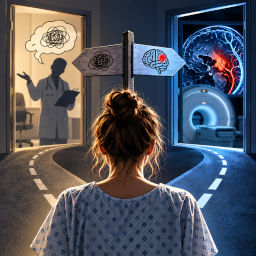
A 26-year-old postpartum woman presenting with headache and neurological symptoms was discharged with anxiety and possible conversion disorder. She returned the following morning unable to walk. MRI revealed a thalamic infarction caused by cerebral venous thrombosis. The case also raises a broader question: if later disease does not necessarily invalidate an FND diagnosis, how is FND misdiagnosis actually identified and counted?

Maddie Aumann: From an FND Diagnosis to Maddie’s Law

Maddie Aumann was diagnosed with FND before genetic testing identified a rare SCN9A disorder. Her mother, Christine Aumann, describes how the FND label continued to affect Maddie’s care even after that discovery, ultimately helping inspire Maddie’s Law.

How Can a Layman Determine Whether a Medical Diagnosis Is Legitimate?

How do we know when a medical diagnosis has actually been demonstrated rather than simply defined? This post examines FND through ontology, epistemology and axiology, asking what positive signs really establish, where classification ends and explanation begins, and whether the confidence placed in the diagnosis matches the strength of the evidence behind it.

When the Presentation Becomes the Disease

Dropsy was once treated as a disease until medicine discovered that it was merely a shared presentation of many underlying conditions. This article asks whether IBS and FND may represent similar umbrella categories that future medical advances will eventually divide into more precise diagnoses.