
Christoff Trüter
Trophies


Posts
5
Differential Diagnosis: Multiple Sclerosis (MS)
When my wife's condition initially began to escalate, one of the first diseases considered was Multiple Sclerosis (MS). The neurologist at the time quickly concluded it was functional, ruling out MS due to the absence of appropriate MRI lesions and stating that the clinical signs were insufficient for a definitive MS diagnosis.

Differential Diagnosis: Psychopharmacology
Interestingly psychopharmacological influences (how drugs affect the mind and behaviour) are known to produce neurological symptoms.
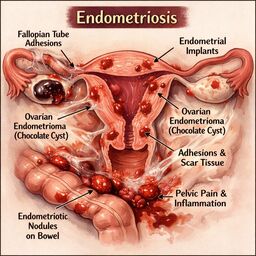
Differential Diagnosis: Endometriosis
Ironically although doctors present the FND framework as a more evolved replacement for outdated concepts like hysteria, conditions such as endometriosis may still be wrongly attributed to FND, echoing the same historical misattributions that labelled unexplained female symptoms as psychological rather than physiological.
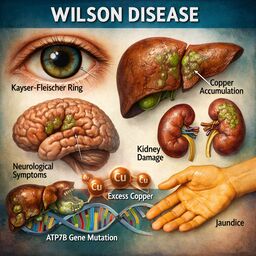
Differential Diagnosis: Wilson Disease
Around 1912, British neurologist Samuel Wilson described a condition he termed progressive lenticular degeneration, linking liver disease with neurological symptoms; this would later come to be known as Wilson disease.
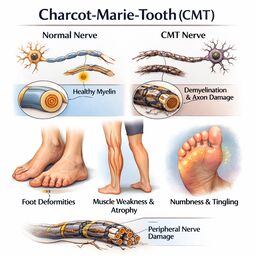
Differential Diagnosis: Charcot-Marie-Tooth (CMT)
Charcot-Marie-Tooth (CMT) is a hereditary (genetic) disorder, not dental related as the name might suggest, that impacts the peripheral nerves, that is motor (movement) and sensory (sensation) nerves in the arms, legs, hands, and feet.
Comments
48- Relentlessly progressive course steadily accumulating symptoms over months with no sustained improvement or fluctuation. Classic FND is typically variable, waxing and waning, and often shows periods of spontaneous improvement.
- Prominent encephalopathic features delirium, psychosis, catatonia, and rapid cognitive/personality change. These are not core features of FND and are far more suggestive of underlying organic brain dysfunction, such as autoimmune or inflammatory encephalitis.
- Objective hard neurological signs positive Hoffmann's sign and MRI findings of demyelination described as too much for age. FND is a technically a diagnosis of exclusion that requires symptoms to be incompatible with recognised organic disease.
- Lack of documented positive FND signs for most symptoms only leg weakness appears to have had such signs recorded. Surely a robust FND diagnosis should document specific rule in signs (e.g., Hoover's sign, entrainment, give way weakness, etc.) for each major complaint.
- Clear post infectious trigger plus strong family autoimmune history both are well established risk factors for autoimmune encephalitis and other neuroinflammatory conditions that require proper rule out, not dismissal.
- Psychiatrist explicitly ruled out primary psychiatric disorder this significantly weakens any trauma based or psychogenic explanation for the neurological picture (for those following the CD model that is sometimes still used in FND).
Discussions started
3Initial interview with Christine Aumann, Maddie Aumann’s mother, on REAL TALK 93.3FM, discussing Maddie’s Functional Neurological Disorder (FND) diagnosis, her subsequent medical journey, and the impact the FND diagnosis had on her care.
From https://www.facebook.com/RealTalk933fm/videos/1095299976492411/
You can literally go onto https://fndconnect.org.uk/shop/product/fnd-connect-i-have-seizures-lanyard-and-card
And for £ 4.99 you can buy yourself a lanyard to inform bystanders to effectively discourage appropriate emergency care.
Someone may assume every episode is "just another functional seizure." But seizures can change, suffer a head injury, have a stroke,
low blood sugar, cardiac syncope, or another medical emergency.

Looking back, was there a symptom(s) that should have prompted doctors to investigate further before diagnosis FND?