The FND quacks think that bringing a list of written notes to your appointment is near-certain proof that you have a psychosomatic disorder
 jakovmrc
Person with Long Covid
jakovmrc
Person with Long Covid
"FND is not a diagnosis of exclusion but is only diagnosed based on rule-in signs". That's what they said. The rule-in signs are meant to be something that proves you have FND.
One of these rule-in signs is if the patient brings a written list of their symptoms.
That's it. Read that again. Simply bringing a piece of paper with a list of your symptoms to the appointment is a rule-in sign for FND.
In the FND paradigm this sign has a 98% specificity, meaning its a very strong confirmation of the diagnosis.
The evidence is crap
This paper "Clinical signs in functional cognitive disorders: A systematic review and diagnostic meta-analysis" has a list of the current rule-in signs along with references to evidence. If you click that link and press "ctrl+F" to search then type in "written" you'll see what it says.
The two references on which this is based are one by Bharambe called "Functional cognitive disorders: demographic and clinical features contribute to a positive diagnosis" and by Randall called "La maladie du petit papier: A sign of functional cognitive disorder?". (Unfortunately both these papers are paywalled, but they can be pirated on scihub). Note the term "Functional cognitive disorder" (FCD) is a subtype of FND involving cognitive dysfunction.
Quote from the Randall paper the part where they build the cohort of FCD:
"A pragmatic diagnostic test accuracy study was performed to examine LMDPP in a dedicated cognitive disorders clinic. Patients were diagnosed with cognitive impairment (dementia or MCI) using standard criteria (DSM‐IV‐TR and Petersen, respectively). In those without evidence of either cognitive impairment or an underlying cognitive disorder, a pragmatic diagnosis of FCD was made."
If you read this passage carefully you'll see they give a "pragmatic diagnosis of FCD" if patients had neither dementia or MCI. In other words this is a diagnosis of exclusion. The paper goes on to calculate the specificity of the written-notes-sign and finds it to be very high.
But this must be wrong. You cant start with a diagnosis of exclusion to create a rule-in sign for FND and argue that therefore FND is not a diagnosis of exclusion.
Despite this obvious logical error, the paper was included in the systematic review which I linked above, and which is used to set guidelines for clinical practice. One of the authors of the review is Jon Stone the creator of the neurosymptoms.org website. If the FND quacks made this error you cant help but wonder what else they got wrong.
Self-evident absurdity
When I realised that I'd been diagnosed with FND because I brought a written list of my symptoms to the appointment, I just laughed. I thought it was a joke. When I later dug into the medical literature I was not surprised to find the evidence is crap.
Imagine if you talked to a man or woman on the street. You said the doctor says you had a psychosomatic illness, and that the main reason why was that you arrived with a written list of your symptoms. I think most men and women on the street would say that sounds wrong.
The 98% specificity for this sign is very high. Among the best tests or signs we have in medicine. Surely this sign would be something to be proud of, something to boast about. "Look how good our speciality is", they might say, "We are able to diagnose patients with such a high accuracy of 98%, false positives are a tiny minority".
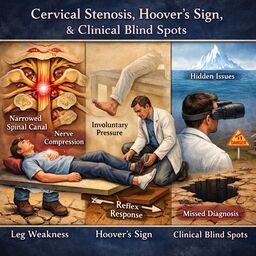
Yet when I look on the various FND-promoting websites (neurosymptoms.org, fndhope.org, fndaction.org.uk, fndsociety.org) the written-notes-sign is not mentioned at all. Unlike Hoover's sign which is mentioned a lot. That's curious to me. Why? Why are they keep quiet instead of boasting about it? I think its like this because deep down the FND quacks know that the written-notes-sign is self-evidently absurd, and most people when hearing it will think its bollocks.
Why else might someone arrive with a written list of notes?
I've been keeping notes for decades in my academic and professional career. Often I'd have notes prepared ahead of a meeting especially if there was a lot to get through and if we were pressed for time. If not I would sometimes find I'm kicking myself later for forgetting to say something important.
Health is important. The most important thing. My disease has made me very unwell, so I see doctor's appointments are very important because they might help me get better. It's very logical then for me to have written notes, especially since my disease is quite complex and challenging. I'd want to give the doctor as much information as possible to maybe help them know what to do.
My disease does not involve memory problems or forgetfulness, but if it did, I would think having written notes would be even more important to help me not forget things.
I did get a diagnosis that made sense and that helped me. Long Covid and Myalgic Encephalomyelitis(ME). Some people with that do have memory problems. Reading all this medical literature I saw none of them even consider ME, instead they're talking about things like dementia and trying to distinguish them from FND.
Rule-in signs are meant to show some inconsistency. What is inconsistent about the written-notes sign? Nothing. As I've explained there are plenty of reasons why someone would bring a list of their symptoms to their doctor's appointment, and a number of pathophysiological neurological disorders (e.g. Long Covid, ME) which don't prevent a patient from doing so.
Bottom line
If someone says that FND or FCD is a legitimate clinical entity because it has positive rule-in signs, you can immediately reply saying that one of those so-called positive rule-in signs is the fact that the patient arrived to the appointment with written notes.