
Four Years of Dystonia: Meige Syndrome Misdiagnosed as FND
 FND Nope
Moderator
FND Nope
Moderator
A 2024 case report describes a 42-year-old woman diagnosed and treated for FND despite persistent facial, oral and cervical movements. After treatment failed, neurology diagnosed Meige syndrome. The authors explicitly describe the original FND diagnosis as a misdiagnosis.

When an Unexplained Gait Became Conversion Disorder: A Huntington’s Disease Case
FND Nope
Moderator
A 65-year-old woman with an abnormal gait, cognitive decline and psychiatric symptoms was diagnosed with conversion disorder after inconclusive neurological investigations. Years later, genetic testing confirmed Huntington’s disease—raising a difficult question: what positive evidence had established conversion disorder in the first place?
When FND Overshadowed an Axonal Neuropathy: A Case of AMSAN
FND Nope
Moderator
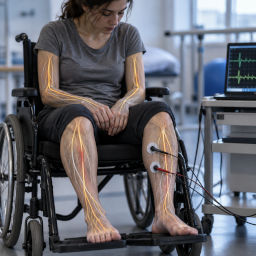
A 22-year-old woman entered rehabilitation with FND as her primary diagnosis while an underlying acute motor and sensory axonal neuropathy (AMSAN) remained unrecognised. EMG and nerve conduction studies later demonstrated extensive axonal damage, leading to IVIG treatment and improved rehabilitation progress. The authors explicitly describe the case as diagnostic overshadowing.
When Suppressible Movements Were Called Functional: A Genetic PKD Case
FND Nope
Moderator
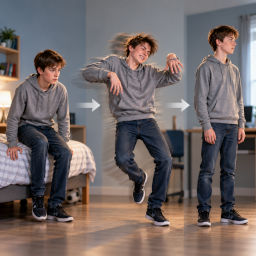
A 14-year-old boy was diagnosed with a functional movement disorder after presenting with suppressible involuntary movements and psychiatric comorbidity. Further investigation identified monogenic paroxysmal kinesigenic dyskinesia (PKD), while the authors noted that specific positive features supporting the original functional diagnosis had been absent.
The Common Phenotypes Hypothesis
 Christoff Trüter
Spousal caregiver
Christoff Trüter
Spousal caregiver
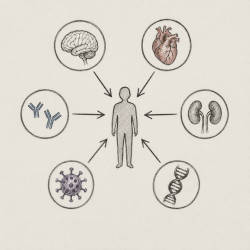
An exploration of FND, positive rule-in signs, comorbidity, predictive processing, diagnostic closure, and whether functional symptoms may reflect common phenotypes arising from multiple underlying conditions.

The FND quacks think that bringing a list of written notes to your appointment is near-certain proof that you have a psychosomatic disorder
 jakovmrc
Person with Long Covid
jakovmrc
Person with Long Covid
A critical examination of the evidence behind so-called “rule-in signs” for Functional Neurological Disorder, focusing on the claim that bringing written notes to an appointment strongly indicates a psychosomatic condition.
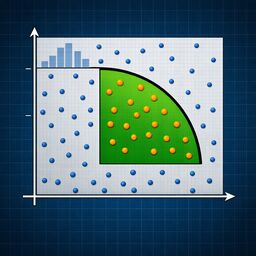
Is FND a diagnosis of exclusion? A Monte Carlo simulation
FND Nope
Moderator
This post explores how DSM-5 criteria for FND expand diagnoses compared with DSM-4 Conversion Disorder, using a simulation to show the impact of positive signs, comorbidities, and Dr Allen Frances’ concerns about diagnostic inflation.

Fatigable Weakness vs Functional Weakness: Why Hoover’s Sign Can Mislead When Isokinetic Testing Shows Otherwise
Christoff Trüter
Spousal caregiver
Examines Hoover's sign in a patient with true fatigable weakness. Highlights how objective isokinetic testing better captures performance deficits than traditional clinical signs, preventing misinterpretation as functional weakness.

When Diagnosis Becomes Doctrine: Questioning FND and Clinical Authority
Christoff Trüter
Spousal caregiver
When I started this website in July 2025, I received a lot of pushback from FND proponents. Some felt that the website was highly offensive and disrespectful, and urged me to please take the website down, which I obviously did not do.