
Kairos moment: Gastrointestinal system
A short summary about my wife's gastroenterological journey that possibly led to her current neurological distress.

For my wife. For answers. For as long as it takes.
Welcome to my little corner of FND Nope. I'm Christoff, the person behind FND Nope. This is where I share my thoughts, investigations, frustrations, occasional sarcasm, and whatever else catches my interest. I'm sceptical of medical dogma, allergic to unquestioned authority, and firmly believe that no diagnosis or idea should be beyond criticism. You don't have to agree with me. Good arguments and evidence are always welcome.
A short summary about my wife's gastroenterological journey that possibly led to her current neurological distress.
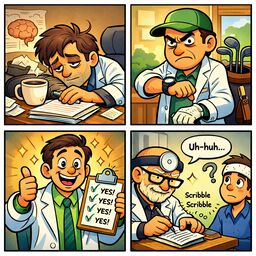
Over the years, navigating my wife's extremely complex medical journey, we have met a lot of doctors along the way: some great, some mediocre, and some negligent. Looking back retrospectively, there are a lot of things I wish we had done differently.
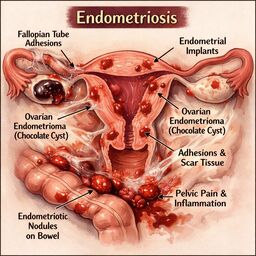
Ironically although doctors present the FND framework as a more evolved replacement for outdated concepts like hysteria, conditions such as endometriosis may still be wrongly attributed to FND, echoing the same historical misattributions that labelled unexplained female symptoms as psychological rather than physiological.
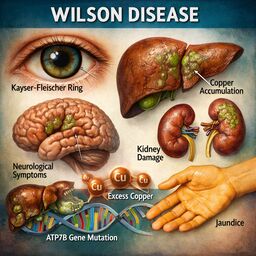
Around 1912, British neurologist Samuel Wilson described a condition he termed progressive lenticular degeneration, linking liver disease with neurological symptoms; this would later come to be known as Wilson disease.
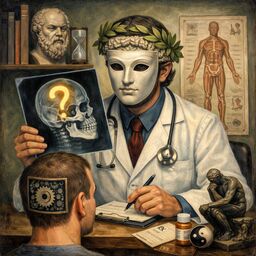
FND is a matter of philosophy, not fact. It is a disorder that was conceptually defined into existence, unlike diseases discovered through measurable physiology. The very idea that the expression of a symptom that cannot be explained somehow correlates to a "brain software" problem is speculative and should be treated as such.

When observing my wife’s medical condition retrospectively, I try to identify what my late father used to call Kairos moments. In other words, identifying the tipping points, the moments in time that brought us to where we are now.

One of the most common and valid criticisms of a website like this is that it heavily relies on anecdotal evidence, meaning personal and subjective lived experiences. That is fair. This is, after all, a reflective journey centred around my wife’s health struggles.
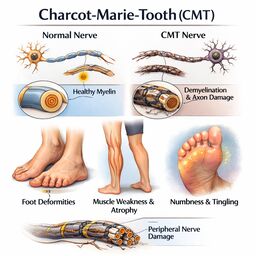
Charcot-Marie-Tooth (CMT) is a hereditary (genetic) disorder, not dental related as the name might suggest, that impacts the peripheral nerves, that is motor (movement) and sensory (sensation) nerves in the arms, legs, hands, and feet.

Barely a week after launching this website and I already received my first calls to take it down.

As soon as an FND diagnosis is made, the patient is thrust into a multidisciplinary treatment approach, which can include psychologists, psychiatrists, physiotherapists, and sometimes speech or occupational therapists, depending on how the disorder presents itself.

In Functional Neurological Disorder (FND), standard brain imaging (e.g. MRI, CT) usually appears normal, showing no structural damage, lesions, tumours, or other typical neurological signs, except when FND is comorbid with an organically confirmed neurological condition, such as multiple sclerosis, stroke, or epilepsy (like saying pain occurs alongside a bone fracture).

What do I mean when I hypothesize that Functional Neurological Disorder (FND) might be nothing more than a central nervous system reflex?