
Christoff Trüter
Trophies


Posts
37
Why Calling It FND Can Be Misleading and Potentially Dangerous
As you might have noticed by now, I am not particularly convinced of the legitimacy of FND as a standalone diagnosis. I believe it is more likely a CNS knee-jerk reaction or referral to underlying causes, rather than a primary cause in itself. In other words, it may be something commonly observed as a consequence of an underlying illness (as pain is to fractures), not something that should automatically be treated or diagnosed as the illness itself, as is increasingly common practice these days.

Differential Diagnosis: Multiple Sclerosis (MS)
When my wife's condition initially began to escalate, one of the first diseases considered was Multiple Sclerosis (MS). The neurologist at the time quickly concluded it was functional, ruling out MS due to the absence of appropriate MRI lesions and stating that the clinical signs were insufficient for a definitive MS diagnosis.

Closing diagnostic doors : The Problem of Psychologisation
The idea that physical health problems could be caused by psychological factors, that is mind, emotion, or behaviour, rather than by physical pathology, is hardly new. Its roots trace back to ancient civilisations, from Egypt, 1900 to 1500 BCE, to classical Greece, 5th to 4th century BCE, where hysteria-like symptoms were first described. These early ideas strongly influenced the development of medical psychologisation, later formalised in the DSM.

When Dramatic Symptoms Are Dismissed: The Problem with Rule-In FND Diagnosis
In the world of FND diagnosis, observation is the primary tool used to positively identify cases caused by non-organic "functional" factors, rather than by physical damage to the spinal cord, nerves, or brain.

Hysteria, a rose by any other name
The act of relabelling is ancient, but it surged in the 20th century as an euphemistic attempt to appear more humane and sensitive, aiming to destigmatize the meanings certain labels carry.

What Would Convince You to Accept FND?
A critical take on FND, emphasising the need for objective, falsifiable evidence and warning against dismissing measurable medical conditions.

FND Poem
A searing poem of rage against the medical dismissal of a woman’s pain, misdiagnosed as FND. It condemns the gatekeepers’ ignorance, scorn, and reliance on flawed theories, leaving her to suffer while her truth is silenced. The poem’s raw emotion and vivid imagery demand accountability for her enduring struggle.

FND and the replication crisis
Back in the 1990s, some psychologists were already raising concerns that many studies weren’t holding up when tested again. At first, these warnings didn’t get much attention, but they planted the seeds of what would later be called the replication crisis.
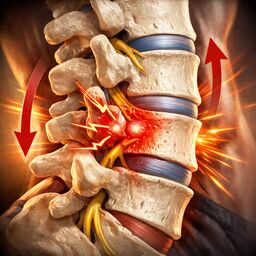
Current working hypothesis: Dynamic cord compression mistaken for FND
Over the years, along with various doctors, we have considered many hypotheses regarding my wife's medical condition, ranging from Parkinson's, Wilson's disease, Multiple Sclerosis (MS), hepatic encephalopathy, B12 deficiencies, CMT (Charcot-Marie-Tooth), and even, briefly, FND, until we realised how speculative such a diagnosis truly is (in essence, no diagnosis, MUS in sheep clothing)

Is FND falsifiable?
Karl Popper's criterion of falsifiability, first presented in Logik der Forschung (1934) and later translated into English as The Logic of Scientific Discovery (1959), is one of the most influential frameworks for separating science from pseudoscience.
Comments
48You’re right that this argument is applied unevenly mostly to conditions historically called psychogenic and mainly affecting women.
I was surprised when I first delved into the literature how nebulous things were not at all like the hard sciences we are used to. Medicine balances known evidence against unknowns with practical judgment and philosophy under uncertainty. That is why the tension exists. And given from what I've seen I am not sure that some clinicians even realise that this tension exists. You've got clinicians treating this as a hard science while the underlying evidence is not that at all that is what we are kicking against. And patients expecting this to be treated as a hard science when none of it is its all a bit disconnected. The limit on testing is real but using it selectively while other idiopathic diseases simply stay unknown cause no psych referral is the double standard.
This is exactly where something like FND can fail horribly when these unknowns are treated as knowns.
Thank you for sharing. This might help someone in the future. FND is the modern descendant of hysteria, so it is hardly surprising that the same diagnostic overshadowing persists. Ménière’s was one of the physical diseases whose symptoms could historically disappear into the broad category of “hysteria.” Today, vertigo can similarly be labelled as functional or PPPD before an evolving inner-ear disorder has been adequately investigated.
I’m glad you trusted your instincts and found a specialist who looked further. It is concerning that FND was suggested while a physical explanation remained unresolved, especially since your symptoms disappeared after vestibular nerve section. If you don’t mind sharing, how long have you been symptom-free since the surgery?
What always boggles my mind is how quickly skepticism about the FND label, especially in cases like this one, gets framed as denial or something harmful. Skepticism is not denial of the symptoms or the suffering. It is a legitimate response when the patient themselves says they don't understand how the diagnosis was reached, no clear positive clinical signs or explanation were communicated, and it felt like a nothing else fits conclusion, with no real treatment plan or forward path.
Shouldn't the priority be listening to the patient's actual experience and asking why the diagnostic process wasn't more transparent? Good medicine welcomes questions and second opinions, especially with sudden, purely cognitive changes that have devastated someone's career and daily life.
Why discourage exploring reasonable alternatives such as Long COVID related brain fog, POTS, autoimmune encephalitis, microbiome issues, and so on? Considering differentials doesn't invalidate FND if that is the right fit. It just protects the patient from a potentially premature label. Many of us have seen cases where digging deeper changed everything.
Yeah, that's the first website most patients diagnosed with FND are directed to, along with https://neurosymptoms.org
It is very strange, isn't it?
@Copper Comet of Lagoon Just out of interest (I'm not sure what your background is, cons of anonymous comments), based on your comment, am I right in thinking that you consider the CSF leak to have been incidental and the surgery unnecessary? That doesn't appear to be the interpretation of the authors.
If so, and assuming you're a clinician, wouldn't that make you less likely to consider or investigate a CSF leak as a differential diagnosis in a similar patient? That's what concerns me.
@Copper Comet of Lagoon Your comment inadvertently illustrates exactly the point of the post. Even though the patient had remained symptom free for up to three months after the CSF leak was repaired, you preserve the FND diagnosis through explanations like functional overlay, comorbidity, placebo, attention, predictive processing, or by questioning the significance of the repair itself, something the authors of the paper do not question.
One other point is that the paper itself does not treat the CSF leak as an incidental finding or question whether it required repair. Those are additional interpretations. The authors accepted it as a curable underlying pathology, repaired it, and reported complete symptom resolution, yet still retained the FND diagnosis.
So contractures form from severe holding of muscles in FND. Even when you "cure" the FND, it's too late. When we look at these muscles on ultrasound, they are completely damaged and fibrotic. Very different than a stroke or neurological disorder. I work with an orthopedic surgeon pic.twitter.com/R5bIln5pH8
- Paul Winston MD - Restoring Movement is the goal. (@drpaulwinston) June 4, 2026
Discussions started
3Initial interview with Christine Aumann, Maddie Aumann’s mother, on REAL TALK 93.3FM, discussing Maddie’s Functional Neurological Disorder (FND) diagnosis, her subsequent medical journey, and the impact the FND diagnosis had on her care.
From https://www.facebook.com/RealTalk933fm/videos/1095299976492411/
You can literally go onto https://fndconnect.org.uk/shop/product/fnd-connect-i-have-seizures-lanyard-and-card
And for £ 4.99 you can buy yourself a lanyard to inform bystanders to effectively discourage appropriate emergency care.
Someone may assume every episode is "just another functional seizure." But seizures can change, suffer a head injury, have a stroke,
low blood sugar, cardiac syncope, or another medical emergency.

Looking back, was there a symptom(s) that should have prompted doctors to investigate further before diagnosis FND?
Theoretically, we have freedom of speech on this side of the world too 😄 Although I'm not entirely convinced my country would go out of its way to defend me, they'd probably throw me under the bus if given half a chance, hehe.
But there will be other battles worth fighting. For my part, I'm going to try to keep things clean and civil and focus on the actual issues rather than personalities.
I am, however, learning a great deal about the kind of discourse I'm dealing with here. At times it feels almost Trumpian in nature: disagreement quickly becomes outrage, criticism becomes an attack, and then everything escalates from there.
I'd rather stick to the substance.