
Christoff Trüter
Trophies


Posts
37
Why Calling It FND Can Be Misleading and Potentially Dangerous
As you might have noticed by now, I am not particularly convinced of the legitimacy of FND as a standalone diagnosis. I believe it is more likely a CNS knee-jerk reaction or referral to underlying causes, rather than a primary cause in itself. In other words, it may be something commonly observed as a consequence of an underlying illness (as pain is to fractures), not something that should automatically be treated or diagnosed as the illness itself, as is increasingly common practice these days.

Differential Diagnosis: Multiple Sclerosis (MS)
When my wife's condition initially began to escalate, one of the first diseases considered was Multiple Sclerosis (MS). The neurologist at the time quickly concluded it was functional, ruling out MS due to the absence of appropriate MRI lesions and stating that the clinical signs were insufficient for a definitive MS diagnosis.

Closing diagnostic doors : The Problem of Psychologisation
The idea that physical health problems could be caused by psychological factors, that is mind, emotion, or behaviour, rather than by physical pathology, is hardly new. Its roots trace back to ancient civilisations, from Egypt, 1900 to 1500 BCE, to classical Greece, 5th to 4th century BCE, where hysteria-like symptoms were first described. These early ideas strongly influenced the development of medical psychologisation, later formalised in the DSM.

When Dramatic Symptoms Are Dismissed: The Problem with Rule-In FND Diagnosis
In the world of FND diagnosis, observation is the primary tool used to positively identify cases caused by non-organic "functional" factors, rather than by physical damage to the spinal cord, nerves, or brain.

Hysteria, a rose by any other name
The act of relabelling is ancient, but it surged in the 20th century as an euphemistic attempt to appear more humane and sensitive, aiming to destigmatize the meanings certain labels carry.

What Would Convince You to Accept FND?
A critical take on FND, emphasising the need for objective, falsifiable evidence and warning against dismissing measurable medical conditions.

FND Poem
A searing poem of rage against the medical dismissal of a woman’s pain, misdiagnosed as FND. It condemns the gatekeepers’ ignorance, scorn, and reliance on flawed theories, leaving her to suffer while her truth is silenced. The poem’s raw emotion and vivid imagery demand accountability for her enduring struggle.

FND and the replication crisis
Back in the 1990s, some psychologists were already raising concerns that many studies weren’t holding up when tested again. At first, these warnings didn’t get much attention, but they planted the seeds of what would later be called the replication crisis.
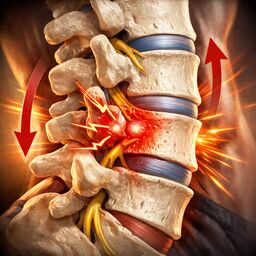
Current working hypothesis: Dynamic cord compression mistaken for FND
Over the years, along with various doctors, we have considered many hypotheses regarding my wife's medical condition, ranging from Parkinson's, Wilson's disease, Multiple Sclerosis (MS), hepatic encephalopathy, B12 deficiencies, CMT (Charcot-Marie-Tooth), and even, briefly, FND, until we realised how speculative such a diagnosis truly is (in essence, no diagnosis, MUS in sheep clothing)

Is FND falsifiable?
Karl Popper's criterion of falsifiability, first presented in Logik der Forschung (1934) and later translated into English as The Logic of Scientific Discovery (1959), is one of the most influential frameworks for separating science from pseudoscience.
Comments
48This is where I think FND can become a distraction.
There is an important difference between recognising a functional presentation and treating FND as the reason for that presentation.
Weakness, tremor, altered sensation, gait changes, variability and other so-called functional features may be things we observe. But once those observations are bundled into an FND diagnosis, the diagnosis can start functioning as the explanation for why they are happening.
That risks reversing the logic.
Instead of asking, "What is causing this presentation?", the answer can become, "It is happening because the patient has FND."
But if these same kinds of features can occur alongside many neurological, structural and systemic conditions, perhaps "functional" is sometimes better understood as part of the presentation rather than as the underlying cause.
The danger is that FND then stops being a description of what is being seen and becomes a reason not to keep looking.
Thanks, @S. F. I think there is actually quite a bit of irony in this exchange.
One of the central reasons this site exists is because I am concerned about diagnostic closure around FND, the dismissal of legitimate scepticism, and the tendency for professional authority to sometimes substitute for actually demonstrating a claim.
Then an anonymous neurologist arrives here and, rather unintentionally, seems to demonstrate exactly the behaviour the site is critical of.
I am repeatedly reminded that I am not a clinician and therefore supposedly lack the knowledge required to challenge their conclusions. Yet the same person, without examining this student, without access to his complete medical history, tests or imaging, felt comfortable making remarkably confident statements about what his symptoms could and could not represent.
My position was never that I knew what was wrong with him. It was almost the opposite: we don't know, so don't close the diagnostic door prematurely.
The insults, Dunning–Kruger accusations and ‘cosplay as a clinician’ comments only make the irony harder to miss. If the intention was to convince sceptical patients that their concerns about FND and diagnostic closure are misplaced, I don't think this exchange achieved that. If anything, it played directly into the concerns this site was created to discuss.
And to the original poster, if you're still reading this: how are you doing?
The last time we spoke, I believe a new neurologist had become involved and there had been some additional findings or discoveries. I would really like to hear what happened after that and whether you are any closer to understanding what is causing your symptoms.
Please update us when you have a chance. I genuinely hope things have moved in the right direction for you.
Glad she finally got answers and that treatment actually helped.
What bothers me is how often people in these stories have to spend half the post apologizing so they don’t offend anyone who has an FND diagnosis. You shouldn’t have to do that to say “they missed something treatable.”
That reflex, protect the label first, then listen to the person who is still sick, is the problem. A diagnosis is a working explanation, not a loyalty test. If rheumatology findings were ignored and neuropathy was never tested, saying so isn’t an attack on people who do have FND. It’s advocacy for patients.
People who are ill should not have to soften their story so a diagnosis stays comfortable.
Similar case shared on the FB Group
https://www.facebook.com/groups/1551839625936156/permalink/1741915683595215/
LOL, I love this quote
‘That’s good that it’s all in your head, because that’s where your brain is.’
Since you mentioned that you are a nurse, I would also be very interested in your perspective on a post I wrote: When Nursing Education Reinforces a Diagnosis.
It looks at an Australian FND nursing education guide that explicitly encourages nurses to reinforce the diagnosis and discusses patient scepticism, pursuit of alternative diagnoses and further investigation largely as barriers to recovery. My concern is that it gives considerably less attention to diagnostic uncertainty, reassessment, or recognising when new symptoms or progression might justify questioning the original diagnosis.
Given your nursing background, I would genuinely be interested to know how you view that kind of educational approach, particularly whether you think reinforcing the diagnosis is an appropriate role for nurses, and how that should be balanced against remaining alert to changes that might warrant reassessment.
As you have done with letters posted to you (for public record), here is the one I received.
To FNDNope,
I am absolutely furious about what you are doing.
You present yourselves as a platform for scepticism and critical discussion around Functional Neurological Disorder, but from where I am standing, what you are actually doing is undermining confidence in doctors, amplifying anecdotes, questioning established medical consensus, and encouraging people to believe that their FND diagnoses may be wrong.
Do you understand how fucking dangerous that can be?
Doctors spend years training to diagnose neurological disorders. FND is a recognised diagnosis with established clinical signs and an extensive scientific literature behind it. Yet your website seems determined to focus on every case where somebody was misdiagnosed, every limitation in the evidence, and every uncomfortable question about diagnostic accuracy.
Patients need reassurance, not endless scepticism. They need to accept their diagnoses and engage with treatment, not be encouraged to interrogate every assumption their clinicians make.
And frankly, the cartoons and satire make it worse. Medicine is serious. FND is serious. Turning disagreements about diagnosis into jokes about doctors, diagnostic overshadowing, and "Must be the FND" may be amusing to you, but it risks portraying clinicians as arrogant or intellectually closed simply because they are following accepted medical practice.
What makes this even more troubling is the constant cosplaying as a clinician while simultaneously claiming to be merely a sceptic asking questions. You cannot spend your time adopting the posture and authority of a medical professional, making sweeping pronouncements about diagnoses and clinicians, and then retreat behind "it's just satire" or "I'm just asking questions" whenever challenged. You do not get to have it both ways.
You also seem obsessed with the possibility that FND can distract clinicians from alternative diagnoses. Of course doctors can make mistakes. Nobody denies that. But continually highlighting those mistakes creates a completely distorted picture of ordinary clinical practice.
There comes a point where "scepticism" stops being healthy questioning and starts undermining trust.
And if you think operating from another country puts you safely beyond accountability, think again.
The internet is not some magical jurisdiction free zone. Operators can be identified through lawful processes, records can be preserved, and legal advice can be obtained across borders. If what you are publishing crosses the legal line, then every available lawful avenue can be explored to identify the responsible parties and pursue the matter in the appropriate jurisdiction.
Do not assume that geographical distance means nobody can reach you legally. It doesn't.
Keep the screenshots. Keep the archives. Keep laughing. If this crosses the threshold for legal action, those records may eventually become evidence.
Perhaps instead of constantly asking what the FND literature gets wrong, you should start asking yourself whether you're prepared to defend what you publish when somebody finally decides to challenge it properly.
This website is irresponsible, provocative, and deeply frustrating.
Consider this a warning. If you continue crossing the line, legal action may only be the beginning of the consequences you have to deal with. There are other entirely legitimate avenues available, and I suggest you think very carefully before assuming that distance, anonymity, or international borders place you beyond accountability. If necessary, the people responsible can be identified through lawful means. Keep pushing this and you may find this becomes considerably uglier than a dispute between strangers on the internet, this will make the Röhm-Putsch look like a walk in the park.
You chose to post a lengthy response on my website, address me directly, question my honesty, and then instruct me not to respond. You do not get to enter my space, make allegations about me, and then declare that only your account may remain on the record.
I never stated that the character was you. I acknowledge the resemblance, but depicting you was not my intention. A laughing emoji is not an admission of identity. Nevertheless, you objected, and I removed the image to de-escalate the dispute, not to concede the allegations you subsequently attached to it.
There is also a recurring problem with your response: several of the points you hammer on were already addressed in the very letter you were responding to.
I have occasionally used "MS" where CIS suggestive of MS was more precise. However, I have repeatedly made that distinction clear, including in the very letter you were responding to. Treating occasional imprecision as dishonesty while ignoring that clarification is unfair.
Likewise, I have never claimed to know how you personally practise inside your clinic. My criticism concerns arguments and attitudes expressed publicly, not clinical encounters to which I have no access. Your explanation of your own assessment and referral procedures is now on the record, and I accept it as your account of your practice.
When points already conceded, qualified, or explicitly addressed in the original letter are presented back to me as evidence of dishonesty, it leaves me wondering whether you actually read the letter in full before responding to it.
Your comments on my wife are a different matter.
You argue that you are entitled to an opinion because I placed information about her medical workup online. Of course you are entitled to an opinion. But despite your lengthy response and extensive recital of your credentials, you provide no clinical reasoning about her case. You identify no examination findings supporting your position, address no progression or subsequent findings, and offer no meaningful differential diagnosis.
You have never examined her.
Reading information posted online does not give you a complete clinical understanding of a woman with a complex and evolving medical history. Yet you speak with a degree of confidence that the information available to you simply does not justify.
Your credentials may establish experience with FND. They do not give you access to investigations you have not seen, examinations you did not perform, follow-up information you do not possess, or the longitudinal evolution of her condition. Credentials are not evidence, and confidence is not clinical reasoning.
I will correct demonstrable errors. I will distinguish fact from inference. I will revise my position when evidence warrants it.
What I will not do is stop examining FND, diagnostic closure, or documented cases of misdiagnosis because clinicians object to being challenged.
More fundamentally, I believe FND itself rests on a very low epistemic bar. Considerable diagnostic certainty can be built upon clinical signs whose mechanisms, interpretation, and specificity are not equivalent to establishing a known underlying disease process, within a diagnostic framework that continues to evolve.
In my wife’s case, even that already low bar was not demonstrably met.
That is the substantive criticism.
Your response does not answer it. Repeating points that the original letter already acknowledged does not answer it either. It substitutes credentials, indignation, and allegations about my honesty and motives for an evidence-based response to the argument I am actually making.
I am not sure whether this website will prove helpful to someone someday. I do know that this conversation is not helping anyone at this stage.
I had hoped this would be more than mudslinging. I guess not. Closing this thread.
Discussions started
3Initial interview with Christine Aumann, Maddie Aumann’s mother, on REAL TALK 93.3FM, discussing Maddie’s Functional Neurological Disorder (FND) diagnosis, her subsequent medical journey, and the impact the FND diagnosis had on her care.
From https://www.facebook.com/RealTalk933fm/videos/1095299976492411/
You can literally go onto https://fndconnect.org.uk/shop/product/fnd-connect-i-have-seizures-lanyard-and-card
And for £ 4.99 you can buy yourself a lanyard to inform bystanders to effectively discourage appropriate emergency care.
Someone may assume every episode is "just another functional seizure." But seizures can change, suffer a head injury, have a stroke,
low blood sugar, cardiac syncope, or another medical emergency.

Looking back, was there a symptom(s) that should have prompted doctors to investigate further before diagnosis FND?
Once the language shifts to "functional overlays," "functional components," triggers, and underlying causes that supposedly produce a functional disorder, the obvious question is whether this is still a primary disorder at all.
If the same features show up across many illnesses, it may just be a common presentation, not evidence of a separate entity called FND. At that point the diagnosis is doing philosophical work: it groups observations together and then treats the grouping as the cause.
That is a different claim from "these symptoms are real." Reality of symptoms does not establish that the category explains them.