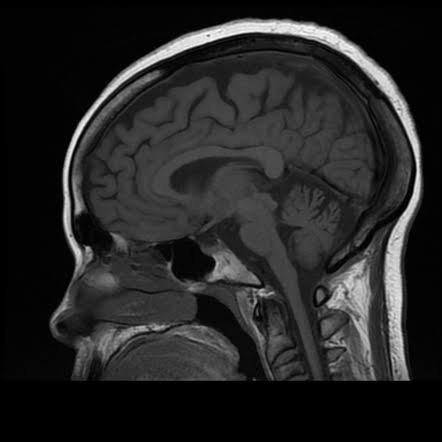
Diagnosed With FND After Negative Genetic Tests. The Patient Actually Had Spinocerebellar Ataxia.
 FND Nope
Moderator
A 37-year-old man spent years experiencing episodes of impaired coordination, speech difficulties and falls severe enough to cause bone fractures. He underwent repeated neurological investigations, including brain imaging, electrophysiological studies, laboratory testing and genetic testing. The results failed to identify a cause. Along the way, doctors diagnosed panic attacks, dissociative or psychogenic seizures and functional movement disorder (FMD), a form of functional neurological disorder (FND). Eventually, specialists discovered that he had spinocerebellar ataxia type 27B (SCA27B), a hereditary neurological disease associated with an abnormal repeat expansion in the FGF14 gene.
His case is one of three described in a December 2025 paper published in BMJ Neurology Open, titled Cerebellar ataxias and functional movement disorders: navigating clinical overlap. The authors examine the difficulties of distinguishing cerebellar disease from functional movement disorders, including the danger of interpreting fluctuating symptoms, unusual presentations and negative investigations as evidence of FND. One of their cases demonstrates exactly what can happen when the disease responsible for a patient's symptoms is not yet detectable through the investigations performed.
Five years of symptoms, investigations and incorrect diagnoses
The man's symptoms began during a wedding, when he experienced a temporary episode of slurred speech and impaired coordination. Similar episodes returned over the following years, eventually developing into a persistent movement disorder. He suffered recurrent falls, some resulting in fractures. There was no known family history of neurological disease, and repeated investigations failed to provide an explanation.
He attended multiple neurological outpatient and inpatient services. Doctors considered several explanations, including panic attacks, psychogenic seizures and functional movement disorder. Episodic ataxia was also considered, but exome sequencing performed in 2021 failed to identify pathogenic variants in several genes associated with that condition, including KCNA1, CACNA1A, CACNB4, SLC1A3 and UBR4. A diagnosis of functional movement disorder followed.
Further genetic investigations in 2023, including an ataxia gene panel and additional spinocerebellar ataxia repeat-expansion analysis, were again negative. Despite years of symptoms and increasingly serious consequences, the underlying neurological disease remained unidentified.
When the patient was eventually assessed at a specialist FND clinic, his examination revealed mild but consistent dysarthria, meaning impaired speech articulation. His gait was broad-based, slow and cautious, and he could not perform tandem walking. Walking sideways appeared somewhat easier, but the examining clinicians found no clear inconsistencies or other unequivocal positive signs supporting a functional movement disorder.
A subsequent assessment at a specialist ataxia clinic identified abnormalities that earlier investigations had apparently failed to establish: inaccurate rapid eye movements, gaze-evoked nystagmus and interruptions of smooth eye tracking. Combined with the history of episodic symptoms progressing into persistent disability, these findings pointed towards an underlying cerebellar disorder.
Specialists suspected spinocerebellar ataxia type 27B, a hereditary neurological condition associated with GAA repeat expansions in the FGF14 gene. Targeted genetic testing conducted through a research study confirmed the diagnosis, identifying expansions of 498 and 684 repeats on the two alleles.
The patient had a genetically confirmed neurological disease. His previous negative investigations had not excluded it, and the functional diagnoses applied during his diagnostic journey had not explained its underlying cause.
The genetic disease that earlier tests missed
SCA27B was first identified in 2023, the same year this patient underwent another round of genetic testing that failed to find an explanation. It is an important example of how rapidly neurological genetics is developing. A disease can remain undetected not because it is imaginary, psychological or functional, but because the necessary diagnostic knowledge or testing approach has not yet become available in routine clinical practice.
Standard exome sequencing is designed primarily to examine protein-coding regions of genes and does not reliably identify every type of pathogenic genetic variation. Repeat expansions, including those associated with certain hereditary ataxias, can require specialised analysis. Even broader genetic investigations cannot exclude every known or undiscovered neurological disorder.
The authors explicitly acknowledge this limitation:
"Even state-of-the-art genetic testing for cerebellar ataxias does not rule out a hereditary disorder"
That statement should matter enormously when a patient is told that negative investigations support an FND diagnosis. A negative test establishes that a particular investigation did not identify the abnormality being sought. It does not establish that no neurological disease exists. In this case, two rounds of genetic investigation failed to identify the condition before targeted testing finally provided the answer.
There is another uncomfortable detail. The authors explain that the classic FMD criterion of neurological "incongruence" has been criticised for requiring medical omniscience. In other words, identifying symptoms as incompatible with recognised neurological disease assumes that clinicians possess sufficiently complete knowledge of every disease and its possible presentations. The discovery of new neurological conditions makes that assumption difficult to justify.
Two additional cases show how easily the diagnoses can overlap
The paper describes two other patients, although neither represents the same diagnostic reversal as the man with SCA27B. The first was a 56-year-old woman initially diagnosed with a presumed immune-mediated brainstem or cerebellar syndrome. She experienced progressive incoordination, gait difficulties, dizziness, swallowing problems, fatigue and right-sided weakness. Treatment with methylprednisolone and rehabilitation did not improve her condition. Brain MRI, cerebrospinal fluid investigations and genetic analysis did not identify a structural, inflammatory or hereditary explanation.
On specialist examination, clinicians observed several findings they interpreted as positive signs of functional neurological disorder. These included variable weakness, a positive Hoover sign, differences between deliberate and spontaneous hand movements, and improved balance or walking under certain conditions. They diagnosed FND rather than confirming the previously suspected immune-mediated cerebellar disorder. The paper does not establish that this diagnosis was subsequently overturned, and this case should not be presented as another proven misdiagnosis.
The third patient was a 60-year-old woman with genetically confirmed spinocerebellar ataxia type 6 (SCA6). Her neurological disease had already been established through MRI evidence of cerebellar atrophy and molecular genetic testing. After years of progressive balance difficulties, she experienced an abrupt deterioration involving additional leg weakness, fatigue and walking difficulties. Clinicians observed variable strength, a positive Hoover sign and substantial changes in gait performance during different tasks. They concluded that functional motor symptoms had developed alongside her existing cerebellar disease.
That conclusion was the authors' clinical interpretation. The underlying SCA6 diagnosis was genetically confirmed, while the additional functional diagnosis rested on examination findings. The distinction matters because the paper itself acknowledges that some findings considered suggestive of functional gait disturbance also occur in patients with cerebellar ataxia.
How reliable are the supposed positive signs?
One of the most important parts of the paper is its discussion of the limitations of clinical signs used to distinguish functional incoordination from cerebellar disease. The authors acknowledge that features such as excessively slow walking and extreme caution are common among patients with cerebellar ataxia and therefore have only moderate specificity for functional movement disorder. Put plainly, these observations are not exclusive to FND.
They also note that relatively few approaches have been established for distinguishing functional incoordination from cerebellar ataxia. Although experimental methods have investigated movement inconsistencies using specialised recording equipment, these techniques have not become established routine clinical tests.
This is a serious diagnostic limitation. A clinician may observe an unusual gait, variable performance or improvement during a different movement task and interpret it as functional. Yet the authors acknowledge that some of these characteristics can occur in patients with established cerebellar disease. An observation cannot reliably distinguish two conditions merely because it is associated with one of them.
The paper also discusses confirmation bias. Once clinicians believe that alternative neurological diseases have been ruled out, subsequent observations can be interpreted through that assumption. Minor inconsistencies may acquire exaggerated diagnostic importance, while findings that do not fit the existing diagnosis risk being overlooked.
"Once a sense of having ‘ruled out’ differential diagnoses is established, a set of confirmation biases such as selective perception and observer-expectancy effects can seemingly strengthen an FMD diagnosis"
The authors add that this can happen even when the foundation of the functional diagnosis, namely unambiguous and specific clinical signs, remains weak. This is not a criticism invented by patients or campaigners. It is an acknowledgement published by clinicians working in specialist ataxia and FND services.
Particularly concerning is the vulnerability of episodic ataxias to misdiagnosis. These disorders can fluctuate, with patients experiencing periods of severe impairment followed by partial improvement. Variability is therefore not necessarily evidence against neurological disease. It may be part of the disease itself.
What this case actually proves
This is a three-patient case series, not a study measuring the frequency of FND misdiagnosis. It cannot establish how often patients labelled with FND actually have an unidentified genetic or degenerative disorder. Nor does it prove that every clinical sign used to diagnose FND is invalid. What it does establish is that one patient received functional diagnoses during years of investigation before targeted genetic testing confirmed a hereditary neurological disease.
It also exposes a broader problem. Diagnostic certainty can exceed the available evidence, particularly when clinicians mistake the limitations of current investigations for evidence that an underlying neurological disease has been excluded. The discovery of SCA27B in 2023 demonstrates how recently an important explanation for late-onset ataxia became identifiable. Patients who underwent earlier investigations could not have been adequately assessed for a disease that had not yet been characterised.
The authors call for greater awareness, careful neurological examination and systematic investigation to avoid misdiagnosis. Their own findings provide a compelling reason not to treat negative tests, fluctuating symptoms or minor inconsistencies as a substitute for identifying the actual cause of a patient's deterioration.
For the patient in case two, the eventual answer was not panic attacks, psychogenic seizures or functional movement disorder. It was SCA27B, confirmed through targeted genetic testing after years of unexplained neurological symptoms and injuries. The disease was not absent when the earlier tests came back negative. It simply had not been found.
References
- Erdlenbruch F, Thieme A, Depienne C, Timmann D, Popkirov S. Cerebellar ataxias and functional movement disorders: navigating clinical overlap. BMJ Neurology Open. 2025;7:e001325.
- Beijer D, et al. The genetic landscape of sporadic adult-onset degenerative ataxia: a multi-modal genetic study of 377 consecutive patients from the longitudinal multi-centre SPORTAX cohort. EBioMedicine. 2025.
- Stone J. Incongruence in FND: time for retirement. Practical Neurology. 2024.
- Herdman SJ, Hall CD, Eggers R, et al. Misclassification of patients with spinocerebellar ataxia as having psychogenic postural instability based on computerized dynamic posturography. Frontiers in Neurology. 2011.
- Perez DL, Hunt A, Sharma N, et al. Cautionary notes on diagnosing functional neurologic disorder as a neurologist-in-training. Neurology: Clinical Practice. 2020.