Resume drafts Unsaved story and dashboard drafts
Comment drafts Unsaved comment drafts
Christoff Truter profile picture

Christoff Truter

Public profile
Spousal caregiver
8 posts 38 comments 2 discussions 04 Aug 2026
Software developer, amateur astronomer, reluctant backyard neurologist by necessity while helping my wife navigate a complex neurological illness, creator of FND Nope (fndnope.org) a resource challenging the Functional Neurological Disorder diagnosis, sharing patient stories, and advocating for better investigation of underlying causes, and professional Trekkie.
Posts
8
Filtered by tag
Organic Clues
A tag exploring clinical findings, objective abnormalities, and alternative disease processes that may point toward biological causes or warrant further investigation in cases labelled as FND.
The Common Phenotypes Hypothesis
1 month ago

An exploration of FND, positive rule-in signs, comorbidity, predictive processing, diagnostic closure, and whether functional symptoms may reflect common phenotypes arising from multiple underlying conditions.

Fatigable Weakness vs Functional Weakness: Why Hoover’s Sign Can Mislead When Isokinetic Testing Shows Otherwise
4 months ago

Examines Hoover's sign in a patient with true fatigable weakness. Highlights how objective isokinetic testing better captures performance deficits than traditional clinical signs, preventing misinterpretation as functional weakness.
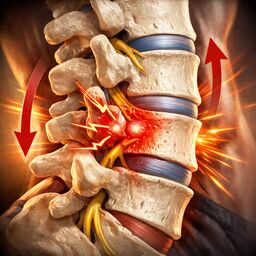
Current working hypothesis: Dynamic cord compression mistaken for FND
11 months ago

Over the years, along with various doctors, we have considered many hypotheses regarding my wife's medical condition, ranging from Parkinson's, Wilson's disease, Multiple Sclerosis (MS), hepatic encephalopathy, B12 deficiencies, CMT (Charcot-Marie-Tooth), and even, briefly, FND, until we realised how speculative such a diagnosis truly is (in essence, no diagnosis, MUS in sheep clothing)

Kairos moment: Gastrointestinal system
11 months ago

A short summary about my wife's gastroenterological journey that possibly led to her current neurological distress.
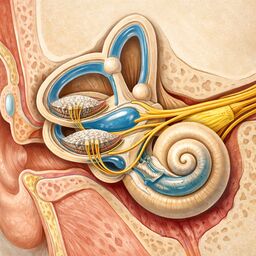
Kairos moment: Vestibular system
1 year ago

When observing my wife’s medical condition retrospectively, I try to identify what my late father used to call Kairos moments. In other words, identifying the tipping points, the moments in time that brought us to where we are now.

Progression Demands Further Investigation
1 year ago

As soon as an FND diagnosis is made, the patient is thrust into a multidisciplinary treatment approach, which can include psychologists, psychiatrists, physiotherapists, and sometimes speech or occupational therapists, depending on how the disorder presents itself.
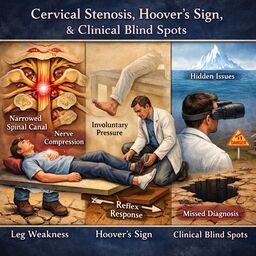
Cervical Stenosis, Hoover’s Sign, and Clinical Blind Spots
1 year ago

In Functional Neurological Disorder (FND), standard brain imaging (e.g. MRI, CT) usually appears normal, showing no structural damage, lesions, tumours, or other typical neurological signs, except when FND is comorbid with an organically confirmed neurological condition, such as multiple sclerosis, stroke, or epilepsy (like saying pain occurs alongside a bone fracture).

Using medication as a diagnostic tool
1 year ago

Over the centuries, doctors have devised a magnitude of methods to diagnose illnesses, from early clinical observations and skin prick tests, all the way through to X-rays, blood tests, ECGs, lumbar punctures, biopsies, mammograms, ultrasounds, endoscopies, stress tests, genetic testing, CT scans, MRIs, and functional imaging like PET scans, just to name a few.

Comments
38
I doubt that anyone would have been held accountable. There is a great deal of diagnostic shielding and protection for clinicians. For example, labelling something as comorbid with another condition can easily and quickly become a defence, effectively a get out of jail free card.

Thank you for taking the time to leave comments and for sharing the link to the TED talk. I will have a look at it. I believe it is quite dangerous to treat a functional disorder as a primary diagnosis. It is far safer to treat unknowns as unknowns and to view these symptoms as a trigger or reflex of an underlying condition. By doing so, we keep diagnostic doors open. I also find it absurd that some proponents believe organic misdiagnosis and functional misdiagnosis are equally dangerous. Treating FND as a primary diagnosis gives both the patient and the doctor a false sense of security. It is like a metaphorical monster living under your bed. If you refuse to acknowledge its existence, sooner or later you risk becoming its meal.

Your reaction to l-dopa is interesting, that might be indicative (like you mentioned) of YOPD, wrote about it over here as well Using medication as a diagnostic tool

I’m so sorry to hear that. Did your neurologist(s) reach a diagnostic impasse, or did they jump straight to that diagnosis? Are they planning to monitor the situation? Did they discuss a way forward? I know that, generally at this stage, they involve other specialties. Sorry for all the questions, I’m just trying to take in as much information as I can. What we try to do at this point is keep a symptom diary, which we share with our neurologist from time to time. It is prudent to monitor the situation rather than blindly assign all symptoms to one label. Especially with an FND diagnosis, you often find yourself on the fringes of neurology; regardless of what neurologists believe, it is always good practice to keep questioning and keep diagnostic doors open. Doctors are only human, prone to bias and often boxed in by what they were taught. And this is your health — you don’t want to play around with it. E.g. in the context of my wife, her hair started falling out, not something that can be attributed to functional causes, and there is clear mechanical reproducible causes - so we literally build a case that warrants further investigation.

Thank you, I was not anticipating all the negative feedback I received online from the FND community, but it was illuminating to see how easily something can become a holy cow.

FND is nothing more than a philosophical framework for approaching treatment when the cause of symptoms is unknown — so while it may be well-intentioned, that’s all it really is. However, the road to hell is paved with good intentions, and this is a clear example of that. When we reach an impasse like this, we cannot simply give it a name and declare victory in diagnosis. We need to be honest and transparent, and acknowledge the unknown as exactly that — unknown. For example, in my wife’s case, we cannot expect a psychiatrist to do the work of a neurosurgeon when it comes to her cervical stenosis and symptoms that are clearly mechanically driven. That’s simply lazy medicine. Meanwhile, she continues to grow sicker while we’re forced to navigate the egos of one doctor after another.

Hi Romina, Thank you for taking the time to leave such a thoughtful comment and for suggesting additional avenues of investigation. My wife has a family history of liver cancer (and cancer in general), so her liver has always been an area of concern that we’re monitoring closely. Given that background, she may indeed be more susceptible than the general population. We relocated to a larger city with proper water treatment when she first became ill, so environmental factors like that should no longer be an issue. Regarding shingles — interestingly, I’m the one who had shingles. However, at the time, her doctors decided to give her the shingles vaccine as a precaution. That likely explains the elevated varicella counts you noticed. Her facial asymmetry is also quite unusual. It’s mechanically reproducible — for example, when she moves her arms in circles, the corner of her mouth and the same side of her face distort. This might relate to her cervical spine, though it has gradually worsened over the past 20 years or so. We also explored myasthenia gravis as a possible cause, but that line of investigation ultimately led to a dead end. At this stage, I suspect we might be dealing with dynamic cord compression. Many of her symptoms can be triggered through specific mechanical movements, so her fatigue may be linked to inflammation that builds up progressively throughout the day.

Hi Mel Thank you very much for taking the time to provide fantastic feedback! I've come across David Tuller's website, and he is doing amazing work around exposing the insanity surrounding illnesses that are actually medically unexplained at the moment of diagnosis, but treated as a concrete diagnosis I am not sure if doctors are even aware of the philosophical reasoning behind the FND diagnosis (https://www.bmj.com/content/325/7378/1449). Perhaps a 5 monkey experiment situation?
There is humility and honesty in declaring that "we don't know", instead of slapping functional labels on something that just needs deeper investigation and a sober eye. Like in your case, the answers might not even be neurological, but something that presents neurological, e.g. a CNS reflex that is being framed as something it is not. As for Lyme disease, that is something that we looked into as well. When her symptoms initially presented, we suspected some kind of parasitic involvement - at the time we lived in a very small town in the Western Cape, without a proper water treatment plant, which initially presented as gastrointestinal symptoms, that escalated to a neurological presentation. The facial asymmetry is one of the stranger aspects of her illness. For example, it was observed that moving her arms in a certain way for about a minute pulls the lower right side of her mouth askew - clearly mechanical and reproducible on demand, with no variability at all. Regards Christoff

Discussions started
2

You can literally go onto https://fndconnect.org.uk/shop/product/fnd-connect-i-have-seizures-lanyard-and-card

And for £ 4.99 you can buy yourself a lanyard to inform bystanders to effectively discourage appropriate emergency care.

Someone may assume every episode is "just another functional seizure." But seizures can change, suffer a head injury, have a stroke,

low blood sugar, cardiac syncope, or another medical emergency.


Started Red flags on 22 Jun 2026
3 replies

Looking back, was there a symptom(s) that should have prompted doctors to investigate further before diagnosis FND?