Metoclopramide-Induced Dystonia Mistaken for Conversion Disorder: FND Cannot Escape Its Own History
 FND Nope
Moderator
The Case: A Drug Reaction Mistaken for Conversion Disorder
The patient arrived at the emergency department experiencing involuntary upward and inward deviation of both eyes, abnormal neck positioning, facial contractions, muscle spasms affecting her back and extremities, tongue protrusion, difficulty speaking and episodes of severe back arching. Despite these dramatic symptoms, she remained conscious, alert and cooperative. Her laboratory investigations were unremarkable, and her neurological examination did not reveal abnormalities outside the movement-related presentation.
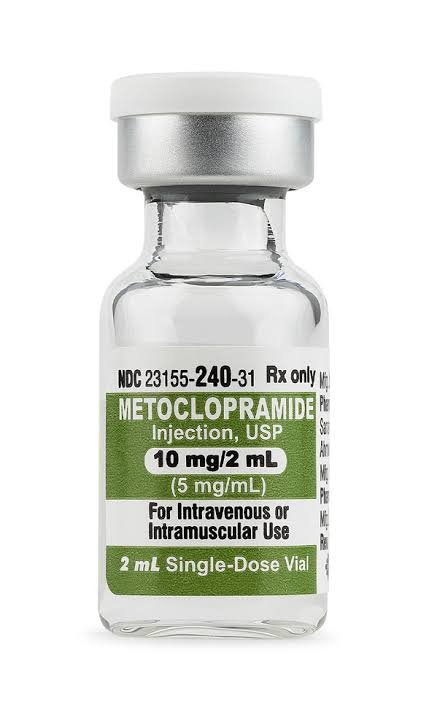
Her medical history provided the critical clue. She had been prescribed metoclopramide for vomiting and diarrhoea and had taken four 10 mg tablets over approximately two days. Her symptoms began abruptly after the fourth tablet, approximately 30 minutes before arriving at the emergency department. Metoclopramide blocks dopamine D2 receptors and is a recognised cause of acute extrapyramidal reactions, including dystonia and oculogyric crisis. The emergency clinicians identified the presentation as a metoclopramide-induced acute dystonic reaction and administered 5 mg of intravenous biperiden. The symptoms resolved completely following treatment, and she was discharged without complaints.
The distinction matters. This was not a patient whose symptoms remained unexplained after investigation, nor a case in which a functional diagnosis was subsequently confirmed. The ambulance crew had initially considered conversion disorder or seizure, but the emergency department identified a specific medication-related cause and treated it successfully. The authors explicitly warned that such diagnostic errors can interfere with appropriate management, waste resources and delay treatment.
An Interesting Detail: The Patient Could Temporarily Control Some Movements
One particularly interesting observation concerns the patient's eye and neck movements. Although both eyes repeatedly deviated upward and inward, she could follow objects when instructed. Similarly, she could temporarily correct her abnormal neck positioning in response to verbal commands, although the deviation returned without those instructions. These observations occurred in a patient whose presentation was ultimately attributed to an acute pharmacological reaction rather than conversion disorder.
This detail is relevant to the Common Phenotypes Hypothesis, which questions whether clinical features treated as diagnostically meaningful in functional presentations may also occur in conditions with different underlying causes. The patient's ability to temporarily modify abnormal movements does not establish that she exhibited a validated positive sign of FND. However, it demonstrates why voluntary modulation, considered in isolation, cannot be treated as proof that an abnormal movement is functional. The relevant question is whether a particular sign has been adequately validated to distinguish the competing conditions, rather than whether it appears compatible with a preferred diagnosis.
Conversion Disorder Is Still Here in 2026
There is an obvious objection that may be raised when discussing this case: the ambulance crew used the term conversion disorder, not FND. That distinction does not make the case irrelevant to modern FND. Conversion disorder is not an unrelated historical diagnosis that disappeared when functional neurological terminology became more widely adopted. It remains explicitly recognised in the current diagnostic framework. In fact, the American Psychiatric Association's own DSM-5-TR explanatory document identifies the contemporary designation as Functional Neurological Symptom Disorder (Conversion Disorder).
The American Psychiatric Association explains that DSM-5 placed Functional Neurological Symptom Disorder in parentheses after Conversion Disorder, whereas DSM-5-TR reversed that order. The change reflected the growing preference for functional neurological terminology and concerns about the implications of the word conversion. Crucially, however, the older designation was retained. Conversion disorder was not abolished, and its relationship with FND is not merely a matter of historical interest. It remains part of the official terminology in 2026.
The diagnostic criteria have also evolved, including greater emphasis on clinical examination findings and the removal of any requirement to identify a psychological stressor. Those changes should be acknowledged, but they should not be confused with evidence that diagnostic errors associated with the earlier framework have been eliminated. Changing the terminology, revising the criteria and presenting the diagnosis as more neurologically grounded do not automatically establish that its diagnostic boundaries are sufficiently reliable or that its historical failures have been resolved.
The Drug-Induced Presentation Problem
This case also raises a broader issue concerning medication-associated neurological presentations. Drugs can directly produce abnormal movements, altered behaviour, muscle contractions and other neurological manifestations that may resemble presentations attributed to FND. A medication exposure may also be proposed as a trigger for a functional presentation, but these are fundamentally different explanations. In the first, the medication directly produces the neurological disturbance through a pharmacological mechanism. In the second, the medication is considered a precipitating event for a separately classified functional condition. Establishing the second explanation requires more than identifying an unusual symptom pattern after drug exposure.
The metoclopramide case demonstrates the importance of this distinction. The temporal relationship with medication exposure, the recognised clinical features of acute dystonia and the complete response to biperiden supported a drug-induced diagnosis. Had the initial conversion disorder interpretation been accepted without adequate assessment of the medication history, the patient could have been denied the treatment that resolved her symptoms. The report does not establish how frequently such mistakes occur in contemporary FND practice, but it provides a concrete example of the clinical consequences of misattributing a pharmacologically induced presentation.
What Has Actually Changed?
The question is not whether the terminology or diagnostic criteria have changed. They have. The question is whether those changes have demonstrably addressed the diagnostic failures that made cases like this possible. A modern diagnosis cannot be assumed to have escaped the limitations of its predecessor merely because its terminology has become more acceptable or its criteria have been revised. That requires evidence concerning diagnostic accuracy, the specificity of clinical signs, the assessment of competing explanations and the consequences of incorrect classification.
Conversion disorder remains explicitly connected to FND in the DSM-5-TR. Its history therefore cannot simply be separated from the modern diagnosis whenever that history becomes inconvenient. At the same time, this case should not be misrepresented as a formal modern FND diagnosis made by a neurologist. It was an initial prehospital interpretation that emergency clinicians corrected. That distinction makes the evidence more precise, not less relevant.
Ultimately, the 2017 report documents something straightforward: a young woman experienced a severe, medication-induced neurological reaction that was initially mistaken for conversion disorder or seizure, and appropriate recognition of the drug reaction led to complete symptom resolution. The broader lesson is equally straightforward. Diagnostic frameworks should be judged by their demonstrated ability to distinguish competing causes, not by their preferred terminology. Conversion disorder is still present within FND's official classification in 2026, and renaming a diagnosis does not, by itself, resolve the problems associated with its use.
References
- Akbuğa Özel B, Aksel G, Kılıçlı E, et al. (2017). Metoclopramide-induced acute dystonic reaction misinterpreted as conversion disorder and seizure. European Journal of General Medicine, 14(4), 122–124.
- American Psychiatric Association (2022). Functional Neurological Symptom Disorder (Conversion Disorder): DSM-5-TR Changes.
- American Psychiatric Association (2013). Highlights of Changes from DSM-IV-TR to DSM-5.
This post explores a hypothesis. It should not be read as an established fact or settled scientific conclusion.