One of the arguments we encounter when discussing antidepressant-induced neurological disturbances is that hysteria, conversion disorder and what we now call Functional Neurological Disorder (FND) existed long before selective serotonin reuptake inhibitors (SSRIs) and earlier generations of antidepressants were introduced. While historically correct, this argument overlooks a potentially important scientific question. Could the neurological adverse effects of these medications provide tangible biological clues to abnormalities that also occur naturally?
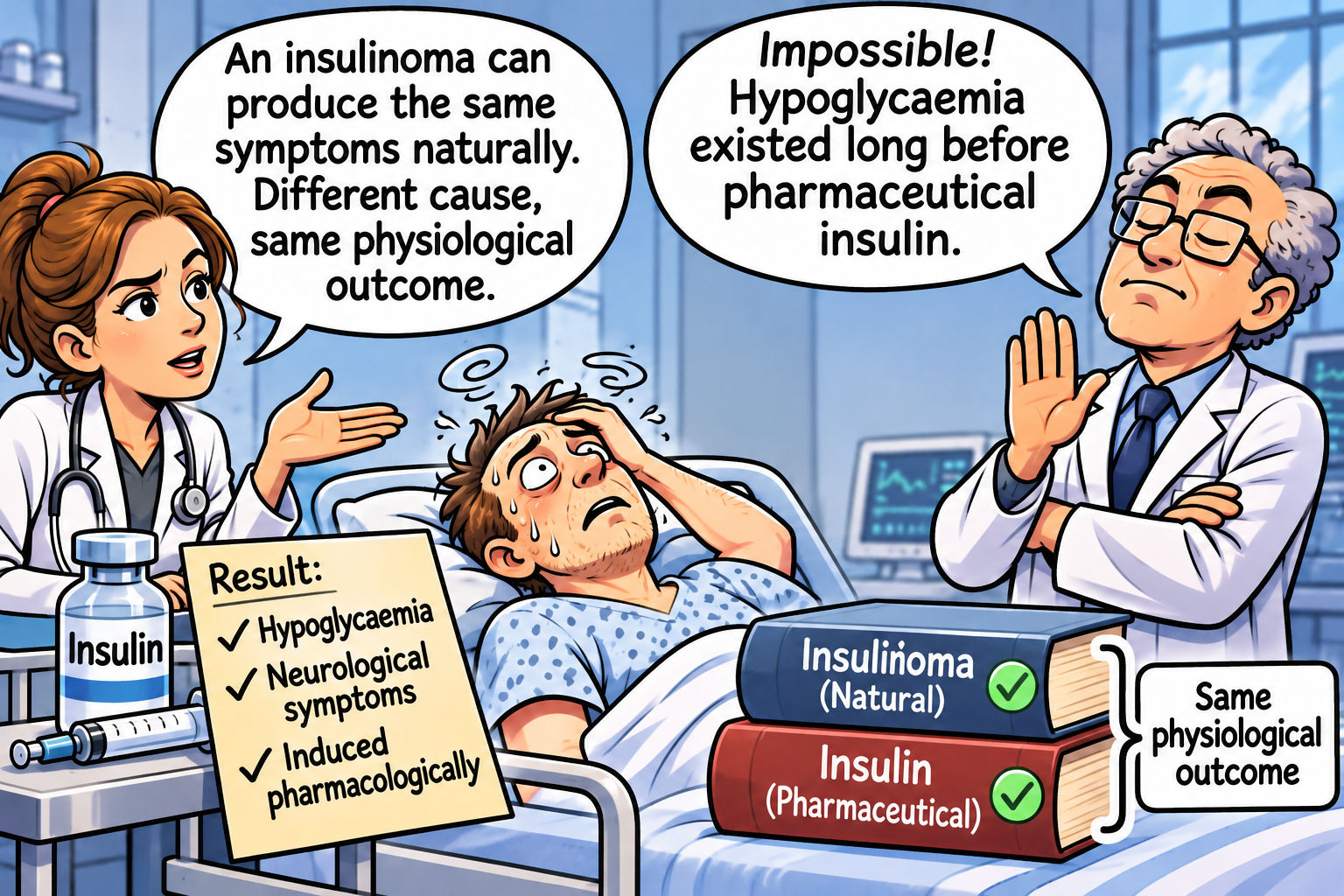
A familiar medical example is hypoglycaemia. Administering insulin can artificially induce hypoglycaemia, but excessive endogenous insulin production, such as that associated with an insulinoma, can produce the same physiological disturbance without pharmaceutical intervention. The initiating causes are different, yet both converge upon a comparable biochemical and clinical outcome. Could a similar principle apply to neurological disturbances associated with serotonergic regulation?
If We Applied FND's Pharmaceutical Withdrawal Logic to Hypoglycaemia
The premise of what we propose calling the Serotonergic Dysfunction Hypothesis is relatively straightforward: artificially altering the body's chemistry through pharmaceutical intervention may, in some circumstances, reproduce the physiological consequences of biochemical abnormalities that occur naturally. In this context, we are referring to medications such as SSRIs, older tricyclic antidepressants (TCAs), monoamine oxidase inhibitors (MAOIs) and other substances that modify serotonergic activity. These medications do not introduce serotonin into the body; they alter the regulation of an existing biological system. If artificially modifying this system can produce neurological disturbances resembling those attributed to FND, could naturally occurring abnormalities within the same system independently produce comparable presentations?
Serotonin, also known as 5-hydroxytryptamine (5-HT), is a naturally occurring biological signalling molecule synthesised by the body from the amino acid tryptophan. Although frequently associated with mood and depression, serotonin plays an important role in motor control, muscle tone, gastrointestinal motility, sensory processing, pain perception, sleep and autonomic regulation. Approximately 90–95% of the body's serotonin is produced within the gastrointestinal tract, with serotonin also being synthesised by neurons within the brain and enteric nervous system. Its physiological significance extends considerably beyond its commonly perceived association with psychiatric conditions.
Hysteria predates antidepressants, but naturally occurring serotonergic dysfunction almost certainly predates hysteria. We are not proposing that antidepressants caused historical cases of hysteria, nor are we proposing that all patients diagnosed with FND share the same underlying abnormality. Instead, we are asking whether the neurological consequences of pharmaceutical intervention could provide tangible biological clues beyond historical assumptions and circular reasoning. Has anyone adequately investigated naturally occurring central or peripheral serotonergic dysfunction as a potential independent explanation for some of these neurological presentations?
Central and Peripheral Serotonin: Could We Be Looking in the Wrong Places?
Serotonin is frequently discussed in the context of brain function, yet the overwhelming majority of the body's serotonin is produced within the gastrointestinal tract, predominantly by specialised cells known as enterochromaffin cells. Two forms of the enzyme tryptophan hydroxylase are particularly relevant to its synthesis. TPH1 is predominantly responsible for serotonin synthesis in peripheral tissues, whereas TPH2 is responsible for serotonin synthesis in serotonergic neurons within the central and enteric nervous systems. This distinction becomes particularly interesting when examining the genetic research already conducted in patients diagnosed with FND.
Location
Primary synthesis enzyme
Relevant physiological functions
Brain and central nervous system
TPH2
Motor regulation, muscle tone, sensory processing, pain modulation, sleep and autonomic regulation
Intestinal enterochromaffin cells and other peripheral tissues
TPH1
Gastrointestinal motility, intestinal secretion, vascular regulation and immune signalling
Enteric serotonergic neurons
TPH2
Enteric neurotransmission and gastrointestinal regulation
Peripheral serotonin does not ordinarily cross the blood-brain barrier, meaning that central and peripheral serotonin constitute largely separate biological pools. This does not mean that the two systems are physiologically isolated. In their review, The Serotonin Signaling System: From Basic Understanding to Drug Development for Functional GI Disorders, Gershon and Tack discuss the involvement of intestinal serotonin in sensory pathways responsible for local gastrointestinal regulation and communication with the central nervous system. Gut-derived serotonin can therefore influence neural activity indirectly without serotonin itself having to enter the brain.
Could we consequently be looking in the wrong places when investigating some neurological presentations? The location where a disturbance manifests does not necessarily establish where the underlying biological abnormality originates. Investigations confined to brain activity could potentially overlook abnormalities involving peripheral serotonergic regulation, gastrointestinal signalling or communication between the central and enteric nervous systems. Conversely, abnormalities originating within the brain or spinal cord could independently produce neurological disturbances without peripheral serotonergic involvement. Both possibilities deserve consideration.
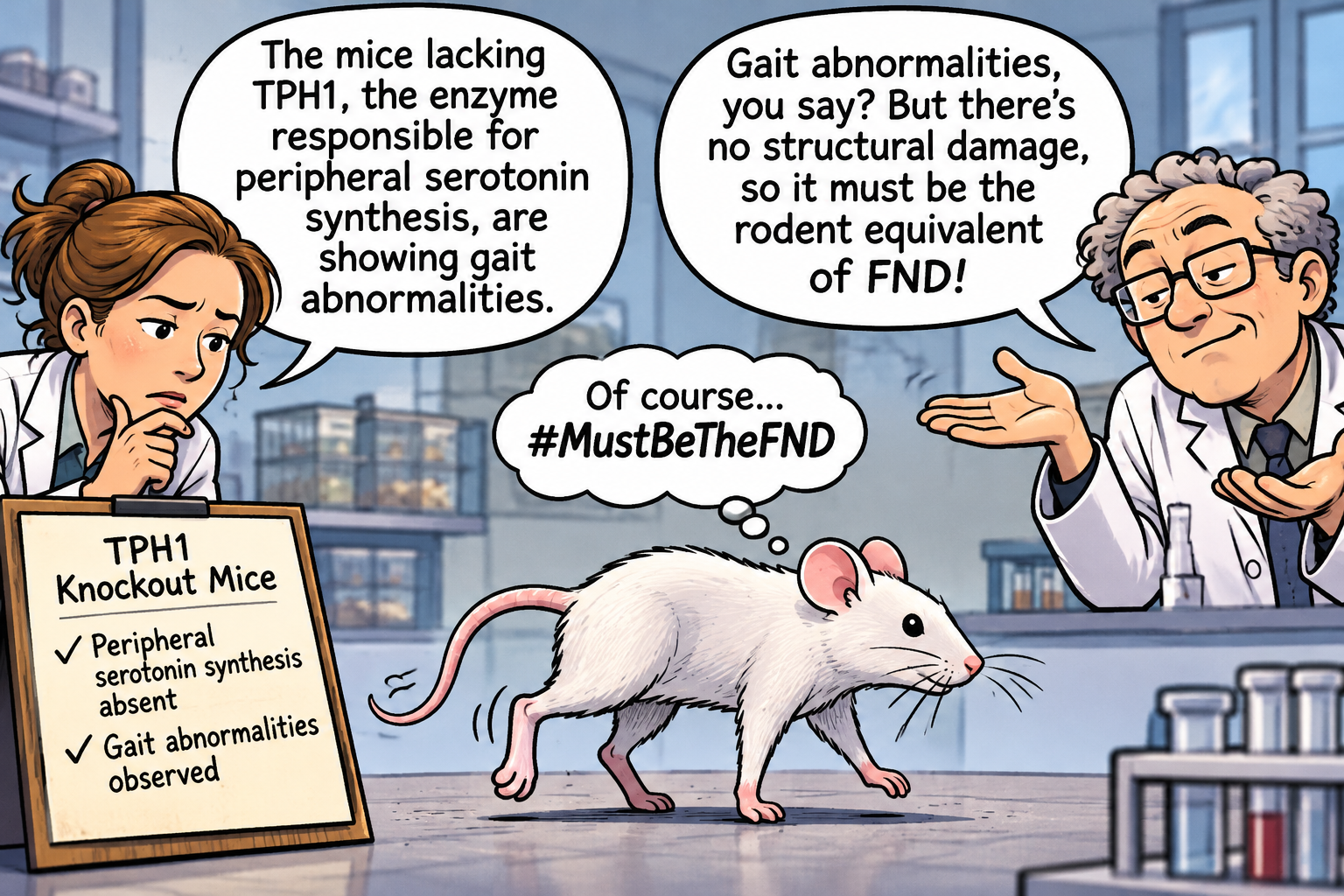
Experimental research has also investigated the consequences of disrupting serotonin synthesis outside the central nervous system. In the 2013 study Lack of Tryptophan Hydroxylase-1 in Mice Results in Gait Abnormalities, genetically TPH1-deficient mice exhibited abnormalities in gait. This is particularly relevant because TPH1 is predominantly associated with peripheral serotonin synthesis. However, the experiment involved a genetic deficiency rather than a selectively induced gastrointestinal abnormality in adulthood, and developmental effects are an important consideration. It does not establish that acquired gastrointestinal serotonergic dysfunction produces equivalent neurological abnormalities in adult humans, but it provides a rationale for investigating the relationship between peripheral serotonin synthesis and motor function.
#MustBeTheFND — The Serotonergic Dysfunction Hypothesis.
Central serotonergic dysfunction can also produce motor abnormalities. Serotonergic neurons within the brainstem project into the spinal cord, where they participate in regulating motor neuron excitability and muscle activity. In 2013, Dentel and colleagues published Degeneration of Serotonergic Neurons in Amyotrophic Lateral Sclerosis: A Link to Spasticity. Their investigation included post-mortem examinations of seven patients with amyotrophic lateral sclerosis (ALS) and six control subjects, alongside experiments using an animal model of ALS. They identified degeneration of serotonergic pathways in human tissue and investigated the contribution of altered serotonin signalling to spasticity in mice. Pharmacologically targeting particular serotonin receptors abolished spastic-like muscle contractions in their experimental model.
In 2017, El Oussini and colleagues investigated this mechanism further in Degeneration of Serotonin Neurons Triggers Spasticity in Amyotrophic Lateral Sclerosis. By selectively removing expression of an ALS-associated mutation from brainstem serotonergic neurons in genetically modified mice, the researchers preserved much of the serotonergic innervation of spinal motor neurons and prevented spasticity. Interestingly, preventing spasticity also worsened other aspects of motor function and accelerated paralysis in the animals. The experiment established a causal contribution of serotonergic neuron degeneration to spasticity within that particular disease model, while illustrating the complexity of its physiological consequences.
These findings illustrate why serotonergic dysfunction cannot simply be reduced to having too much or too little serotonin. Its physiological effects depend on where it is produced, how it is transported, which receptors are activated, the integrity of the neurons involved and the compensatory responses of the nervous system. Reduced serotonergic input may, for example, result in compensatory changes in receptor activity that increase motor neuron excitability. An abnormality affecting serotonin synthesis may therefore have very different consequences from one affecting its receptors or transport mechanisms.
Of particular interest is the coexistence of gastrointestinal, autonomic and neurological disturbances in some patients diagnosed with FND. Given the involvement of serotonin across these physiological systems, could some patients be experiencing manifestations of a shared biological abnormality rather than several independently occurring functional disorders? Their coexistence does not establish a serotonergic cause, but it provides a rationale for investigating central serotonin regulation, peripheral serotonin regulation and communication between these systems. The fact that a disturbance manifests through the nervous system does not necessarily mean that its underlying cause originated exclusively within the brain.
What Naturally Occurring Disorders and Modern Pharmacology Can Teach Us
Researchers investigating dystonia have already recognised the potential relationship between neurological disturbances arising naturally and those associated with pharmaceutical interference in serotonergic regulation. In their 2016 systematic review, Serotonergic Perturbations in Dystonia Disorders, Smit and colleagues examined human and animal research concerning the role of serotonin in dystonia. They identified research associating dystonia with reduced concentrations of 5-hydroxyindoleacetic acid (5-HIAA), the principal metabolite of serotonin, alongside 89 cases across 49 publications describing dystonia in association with substances affecting serotonergic signalling. The researchers recommended further investigation using selective serotonergic substances in appropriate experimental models.
The relevance of this review extends beyond its individual findings. Researchers investigating an established neurological presentation considered naturally occurring biochemical abnormalities alongside pharmacologically induced neurological disturbances, recognising that both could provide information about the biological mechanisms involved. The historical existence of dystonia did not invalidate the relevance of neurological disturbances associated with modern medications. Why should a fundamentally different scientific approach be adopted when investigating dystonia that has been classified as functional?
An established example of an inherited disorder involving abnormal neurotransmitter synthesis is sepiapterin reductase deficiency (SRD). This metabolic disorder affects the availability of tetrahydrobiopterin, a cofactor necessary for the synthesis of serotonin and dopamine. Its clinical manifestations can include dystonia, tremor, bradykinesia, rigidity, abnormal muscle tone, exaggerated reflexes, autonomic disturbances and considerable fluctuations in neurological function throughout the day. Some affected individuals present predominantly with movement disturbances rather than extensive developmental impairment.
Because SRD affects both dopamine and serotonin synthesis, its neurological manifestations cannot be attributed exclusively to serotonergic dysfunction. The responsiveness of its motor manifestations to levodopa demonstrates the importance of dopaminergic involvement. Nevertheless, it establishes that naturally occurring biochemical abnormalities involving neurotransmitter synthesis can produce complex and fluctuating neurological presentations. We are not proposing that this particular rare disorder necessarily accounts for a substantial proportion of patients diagnosed with FND. Rather, established neurotransmitter disorders demonstrate why endogenous abnormalities involving these biological systems deserve investigation as potential explanations for neurological presentations whose underlying mechanisms remain uncertain.
Pharmaceutical intervention provides another investigative avenue. Although SSRIs are frequently discussed in relation to serotonergic disturbances, they were not the first medications to modify this biological system. Earlier generations of antidepressants, including tricyclic antidepressants and monoamine oxidase inhibitors, also alter neurotransmitter regulation. Their mechanisms differ, and their effects are not necessarily confined to serotonin.
Medication class
Examples
Relevant biochemical action
Selective serotonin reuptake inhibitors (SSRIs)
Fluoxetine, sertraline, paroxetine
Inhibit the serotonin transporter, altering serotonin availability and signalling.
Tricyclic antidepressants (TCAs)
Clomipramine, amitriptyline, imipramine
Inhibit serotonin and noradrenaline reuptake to varying degrees, alongside other receptor-level effects.
Monoamine oxidase inhibitors (MAOIs)
Phenelzine, tranylcypromine
Inhibit the enzymatic breakdown of monoamine neurotransmitters, including serotonin.
These medications artificially modify existing biological processes. Reuptake, metabolism and receptor signalling are all naturally occurring physiological mechanisms, and abnormalities affecting these mechanisms need not originate from pharmaceutical intervention. A genetic abnormality affecting the expression or function of a neurotransmitter transporter, for example, could potentially alter aspects of neurotransmission that are also modified pharmacologically. Whether a particular endogenous abnormality reproduces the biochemical effects of a particular medication would require experimental confirmation, but the possibility provides a direction for scientific investigation.
Several of these manifestations have counterparts commonly encountered in patients diagnosed with FND. However, spontaneous pharmacovigilance reports cannot establish incidence rates, prove causation in individual patients or isolate serotonin from other pharmacological mechanisms. We have previously examined related medication-associated disturbances in When Antidepressants Cause Visual Disturbances: The Medication Differential FND Cannot Afford to Ignore. Our question here extends beyond medication-induced neurological disturbances and potential misdiagnosis.
Under the Serotonergic Dysfunction Hypothesis, neurological disturbances associated with SSRIs, older antidepressants and other serotonergic medications represent potential biological clues. If artificially altering the body's chemistry produces a particular neurological manifestation, we should investigate whether naturally occurring abnormalities affecting the same biochemical pathways can produce comparable consequences. Similar clinical manifestations do not establish identical mechanisms, but they provide a reason to investigate whether those mechanisms converge. A patient would not need to have taken an antidepressant at any point in their life for this hypothesis to be applicable.
What Has Already Been Discovered in FND Patients?
Serotonergic genetics has already attracted interest from researchers investigating FND. In 2020, Spagnolo and colleagues published Effects of TPH2 Gene Variation and Childhood Trauma on the Clinical and Circuit-Level Phenotype of Functional Movement Disorders. The researchers examined 18 single-nucleotide polymorphisms across 14 candidate genes in 69 patients diagnosed with functional movement disorders. A subgroup of 38 patients was also compared with 38 matched healthy controls using resting-state functional neuroimaging.
Among the genetic variants investigated, the researchers identified an association involving the TPH2 G703T polymorphism (rs4570625). Patients carrying the T allele experienced an average age of onset of 33.4 years, compared with 41.4 years among GG homozygotes. Differences in connectivity between the amygdala and frontal regions of the brain were also identified. Although the genetic variant alone was not a significant predictor of symptom severity, an interaction between the variant and reported childhood trauma was associated with greater symptom severity.
The researchers interpreted their findings within a framework involving genetic influences on stress responses and the modulation of functional motor manifestations. However, the involvement of a gene directly implicated in serotonin synthesis raises an additional biological question. Could genetic variation affecting serotonergic regulation contribute to the neurological manifestations themselves, rather than merely influencing susceptibility to a presumed functional mechanism? These are two different interpretations of the potential significance of the findings, and distinguishing between them requires further investigation.
In 2024, Weber and colleagues published The Impact of Genetic Variations in the Serotonergic System on Symptom Severity and Clinical Outcome in Functional Neurological Disorders. Their study examined ten genetic polymorphisms across seven genes in 85 patients with mixed FND presentations, with 52 patients participating in a subsequent clinical assessment approximately eight months later. The researchers reported nominal associations between a TPH1 variant and clinical characteristics, alongside exploratory findings involving interactions between several genes.
Genetic finding
Reported clinical association
TPH1 (rs1800532)
Nominal association with initial symptom severity (p = 0.035).
TPH1 (rs1800532)
Nominal association with clinical outcome (p = 0.041).
TPH2 and OXTR interaction
Potential association with symptom severity.
TPH1, TPH2 and BDNF interaction
Potential association with clinical outcome.
What makes this research particularly interesting from the perspective of the Serotonergic Dysfunction Hypothesis is that it encompasses genes involved in both peripheral and neuronal serotonin synthesis. Experimental disruption of TPH1 has been associated with measurable gait abnormalities in animals, while TPH2 is involved in serotonergic pathways responsible for numerous neurological functions. Complete experimental elimination of TPH1 in mice cannot be equated with naturally occurring genetic variation in humans, and common genetic polymorphisms do not necessarily constitute pathological mutations. Nevertheless, these investigations identify specific biological pathways that warrant further research.
The 2013 TPH1 gait experiment, in particular, raises an interesting question when considered alongside the 2024 genetic findings. If an enzyme principally associated with peripheral serotonin synthesis can influence motor function in an experimental model, should the investigation of genetic variations involving that enzyme in patients diagnosed with FND extend beyond their potential contribution to stress-related mechanisms? Could peripheral serotonergic regulation, including gastrointestinal serotonin production, warrant direct physiological investigation in some of these patients? Neither study answers these questions, but their findings provide a reason to ask them.
Neither FND-specific genetic study establishes that serotonergic dysfunction independently caused the neurological presentations investigated. Nor does genetic variation alone demonstrate that the patients had abnormal serotonin production. The relatively small samples, exploratory analyses and nominal statistical associations warrant caution and independent replication. There is, however, a fundamental distinction between investigating serotonergic abnormalities as factors modifying a presumed functional disorder and investigating whether these abnormalities could independently account for the neurological presentation itself.
If the diagnostic classification is accepted as establishing the underlying mechanism in advance, new biological findings may automatically be interpreted as factors influencing that mechanism rather than being investigated as potentially independent explanations. A genetic or biochemical association cannot, by itself, distinguish between an independent cause, a contributing mechanism, a compensatory response or an incidental finding. Research must be designed to distinguish these possibilities rather than automatically accommodating new biological findings within an existing diagnostic framework.
In the pursuit of preserving an existing diagnostic framework, researchers may inadvertently overlook relatively obvious avenues of biological investigation. If every newly identified biological abnormality is interpreted through the lens of FND, rather than investigated as a potentially independent explanation, the framework risks becoming self-reinforcing. The neurological consequences of pharmaceutical manipulation of serotonergic pathways should not merely be regarded as a diagnostic inconvenience; they may provide valuable clues to naturally occurring biochemical abnormalities. Protecting a diagnostic framework should never take precedence over investigating the mechanisms responsible for a patient's neurological presentation.
The Serotonergic Dysfunction Hypothesis
Three distinct bodies of research provide the scientific rationale for this hypothesis. Clinical and experimental research demonstrates that disruptions involving serotonergic pathways can have neurological consequences. Pharmacological research identifies neurological disturbances associated with artificially modifying these pathways. Preliminary genetic research in patients diagnosed with FND has identified associations involving genes responsible for central and peripheral serotonin synthesis. Although none of these findings independently establishes the proposed mechanism, their convergence provides a basis for investigating it directly.
Formal statement of the Serotonergic Dysfunction Hypothesis
Naturally occurring abnormalities involving serotonin synthesis, metabolism, transport, receptor activity or communication between central and peripheral serotonergic systems may independently account for a subset of neurological presentations currently attributed to Functional Neurological Disorder.
Neurological disturbances associated with pharmaceutical manipulation of these biological processes, including those associated with SSRIs, tricyclic antidepressants, monoamine oxidase inhibitors and other serotonergic medications, may provide biological clues to comparable disturbances arising naturally, without prior pharmaceutical exposure.
The hypothesis is not a claim that FND is universally caused by a serotonin deficiency or excess. Serotonergic dysfunction encompasses a considerably broader range of potential abnormalities, including altered enzyme activity, receptor sensitivity, transporter function, neurotransmitter metabolism, neuronal degeneration and compensatory changes within interconnected biological systems. It also recognises that serotonin interacts extensively with other neurotransmitters, including dopamine, noradrenaline and glutamate. In some cases, the neurological consequences of serotonergic abnormalities may arise indirectly through these interactions.
What distinguishes this hypothesis from merely proposing a serotonergic contribution to FND symptom severity is that it questions whether endogenous serotonergic abnormalities could independently generate the neurological presentations and clinical signs currently interpreted as evidence of FND. Rather than assuming that serotonergic abnormalities necessarily modify an existing functional mechanism, it proposes that they could, in some circumstances, constitute an alternative explanation for the neurological presentation itself.
A meaningful investigation would require appropriate healthy and neurological disease controls, medication-naive patients where possible, validated biochemical and neurophysiological measurements, and blinded assessment of clinical signs. Researchers would need to examine abnormalities involving serotonin synthesis, metabolism, transport and receptor activity while accounting for interactions with other neurotransmitter systems. Peripheral serotonin concentrations should not be interpreted as direct measurements of central serotonergic activity, and both systems would require appropriate methods of investigation.
The Serotonergic Dysfunction Hypothesis generates several specific research questions and predictions:
Endogenous abnormalities: Do identifiable subgroups of patients diagnosed with FND exhibit reproducible abnormalities in central or peripheral serotonergic regulation that distinguish them from appropriate healthy and neurological disease controls?
Independent neurological manifestations: Can naturally occurring abnormalities involving serotonin synthesis, metabolism, transport or receptor activity independently generate neurological presentations resembling those attributed to FND?
Pharmacological convergence: Do neurological disturbances induced by SSRIs, tricyclic antidepressants, MAOIs or other serotonergic medications reproduce the physiological consequences of specific endogenous biochemical abnormalities?
Peripheral involvement: Could abnormalities involving gastrointestinal serotonin production or gut-brain communication contribute to neurological disturbances independently of abnormalities originating within the brain?
Multisystem manifestations: Could gastrointestinal, autonomic and neurological manifestations in some patients arise from a shared disturbance involving serotonergic regulation?
Positive diagnostic signs: Can established neurological disturbances involving serotonergic dysfunction reproduce the diagnostic signs attributed to FND, including distractibility, entrainment and internal inconsistency?
Causal intervention: Where specific pathological serotonergic abnormalities are identified, does appropriately targeted correction of those abnormalities improve the associated neurological manifestations?
Investigating positive diagnostic signs is particularly important because symptom overlap alone does not establish diagnostic equivalence. Demonstrating that serotonergic dysfunction can produce tremor, dystonia or gait abnormalities does not establish that these manifestations exhibit the characteristics currently used to diagnose their functional counterparts. Conversely, those characteristics cannot simply be presumed absent from serotonergic disorders without adequate comparative investigation. As discussed in Functional Dystonia: When a Twisted Limb Becomes Evidence of a Twisted Brain Map and When Attention Changes the Body: Why Distractibility Is Not an Explanation of Disease, describing how a neurological manifestation behaves under particular circumstances is not equivalent to establishing why it occurs.
Demonstrating that an endogenous serotonergic abnormality independently produces both the neurological manifestations and specific positive diagnostic signs attributed to FND would provide considerably stronger evidence for the proposed mechanism than genetic associations or symptom overlap alone. Demonstrating that appropriately targeted correction of the identified abnormality also improves neurological function would strengthen the causal argument further. Such interventions would require controlled clinical investigations rather than empirical attempts to increase or decrease serotonin in individual patients.
Equally important is the ability to falsify the hypothesis. Specific versions of the hypothesis would be weakened if adequately designed studies consistently failed to identify their predicted biochemical abnormalities, if experimentally established serotonergic disturbances failed to reproduce the relevant neurological signs, or if correcting the implicated abnormalities failed to alter the predicted manifestations. The hypothesis must generate measurable predictions about particular pathways and patient subgroups rather than simply attributing unexplained neurological disturbances to an equally unexplained serotonergic dysfunction.
The Serotonergic Dysfunction Hypothesis may ultimately prove incorrect, or it may account for only a small subset of patients. That is not a reason to dismiss it; it is a reason to test it. The purpose of scientific investigation should be to establish the underlying mechanisms responsible for neurological presentations, not merely to find ways of accommodating new biological findings within an existing diagnostic classification.
Historical physicians lacked the means to investigate neurotransmitter synthesis, genetic abnormalities, receptor signalling and communication between the gastrointestinal and central nervous systems. The similarity between historical descriptions of hysteria and modern neurological presentations does not establish that they share an identical underlying pathology. By artificially modifying the body's chemistry through SSRIs, older antidepressants and other medications, we may inadvertently reproduce some of the physiological consequences of abnormalities that also occur naturally. Rather than using the historical existence of hysteria to dismiss these biological clues, we should be using them to investigate what historical physicians could not.
Published research documents visual snow, palinopsia, night-vision difficulties and other visual disturbances associated with serotonin reuptake-inhibiting antidepressants, including reports of symptoms persisting after discontinuation. These findings raise important questions about medication histories, diagnostic confidence and the risk of attributing visual symptoms to Functional Neurological Disorder without adequately investigating alternative explanations.
A 2017 case report documents a young woman whose severe drug-induced dystonia was initially mistaken for conversion disorder or seizure. The case exposes the dangers of premature diagnostic attribution and raises an uncomfortable question for modern FND: how can conversion disorder's diagnostic failures be dismissed as historical when conversion disorder remains part of the official classification in 2026?
Comments
No comments yet.
This post explores a hypothesis. It should not be read as an established fact or settled scientific conclusion.
Leave a comment
Unrestricted
All comments are reviewed before being published. Most comments are approved unless they are clearly inappropriate or unsafe.






This post explores a hypothesis. It should not be read as an established fact or settled scientific conclusion.