Resume drafts Unsaved story and dashboard drafts
Comment drafts Unsaved comment drafts
Christoff Truter profile picture

Christoff Truter

Public profile
Spousal caregiver
37 posts 38 comments 2 discussions 04 Aug 2026
Software developer, amateur astronomer, reluctant backyard neurologist by necessity while helping my wife navigate a complex neurological illness, creator of FND Nope (fndnope.org) a resource challenging the Functional Neurological Disorder diagnosis, sharing patient stories, and advocating for better investigation of underlying causes, and professional Trekkie.
Posts
37
FND: Philosophy Masquerading as Diagnosis - Part 2
11 months ago

The first thing to note is that FND is a product of medical constructivism (in contrast to medical realism). So if we are to buy into this philosophy, what exactly does that mean?

Functional Fracture Disorder
11 months ago

Functional Fracture Disorder (FFD) is that mysterious middle ground between Orthopaedics and Psychiatry where mostly men show up limping and wincing, convinced their bones have shattered—yet no X-ray, scan, or magic spell can find a crack.

Kairos moment: Gastrointestinal system
11 months ago

A short summary about my wife's gastroenterological journey that possibly led to her current neurological distress.
A Tale of Four Neurologists
1 year ago

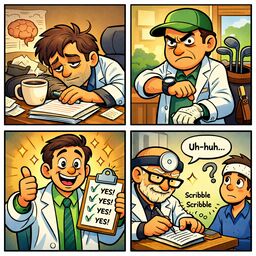
Over the years, navigating my wife's extremely complex medical journey, we have met a lot of doctors along the way: some great, some mediocre, and some negligent. Looking back retrospectively, there are a lot of things I wish we had done differently.
Differential Diagnosis: Endometriosis
1 year ago

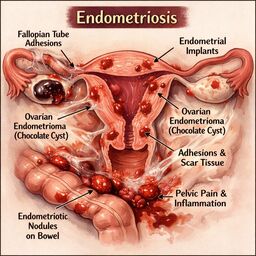
Ironically although doctors present the FND framework as a more evolved replacement for outdated concepts like hysteria, conditions such as endometriosis may still be wrongly attributed to FND, echoing the same historical misattributions that labelled unexplained female symptoms as psychological rather than physiological.
Differential Diagnosis: Wilson Disease
1 year ago

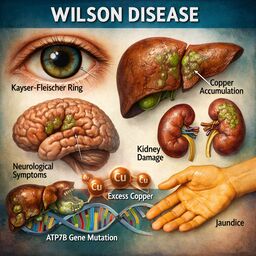
Around 1912, British neurologist Samuel Wilson described a condition he termed progressive lenticular degeneration, linking liver disease with neurological symptoms; this would later come to be known as Wilson disease.

FND: Philosophy Masquerading as Diagnosis - Part 1
1 year ago

FND is a matter of philosophy, not fact. It is a disorder that was conceptually defined into existence, unlike diseases discovered through measurable physiology. The very idea that the expression of a symptom that cannot be explained somehow correlates to a "brain software" problem is speculative and should be treated as such.
Kairos moment: Vestibular system
1 year ago

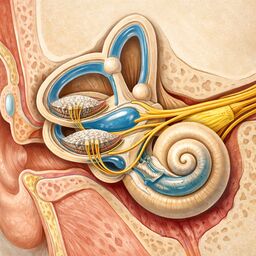
When observing my wife’s medical condition retrospectively, I try to identify what my late father used to call Kairos moments. In other words, identifying the tipping points, the moments in time that brought us to where we are now.

Anecdotes, Bias, and the Bigger Picture
1 year ago

One of the most common and valid criticisms of a website like this is that it heavily relies on anecdotal evidence, meaning personal and subjective lived experiences. That is fair. This is, after all, a reflective journey centred around my wife’s health struggles.

Differential Diagnosis: Charcot-Marie-Tooth (CMT)
1 year ago

Charcot-Marie-Tooth (CMT) is a hereditary (genetic) disorder, not dental related as the name might suggest, that impacts the peripheral nerves, that is motor (movement) and sensory (sensation) nerves in the arms, legs, hands, and feet.

Comments
38
With all due respect, I believe you may be misreading the case details or missing the nuance. The article never described initial weakness in the affected leg. It emphasised the opposite: preserved initial strength with clear fatigability under sustained or higher demand efforts. Hoover’s sign is a low demand test that only compares brief voluntary versus automatic activation. It is not designed to detect, nor can it rule out, a reproducible side specific fatigable deficit that emerges with repeated or high intensity loading. This is precisely what the isokinetic data demonstrated in this case. This pattern contrasts with the highly variable and inconsistent weakness described in the 1985 Knutsson and Martensson study on hysterical paresis. Dismissing objective quantitative measurements in favour of a single bedside sign, is exactly how misclassification occurs. When better data is available, it should take precedence over a tool that is simply not suited to evaluate endurance related or velocity dependent deficits.

Do you have any self-awareness at all? I've consistently been open to dialogue, but that's not what I'm receiving from you. From the outset, you engaged in personal attacks, demonstrated no willingness to listen, and consistently overstated your points while making fundamental errors (see). I believe you are misrepresenting yourself as a neurologist. If this is considered acceptable practice in neurology, it only underscores that the evidence is not being properly examined. I am well aware of what CIS "presenting" as MS is, will probably not help to mention that it can take decades (as per the literature) for lesions to present, since I am apparently not qualified to read nor quote research papers. The reasons we reject the FND diagnosis is simply because positive rule in signs were never found, the clinician literally based his evidence on a MRI, our current neurologist is leaning towards MS due to optic neuritis being present. I would welcome corrections from qualified neurologists, but I dont feel being bullied is fair here.

Thank you for your feedback. May I ask about your background? From what neurosurgeons have explained to me, dynamic spinal compression, for example lumbar spinal stenosis, can cause nerve signals to vary depending on posture or strain. As a result, a person may struggle to push a leg down voluntarily, but when the opposite leg is lifted, the nervous system automatically generates extension, and some force appears. This difference can resemble a positive Hoover’s sign, even when a structural problem exists. Of course, Hoover’s sign is normally interpreted within the broader clinical context rather than in isolation. The key point is that apparent inconsistencies in motor output do not automatically exclude structural causes. Regarding my wife’s facial asymmetry, this is not a theory. It was verified by a neurosurgeon through examination of her biokinetics. The facial nerve branches, particularly the marginal mandibular branch, control muscles that pull the jaw and lower lip downward, and this movement can be easily demonstrated and reproduced on demand. Therefore, your assessment here is a serious overreach, since you lack the context of our situation. As for labelling me as narcissistic, you have completely missed the point of this post. As stated in other communications, I am under no delusion about who or what I am. I have never claimed to know more about medicine than any doctor. I am simply offering my perspective. Regardless of whether you, or anyone sceptical, respect me, it is important to keep dialogue open and have meaningful discussions rather than whatever this approach is that you are attempting here.

Thank you for the feedback. I will update that part of the post to include sources when I get a chance and will ping you once I’ve done so. Even in its modern context, hysteria>CD>FND is still sometimes confused with these illnesses. It is understandable, though. When it comes to the CNS, disorders tend to present in very similar ways. FND is merely a presentation; even the patron saint of FND (J. Stone) refers to things that trigger “FND.”

At no point have I misrepresented myself on this website. I have clearly stated who I am and my limitations. I am not diagnosing anyone in this post or in any other post on this website, because, as I have been transparent about, I am not qualified to do so. I share opinions mostly supported by sources and firsthand accounts to foster discussion, not to provide medical conclusions. In contrast, you remain completely anonymous. I have no insight into who you are, your expertise, or what motivates your stance, for all I know you're a "vibe clinician". The purpose of this website is to keep diagnostic doors open and explore alternatives, always in consultation with qualified clinicians. Surely you would agree that prematurely closing the door on a diagnosis carries clear risks. I am genuinely concerned if anyone, even trained clinicians, fails to recognise just how serious those risks can be. If you believe that only neurologists are allowed to have opinions, and that being sceptical is offensive, then your approach comes from a position of faith rather than science. Again, you are overreaching. You have no proper basis to draw this conclusion. Providing a detailed history is valuable, but this is likely not a complete medical history (you are basing your bigger picture on incomplete data, e.g. family history, what happened prior to 2025?), and history alone cannot definitively confirm or exclude an organic diagnosis. Proper examination, testing, and imaging are required. Sharing opinions or exploring possibilities is not the same as diagnosing. Hemisensory syndromes are well-recognised and not rare. A normal MRI does not rule out an organic cause, as small, early, or subtle lesions can be missed. Complete hemibody symptoms can still occur in conditions such as stroke or demyelination. The student never claimed the medication "cured" the lesion-only that it reduced hypertonia.
I took the course, everything went away, everything stabilized as before. But not for long.
Muscle relaxants symptomatically reduce tone and spasticity in organic conditions such as MS, stroke, or spinal cord injury without healing the underlying lesion. Temporary improvement does not rule out an organic cause. Rapid or fluctuating tone changes can occur in organic neurological conditions, including evolving demyelinating or inflammatory disorders. Hypotonia and hypertonia can appear sequentially depending on lesion location, inflammation, or CNS modulation. Symptoms evolving over weeks, including speech or gait changes, do not automatically indicate a functional disorder. Being a non-clinician does not make my points factually incorrect. I have cited evidence and recognized sources to challenge specific overstatements and misconceptions. Highlighting errors or discussing possibilities is not the same as diagnosing, and questioning absolute claims does not require being a clinician. In short, dismissing complex neurological presentations as "functional" without evidence is exactly what this website warns against. Keeping an open, evidence-based approach is critical. Questioning assumptions and considering alternatives saves lives and prevents misdiagnosis. You seem more interested in defending the FND label than in evidence, dismissing scepticism and relying on authority and insults.

Hi Anonymous Thank you for your feedback. Although it is quite negative (and, to be blunt, somewhat insulting), it does give the reader valuable insight into the attitude that those who are skeptical of a diagnosis like this often seem to "enjoy." This email was sent to me on 21 January 2026. I shared his story in good faith, kept his name anonymous, and have no reason to believe any of his statements are fabricated. You will note that his medical story does not conclude with any concrete diagnosis or resolution. He is simply not convinced by the diagnosis he received, which is the best approach in the interest of his health, and he shares his own speculation and hypotheses. There is no need for ad hominem attacks of this kind. At no point does the author claim expert knowledge; he clearly states that he is a student. I have no idea who you are. Are you involved in pro-FND advocacy? I have to assume you are. Are you a medical professional? I hope not, because it will become clear that you are projecting. You accuse the author of this email of things you are clearly guilty of yourself. This is overreaching. You do not have access to his blood tests, his MRIs, nor have you physically examined him. You have no concrete evidence to make any assumptions about his condition. This is false, this is literally called "hemibody/hemisensory numbness" (Hemibody refers to one half of the body), you can read more about it over here | and here The author never stated that muscle relaxants heal organic lesions, that is a strawman. Furthermore, muscle relaxants do improve hypertonia and spasticity in organic conditions, such as MS, stroke, or spinal cord injury, without "healing" the lesion. They work by reducing excessive tone, spasms, and stiffness through central and peripheral mechanisms. Read more about it over here And Tone CAN switch/fluctuate between hypertonia and hypotonia in organic diseases: e.g., early spinal shock (hypotonia) evolves to spasticity (hypertonia); mixed/fluctuating tone occurs in cerebral palsy, some neurodegenerative cases, or evolving lesions. Read more about it over here: Here | And here The claim is false as well. Organic neurological conditions do cause symptoms to evolve, spread, and change drastically over time, including from speech issues to gait problems. Here | Here | and here I believe I have clearly demonstrated that it is you who is lacking clinical knowledge.

That is true, unfortunately if you’re battling debilitating symptoms and don’t have someone fighting in your corner, you’re forced to navigate a complex, dismissive system while already impaired. When your cognition, balance, or energy are compromised, you can’t advocate effectively, and that’s when you become a lamb to the slaughter.

Thank you for this, I will definitely have a closer look at your notes. My current working hypothesis is around Dynamic spinal compression. We're in the process of talking to a doctor that has the facilities to perform a dynamic MRI. Her symptoms tend to get worse as the day progresses, and some of her symptoms manifest when certain mechanical actions are performed, e.g. turning her neck in a certain way causes her face to distort, so definitely some biokinetic/mechanical going on as well. In addition we are also looking into Myasthenia Gravis as a possibility, e.g. her rehab over the last few years actually made her sicker, that is why we are considering that as an option as well. Not completely ruling out MS, but like you said, there is no lesions after 2 years of imaging, would be interesting if we could somehow investigate the myelin or like in CMT disease other parts of the cells that can present like myelin damage. But yes, all of this said, clinically isolated MS generally takes 2-5 years to show lesions, some 5-10 years (less common), even cases of up to 20+ years, so we're keeping it in the back of our heads for now (so to speak 😄), dynamic spinal compression and MG is still the current focus though, sigh.... As for her mental health, that is a challenge, I must admit, she is a very strong woman, but things are getting to her, so we are trying to set goals, live our life, but yes tough!

Replied to Using medication as a diagnostic tool · 24 Jan 2026
Lyme disease and Bartonella are both valid differential diagnoses for FND. We have pursued both in the past and completed a number of workups. I found it rather odd that our neurologists did not even consider Bartonella, especially given that we mentioned we have eleven cats, which is clearly relevant in that context. We involved other specialties to carry out those investigations, and everything came back clean. That said, thank you for mentioning this to everyone. It is definitely something worthwhile and important to check for.

Hysteria is something they understandably want to distance themselves from. However, as with hysteria, its modern FND label is still used in much the same way, and even conditions that were previously bagged and tagged under that label continue to persist to this day. The reality is that diagnosis is not always as easy or clear cut as clinicians would like it to be. That is why I consistently advocate for honesty. There is nothing wrong with acknowledging an agnostic position in medicine. It should be encouraged. I would rather call a shovel a shovel than have everyone walking around calling it a spoon. I am not sure when honesty about ignorance became a sin.

Discussions started
2

You can literally go onto https://fndconnect.org.uk/shop/product/fnd-connect-i-have-seizures-lanyard-and-card

And for £ 4.99 you can buy yourself a lanyard to inform bystanders to effectively discourage appropriate emergency care.

Someone may assume every episode is "just another functional seizure." But seizures can change, suffer a head injury, have a stroke,

low blood sugar, cardiac syncope, or another medical emergency.


Started Red flags on 22 Jun 2026
3 replies

Looking back, was there a symptom(s) that should have prompted doctors to investigate further before diagnosis FND?