
Christoff Trüter
Trophies


Posts
13
When Nursing Education Reinforces a Diagnosis
Does this nursing guide teach observation, or does it teach reinforcement of a diagnosis? A critical examination of how skepticism, alternative diagnoses, and diagnostic uncertainty are presented to nursing staff.
The Common Phenotypes Hypothesis
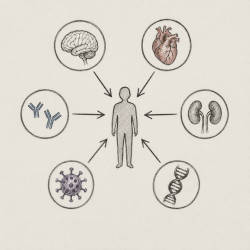
An exploration of FND, positive rule-in signs, comorbidity, predictive processing, diagnostic closure, and whether functional symptoms may reflect common phenotypes arising from multiple underlying conditions.
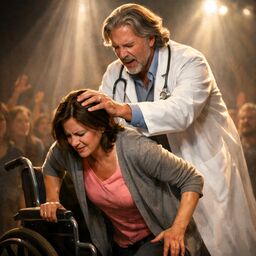
The Belief Prerequisite: How FND Treatment Echoes Faith Healing
One of the most striking things you notice when you first start reading the literature on FND is how crucial it is considered for patients to accept and believe in the diagnosis. Without that belief, treatment is often regarded as futile. They simply will not get better.

When Diagnosis Becomes Doctrine: Questioning FND and Clinical Authority
When I started this website in July 2025, I received a lot of pushback from FND proponents. Some felt that the website was highly offensive and disrespectful, and urged me to please take the website down, which I obviously did not do.
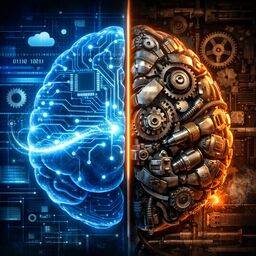
FND's Flawed Analogy: When 'Software' Problems can Hide Undetected Hardware Damage
One of the most common analogies that you would come across within FND literature is the software/hardware analogy.

If FND Scepticism Feels Like a Personal Attack, It Might Be Time for Introspection
FND patient communities provide support but risk echo chambers: illness becomes identity, criticism feels like attack, closing doors to misdiagnosis & recovery—modern hysteria protected by groupthink.

Why Calling It FND Can Be Misleading and Potentially Dangerous
As you might have noticed by now, I am not particularly convinced of the legitimacy of FND as a standalone diagnosis. I believe it is more likely a CNS knee-jerk reaction or referral to underlying causes, rather than a primary cause in itself. In other words, it may be something commonly observed as a consequence of an underlying illness (as pain is to fractures), not something that should automatically be treated or diagnosed as the illness itself, as is increasingly common practice these days.

Closing diagnostic doors : The Problem of Psychologisation
The idea that physical health problems could be caused by psychological factors, that is mind, emotion, or behaviour, rather than by physical pathology, is hardly new. Its roots trace back to ancient civilisations, from Egypt, 1900 to 1500 BCE, to classical Greece, 5th to 4th century BCE, where hysteria-like symptoms were first described. These early ideas strongly influenced the development of medical psychologisation, later formalised in the DSM.

Hysteria, a rose by any other name
The act of relabelling is ancient, but it surged in the 20th century as an euphemistic attempt to appear more humane and sensitive, aiming to destigmatize the meanings certain labels carry.

What Would Convince You to Accept FND?
A critical take on FND, emphasising the need for objective, falsifiable evidence and warning against dismissing measurable medical conditions.
Comments
48Discussions started
3Initial interview with Christine Aumann, Maddie Aumann’s mother, on REAL TALK 93.3FM, discussing Maddie’s Functional Neurological Disorder (FND) diagnosis, her subsequent medical journey, and the impact the FND diagnosis had on her care.
From https://www.facebook.com/RealTalk933fm/videos/1095299976492411/
You can literally go onto https://fndconnect.org.uk/shop/product/fnd-connect-i-have-seizures-lanyard-and-card
And for £ 4.99 you can buy yourself a lanyard to inform bystanders to effectively discourage appropriate emergency care.
Someone may assume every episode is "just another functional seizure." But seizures can change, suffer a head injury, have a stroke,
low blood sugar, cardiac syncope, or another medical emergency.

Looking back, was there a symptom(s) that should have prompted doctors to investigate further before diagnosis FND?