FND Nope
Trophies


Posts
8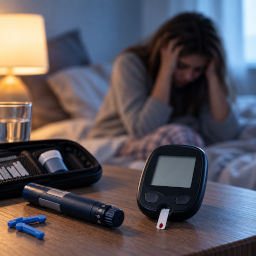
Severe Hypoglycaemia Mistaken for Conversion Disorder
A 2025 case report describes a 17-year-old with type 1 diabetes whose abnormal behaviour and movements were initially attributed to conversion disorder. Glucose readings of 36 and 24 mg/dL during attacks revealed severe hypoglycaemia, and the conversion diagnosis was withdrawn.

When an Unexplained Gait Became Conversion Disorder: A Huntington’s Disease Case
A 65-year-old woman with an abnormal gait, cognitive decline and psychiatric symptoms was diagnosed with conversion disorder after inconclusive neurological investigations. Years later, genetic testing confirmed Huntington’s disease—raising a difficult question: what positive evidence had established conversion disorder in the first place?
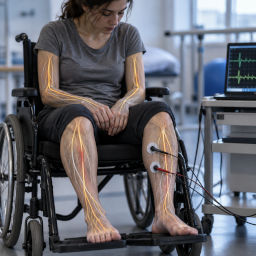
When FND Overshadowed an Axonal Neuropathy: A Case of AMSAN
A 22-year-old woman entered rehabilitation with FND as her primary diagnosis while an underlying acute motor and sensory axonal neuropathy (AMSAN) remained unrecognised. EMG and nerve conduction studies later demonstrated extensive axonal damage, leading to IVIG treatment and improved rehabilitation progress. The authors explicitly describe the case as diagnostic overshadowing.

When Suppressible Movements Were Called Functional: A Genetic PKD Case
A 14-year-old boy was diagnosed with a functional movement disorder after presenting with suppressible involuntary movements and psychiatric comorbidity. Further investigation identified monogenic paroxysmal kinesigenic dyskinesia (PKD), while the authors noted that specific positive features supporting the original functional diagnosis had been absent.

FND, Then Genetic Dystonia: A Pediatric DYT-TOR1A Case
A pediatric patient diagnosed with Functional Neurological Disorder was later found to have DYT-TOR1A dystonia and responded well to deep brain stimulation. The authors retained FND as a coexisting diagnosis, raising an important question: once a genetic disorder capable of producing the movements was identified, what evidence determined which symptoms remained functional?
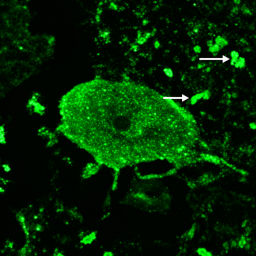
When Stress-Sensitive Stiffness Was Diagnosed as Conversion Disorder
A 52-year-old woman developed progressive leg stiffness, spasms and severe gait impairment that worsened with stress and fatigue. After multiple evaluations, she was diagnosed with conversion disorder. A year later, markedly elevated anti-GAD antibodies and characteristic EMG abnormalities supported stiff-person syndrome, with significant improvement following IVIG.

Diagnosed With FND After Three Weeks: 200 Seizures Later, Doctors Found Severe Hypoglycaemia
Diagnosed with FND after three weeks, an Australian teenager endured around 200 seizures before severe hypoglycaemia linked to a gastrointestinal motility disorder was identified.

The Falsification Problem: FND Resolved After CSF Leak Repair
A patient diagnosed with FND recovered completely after surgical repair of a CSF leak. Why did the diagnosis remain? This article explores what the case reveals about comorbidity, diagnostic reasoning, and the falsification problem in FND.
Comments
27Thank you for taking the time to write this and for sharing your perspective.
The literature suggests, as you pointed out, that comorbidity is extremely common in functional disorders, with some studies reporting rates approaching 80%. That is important because it demonstrates just how frequently functional symptoms exist alongside other medical conditions. It also makes it particularly important that a functional diagnosis isn't interpreted as an explanation for every symptom a patient subsequently experiences.
I would also add an important caveat to the discussion: we need to distinguish between what we observe, how we classify it, and what the evidence actually allows us to conclude about it.
This is essentially the distinction I explored in my previous post between ontology and epistemology. We can define and recognise a clinical pattern without necessarily knowing what produces that pattern. The existence of a recognisable phenotype does not, by itself, establish its underlying mechanism or cause.
That distinction matters particularly in functional disorders. There may be recognisable clinical patterns and positive signs, but the mechanisms underlying them remain incompletely understood. There are numerous proposed models involving brain and body interactions, attention, prediction, cognition, stress, trauma and other physiological processes, but many of these remain hypotheses or partial explanations rather than established causes that can confidently be applied to an individual patient.
This is where I think we sometimes allow the strength of the classification to imply a strength of explanation that the evidence does not necessarily support. In other words, being confident that we recognise a pattern is not the same thing as being equally confident that we know why that pattern exists.
This also connects directly with the issue I raised in my latest post. Clinicians themselves can misunderstand what “functional” means. The literature has documented that some clinicians still associate functional symptoms with feigning or intentional production, while others continue to rely on older psychological narratives. So although I absolutely agree that some patients may misunderstand what their clinician is saying, we also have to acknowledge that the misunderstanding does not always originate with the patient.
A clinician can genuinely believe they are explaining a sophisticated brain and body model while still communicating an interpretation that is more certain than the evidence warrants. And a patient can understandably hear that as “your symptoms are psychological” or “they're all in your head,” particularly if they have previously experienced dismissal.
That doesn't mean clinicians are acting in bad faith, and it doesn't mean patients can never misunderstand. Both things can be true.
For me, the more constructive approach is to hold these distinctions together: functional symptoms are real, recognisable patterns can be clinically useful, organic disease can coexist with them, and psychological or cognitive factors may be relevant, but none of that removes the need to distinguish what has actually been demonstrated from what is currently inferred or hypothesised.
That epistemic humility becomes especially important when a patient's condition progresses, changes character, or produces new objective findings. A useful clinical framework should help us investigate reality, not become a reason to stop looking at it.
Thank you again for contributing to the discussion. I think this is exactly the kind of nuance that is needed if we're going to move beyond the persistent “it's either physical or it's psychological” debate.
Fair criticism: “odontogenic brain abscesses” was imprecise because no brain abscess was documented in the post, and I withdraw that implication. A brain abscess remains a theoretical possibility given the known pathways of odontogenic infection, but it was never confirmed. My actual point is narrower: he had persistent local dental red flags, a subsequently confirmed large abscess, and substantial improvement after its treatment. That does not prove the abscess caused his entire neurological presentation, but it makes the infection a plausible contributor that deserved investigation before anyone expressed absolute certainty about FND.
The personal insults add nothing to that discussion. If you believe the observation itself is arrogant, feel free to explain why.
Called odontogenic brain abscesses.
A chronic occult infection from the failed root canal was already a biologically plausible differential, particularly given the toothache, putrid smell and referred ear pain. The fact that his symptoms substantially resolved after the infection was treated makes causation considerably more likely, although it does not prove it conclusively.
These red flags warranted CBCT before FND was declared with “absolute certainty.”
Sources: Undetected dental sepsis causing brain abscesses, odontogenic brain abscess review, CBCT detection study.
I’m glad you found the answer and are feeling better. Keppra can cause depression, anxiety and cognitive problems that resemble FCD. Missing a known medication effect and misdiagnosing it as functional is a serious diagnostic failure.
Of 148,727 patients diagnosed with FND, 78.5% had another recorded neurological diagnosis. That is an extraordinarily high rate to dismiss as mere coincidence and lends weight to the possibility that FND may possibly represent a common phenotype across different neurological diseases.
This dashboard entry is based on a real, published case report: "Revising a diagnosis of functional neurological disorder—a case report".
In this particular case, I agree that the neurologists did their due diligence. They continued following the patient, recognised that the clinical picture was changing, ordered further investigations and revised the diagnosis to progressive supranuclear palsy. They deserve credit for doing precisely what longitudinal neurological care should involve.
That does not, however, make the case irrelevant to a website focused on sceptical examination of FND. The authors themselves state that the FND diagnosis was revised and that diagnostic overshadowing "likely occurred." The case demonstrates both sides of the issue: an early presentation may genuinely be difficult to interpret, while continued reassessment can prevent an FND diagnosis from becoming permanently fixed despite new evidence.
My father used to talk about first-year psychology students who became convinced they had every condition they were studying. It is an old and familiar phenomenon, but nobody suggests that psychology students should therefore be shielded from the literature. The proper response to possible misunderstanding is education and context, not withholding information.
Similarly, the suggestion that visitors to this website "won't understand" the case and will conclude that they have a terminal neurodegenerative disease is speculative and medically paternalistic. It assumes that patients are incapable of engaging responsibly with published evidence and must therefore have information filtered for them.
This is explicitly a website concerned with sceptical examination of FND: its evidence, diagnostic practices, limitations and potential for diagnostic harm. It would be strange to exclude a published case because it could cause someone to question an FND diagnosis. Scepticism does not mean claiming that everyone diagnosed with FND has PSP. It means presenting the evidence, including cases that reveal diagnostic uncertainty, and allowing it to be examined critically.
We also cannot generalise from the diligence shown in this case and assume that every patient receives the same standard of care. We cannot assume that doctors are always correct, always consider every reasonable differential diagnosis or always apply the FND criteria as intended.
In my country, roughly 150 neurologists serve a population of approximately 62 million people. They are overworked, services are understaffed and consultations can become something of a conveyor belt. That is not necessarily the fault of individual neurologists; it is often the unavoidable consequence of a severely constrained healthcare system. Nevertheless, it means that comprehensive investigation and reliable longitudinal follow-up cannot simply be presumed.
Training in FND is also not consistently up to scratch. In our experience, and in reports from many other patients, clinicians who diagnose FND sometimes appear genuinely unfamiliar with the requirement for positive clinical signs. When asked which positive signs supported the diagnosis, some effectively respond, "What positive signs?" We therefore cannot assume that every FND diagnosis was made according to modern standards merely because a neurologist recorded it.
I also disagree that an incorrect initial diagnosis is necessarily harmless simply because PSP has no disease-modifying treatment. Diagnosis affects prognosis, counselling, symptom management, monitoring of risks, access to appropriate services and the patient's ability to plan. The absence of a cure does not make diagnostic delay inconsequential.
The answer is not to treat patients like children who must be protected from medical information. Patients should be empowered to understand what evidence supports their diagnosis, ask which positive signs were demonstrated, recognise meaningful changes in their presentation and request reassessment where appropriate. Patients should be partners in diagnostic safety, not passive recipients expected to accept every clinical conclusion without question.
I think there may be a misunderstanding of what is being discussed.
- Nobody is saying that FCD/FND does not exist or is impossible.
- Seeking clarification or a second opinion is not FND denial; it is good clinical practice, particularly when someone develops sudden, life-changing cognitive symptoms.
- The question is whether the diagnosis, in this particular case, was accurate and established using the recommended diagnostic process.
- The author himself says he doesn't know how the clinicians reached their conclusion, received no explanation of the positive clinical features supporting the diagnosis. Given that, it is entirely reasonable to ask whether the recommended diagnostic criteria were actually applied. Without clear communication from the clinicians, neither the patient nor we can know.
It is also not helpful to dismiss alternative explanations outright, especially when there remains uncertainty about how the diagnosis was established. Considering reasonable differential diagnoses is part of good medicine and does not imply rejecting FND.
Ultimately, I think everyone here wants the same thing: that @Con Bradley receives the correct diagnosis and the most appropriate treatment, whatever that diagnosis ultimately proves to be.
Discussions started
7Share your FND memes and cartoons here.
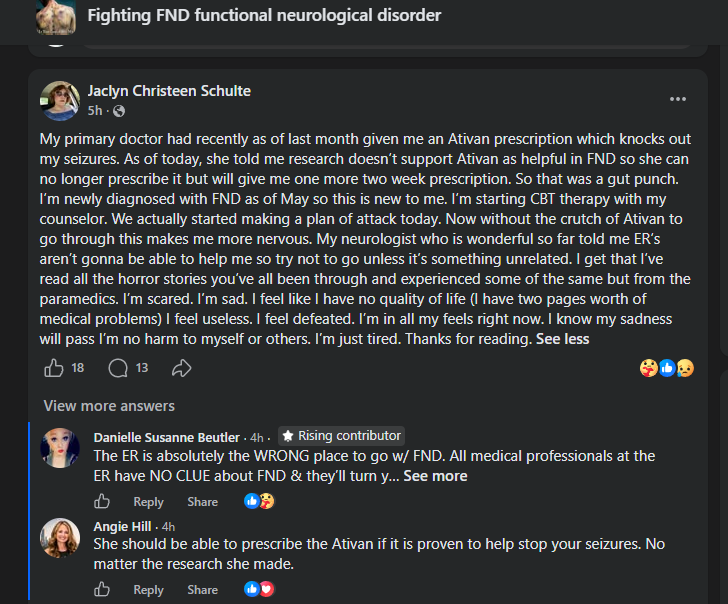
Researchers say medicine doesnt work for FND but thats pure conjecture when no one fully knows what causes these symptoms or how the brain is glitching. We cant keep denying people treatments that might help just because of an unproven hypothesis. If it works for someone its usually just treating their claimed comorbidities like pain mood or sleep not the core FND itself. Stop gatekeeping based on theories. Personal results matter more than the current official line.
Whenever I read an FND advocacy page, I like to go back in time using the Internet Archive to see how the narrative has evolved. Comparing older versions with current ones often reveals not just changes in wording, but shifts in priorities and values.
- Original page: http://web.archive.org/web/20160904034822/https://www.fndaction.org.uk/diagnosis/
- Current page: https://www.fndaction.org.uk/diagnosis/
The 2016 page had soul. It was written by patients, for patients. It openly acknowledged the harm people experienced: being made to feel their symptoms were "their fault," being dismissed, left without support, and let down by inconsistent care. It felt urgent, validating, and unapologetically activist.
The current page feels sanitized and clinician focused. It reads as though it was edited by neurologists concerned about sounding too speculative or unscientific. The raw expression of patient suffering is gone. The frustration with poor care is gone. In its place are lengthy discussions of diagnostic pitfalls, positive signs, research priorities, and carefully worded disclaimers. It is all very proper, but it also feels cold and defensive.
Rather than centering the needs of people living with FND, the page seems more concerned with protecting the reputation of the diagnosis. The charity appears to have exchanged genuine patient advocacy for mainstream medical respectability, and in doing so, lost much of its original purpose and emotional impact.
The end result is a page that may be more technically accurate, but is significantly less human. It serves clinicians and the diagnosis better than it serves the patients who are suffering.
Hey everyone
This site is very new and evolving quickly.
What features, enhancements, or changes would you like to see?
Reply under this post with your ideas!
All suggestions welcome - let's build this together!
Hey everyone
This site is very new and evolving quickly.
If you spot any bugs (broken links, formatting issues, mobile glitches, comment problems, etc.),
please reply under this post.
Include:
- Device + browser
- What happened
- Screenshot if possible
Thanks for helping improve it!
This is the place to share the craziest "my FND did this" claims you’ve seen, hair loss, sudden allergies, psychic powers, eyes changing color, poltergeist activity, speaking unknown languages, etc.
Drop the most ridiculous ones below!
When we initially investigated FND, we were surprised to find almost no official skepticism.
Dr. David Tuller, through his “Trial By Error” series on virology.ws (https://virology.ws/tag/fnd/)He has challenged inflated prevalence claims, the reliability of diagnostic signs, and aspects of FND’s psychological framing.
Are there any other skeptical sources out there?
Thank you for sharing this. I think your perspective is particularly valuable because you are writing as someone who accepts their FND diagnosis, yet is still willing to question aspects of how FND is understood and treated.
That distinction matters. People can arrive at very different conclusions about FND itself while still finding common ground in questioning clinical assumptions, treatment approaches, and whether patients' experiences are being adequately heard.
Your final point perhaps captures it best: "you know your body best". That doesn't mean clinicians have nothing to contribute. It means your lived experience of your own body should be part of the evidence, not something that has to be reshaped to fit a predetermined explanation.
Thank you for sharing such a thoughtful perspective.