FND Nope
Trophies


Posts
26
Maddie Aumann: From an FND Diagnosis to Maddie’s Law
Maddie Aumann was diagnosed with FND before genetic testing identified a rare SCN9A disorder. Her mother, Christine Aumann, describes how the FND label continued to affect Maddie’s care even after that discovery, ultimately helping inspire Maddie’s Law.
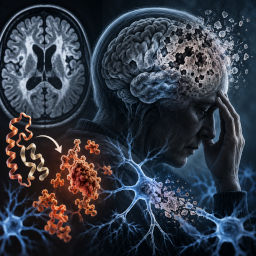
A Case of Sporadic Creutzfeldt-Jakob Disease Presenting as Conversion Disorder
A 64-year-old woman was diagnosed with a functional neurological movement disorder after clinicians observed distractibility, variability and entrainment. Within weeks, worsening symptoms and newly abnormal EEG and MRI findings reopened the investigation, and a brain biopsy confirmed sporadic Creutzfeldt-Jakob disease.
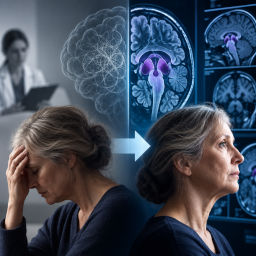
FND Diagnosis Revised to Progressive Supranuclear Palsy (PSP)
A published case report documents a patient initially diagnosed with FND whose progressive neurological deterioration led to further investigation and an eventual diagnosis of progressive supranuclear palsy (PSP).
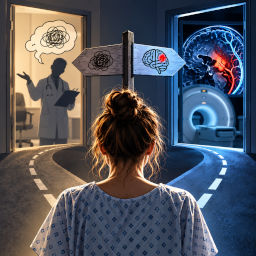
A Case Report of Headache and Weakness Diagnosed as Functional Neurological Disorder
A 26-year-old postpartum woman presenting with headache and neurological symptoms was discharged with anxiety and possible conversion disorder. She returned the following morning unable to walk. MRI revealed a thalamic infarction caused by cerebral venous thrombosis. The case also raises a broader question: if later disease does not necessarily invalidate an FND diagnosis, how is FND misdiagnosis actually identified and counted?
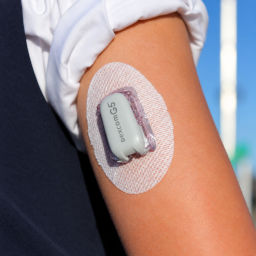
Diagnosed With FND After Three Weeks: 200 Seizures Later, Doctors Found Severe Hypoglycaemia
Diagnosed with FND after three weeks, an Australian teenager endured around 200 seizures before severe hypoglycaemia linked to a gastrointestinal motility disorder was identified.

If FND Is Not ‘We Don’t Know’... What Exactly Do We Know?
What do we actually know when we diagnose FND? A look at the epistemic limits of the diagnosis, the danger of treating unknowns as knowns, and how overstating certainty can contribute to diagnostic overshadowing and undermine advocacy.

How Can a Layman Determine Whether a Medical Diagnosis Is Legitimate?
How do we know when a medical diagnosis has actually been demonstrated rather than simply defined? This post examines FND through ontology, epistemology and axiology, asking what positive signs really establish, where classification ends and explanation begins, and whether the confidence placed in the diagnosis matches the strength of the evidence behind it.
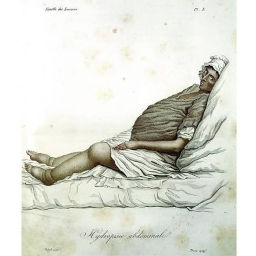
When the Presentation Becomes the Disease
Dropsy was once treated as a disease until medicine discovered that it was merely a shared presentation of many underlying conditions. This article asks whether IBS and FND may represent similar umbrella categories that future medical advances will eventually divide into more precise diagnoses.

The Falsification Problem: FND Resolved After CSF Leak Repair
A patient diagnosed with FND recovered completely after surgical repair of a CSF leak. Why did the diagnosis remain? This article explores what the case reveals about comorbidity, diagnostic reasoning, and the falsification problem in FND.
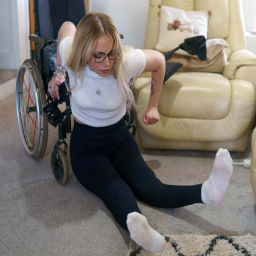
The Medical Journey of Megan Dixon: FND and Severe Disability
Megan Dixon became severely disabled following childhood illness, with progressive loss of mobility and speech leading to prolonged hospitalisation. She was later reportedly diagnosed with FND and underwent extended rehabilitation after years of severe impairment.

Case Study: FND After Spine Surgery
A critical look at a case of postoperative paralysis labelled as FND, questioning whether pre-existing neurological instability and predictive processing may better explain the presentation than a purely functional diagnosis.
Comments
27Functional neurological disorder (FND) provides a significant diagnostic challenge because of its phenotypic heterogeneity https://t.co/SnIFREidii pic.twitter.com/zccm1f8e7J
— FndNope (@FndNope) March 15, 2026
Discussions started
7Share your FND memes and cartoons here.
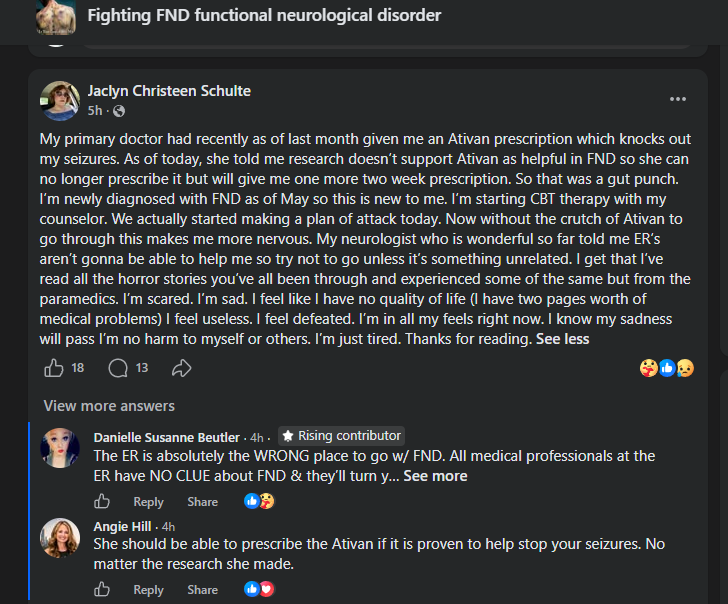
Researchers say medicine doesnt work for FND but thats pure conjecture when no one fully knows what causes these symptoms or how the brain is glitching. We cant keep denying people treatments that might help just because of an unproven hypothesis. If it works for someone its usually just treating their claimed comorbidities like pain mood or sleep not the core FND itself. Stop gatekeeping based on theories. Personal results matter more than the current official line.
Whenever I read an FND advocacy page, I like to go back in time using the Internet Archive to see how the narrative has evolved. Comparing older versions with current ones often reveals not just changes in wording, but shifts in priorities and values.
- Original page: http://web.archive.org/web/20160904034822/https://www.fndaction.org.uk/diagnosis/
- Current page: https://www.fndaction.org.uk/diagnosis/
The 2016 page had soul. It was written by patients, for patients. It openly acknowledged the harm people experienced: being made to feel their symptoms were "their fault," being dismissed, left without support, and let down by inconsistent care. It felt urgent, validating, and unapologetically activist.
The current page feels sanitized and clinician focused. It reads as though it was edited by neurologists concerned about sounding too speculative or unscientific. The raw expression of patient suffering is gone. The frustration with poor care is gone. In its place are lengthy discussions of diagnostic pitfalls, positive signs, research priorities, and carefully worded disclaimers. It is all very proper, but it also feels cold and defensive.
Rather than centering the needs of people living with FND, the page seems more concerned with protecting the reputation of the diagnosis. The charity appears to have exchanged genuine patient advocacy for mainstream medical respectability, and in doing so, lost much of its original purpose and emotional impact.
The end result is a page that may be more technically accurate, but is significantly less human. It serves clinicians and the diagnosis better than it serves the patients who are suffering.
Hey everyone
This site is very new and evolving quickly.
What features, enhancements, or changes would you like to see?
Reply under this post with your ideas!
All suggestions welcome - let's build this together!
Hey everyone
This site is very new and evolving quickly.
If you spot any bugs (broken links, formatting issues, mobile glitches, comment problems, etc.),
please reply under this post.
Include:
- Device + browser
- What happened
- Screenshot if possible
Thanks for helping improve it!
This is the place to share the craziest "my FND did this" claims you’ve seen, hair loss, sudden allergies, psychic powers, eyes changing color, poltergeist activity, speaking unknown languages, etc.
Drop the most ridiculous ones below!
When we initially investigated FND, we were surprised to find almost no official skepticism.
Dr. David Tuller, through his “Trial By Error” series on virology.ws (https://virology.ws/tag/fnd/)He has challenged inflated prevalence claims, the reliability of diagnostic signs, and aspects of FND’s psychological framing.
Are there any other skeptical sources out there?