Christoff
Community trophies


Game trophies


Posts
6
I Am Angry
I am angry that uncertainty became certainty, that softened language obscures what is actually being claimed, that scepticism is treated as hostility, and that while we argue about FND, my wife keeps getting sicker.

When the Tests Find Something, but We Still Have to Find the Answers
An update on my wife’s worsening gastrointestinal problems, the objectively demonstrated delayed intestinal transit, what has been excluded, what still needs investigation, and why it feels wrong that we are being left to work out the next steps ourselves.
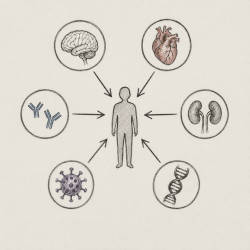
The Common Phenotypes Hypothesis
An exploration of FND, positive rule-in signs, comorbidity, predictive processing, diagnostic closure, and whether functional symptoms may reflect common phenotypes arising from multiple underlying conditions.

What Makes a Doctor a Good Doctor?
A reflection on what makes a good doctor in the context of complex chronic illness, focusing on collaboration, systems thinking, and clinical humility.

When Diagnosis Becomes Doctrine: Questioning FND and Clinical Authority
When I started this website in July 2025, I received a lot of pushback from FND proponents. Some felt that the website was highly offensive and disrespectful, and urged me to please take the website down, which I obviously did not do.

Advice from an FND Sceptic for Those Newly Diagnosed
What advice would I give to anyone newly diagnosed with this disorder? Advice that I wish I had received back then?
Comments
53Someone help me understand this. Surely this cannot be normal?
Something is seriously off here. These are public statements from an allied healthcare professional who treats FND patients for a living, yet the pattern comes across as deeply anti-patient and potentially dangerous. If you're so convinced that everything is functional, how can you objectively recognise when it isn't?
And let's be clear. This isn't about FND Nope versus one particular clinician. It's about FND Nope challenging bad ideas, questionable clinical reasoning and the potential consequences for patients, regardless of who promotes them.
Surely this raises serious questions about diagnostic bias, professional accountability and patient safety? These questions deserve answers, not personal feuds.
What we call FND may not be a distinct disorder at all, but a collection of common neurological presentations that occur across numerous diseases. Grouping these presentations under a single diagnostic label does not establish a shared underlying pathology or mechanism.
This hits close to home. My wife has an extremely high foot arch (pes cavus), a physical feature often associated with Charcot-Marie-Tooth disease (CMT). We had genetic testing done, and the results came back normal. The catch? Only four genetic variants were tested, despite CMT being associated with over 100 different genes. Differential Diagnosis: Charcot-Marie-Tooth (CMT)
We're not saying she has CMT, but surely testing four variants doesn't rule it out? It makes me wonder how many patients are told their results are "normal" without realising how limited the testing actually was.
There is a certain irony in KimH's criticism. By questioning how the researchers established misdiagnosis, she inadvertently raises the falsifiability problem surrounding FND itself. What evidence would actually be sufficient to overturn the original PNES diagnoses?
If identifying an autonomic disorder capable of explaining the presenting symptoms is insufficient because the conditions can coexist, and improvement following treatment of that disorder is also insufficient, what remains that could count against the original attribution?
Neither finding necessarily disproves PNES in isolation. But repeatedly invoking possible comorbidity without establishing independent evidence for both diagnoses risks making the original diagnosis resistant to revision. Every alternative explanation can simply be accommodated alongside it.
KimH is right to demand evidence for the researchers' classification of misdiagnosis. The difficulty is that her argument does not apply the same scrutiny to the original PNES diagnoses. In doing so, she risks illustrating the very problem she appears to be challenging: a diagnostic framework in which evidence is required to overturn FND, but the evidence required to retain it receives considerably less attention.
The question is not whether coexistence is possible. It is what evidence would justify withdrawing the original diagnosis, and whether that standard is being applied consistently.
Once the language shifts to "functional overlays," "functional components," triggers, and underlying causes that supposedly produce a functional disorder, the obvious question is whether this is still a primary disorder at all.
If the same features show up across many illnesses, it may just be a common presentation, not evidence of a separate entity called FND. At that point the diagnosis is doing philosophical work: it groups observations together and then treats the grouping as the cause.
That is a different claim from "these symptoms are real." Reality of symptoms does not establish that the category explains them.
This is where I think FND can become a distraction.
There is an important difference between recognising a functional presentation and treating FND as the reason for that presentation.
Weakness, tremor, altered sensation, gait changes, variability and other so-called functional features may be things we observe. But once those observations are bundled into an FND diagnosis, the diagnosis can start functioning as the explanation for why they are happening.
That risks reversing the logic.
Instead of asking, "What is causing this presentation?", the answer can become, "It is happening because the patient has FND."
But if these same kinds of features can occur alongside many neurological, structural and systemic conditions, perhaps "functional" is sometimes better understood as part of the presentation rather than as the underlying cause.
The danger is that FND then stops being a description of what is being seen and becomes a reason not to keep looking.
Thanks, @S. F. I think there is actually quite a bit of irony in this exchange.
One of the central reasons this site exists is because I am concerned about diagnostic closure around FND, the dismissal of legitimate scepticism, and the tendency for professional authority to sometimes substitute for actually demonstrating a claim.
Then an anonymous neurologist arrives here and, rather unintentionally, seems to demonstrate exactly the behaviour the site is critical of.
I am repeatedly reminded that I am not a clinician and therefore supposedly lack the knowledge required to challenge their conclusions. Yet the same person, without examining this student, without access to his complete medical history, tests or imaging, felt comfortable making remarkably confident statements about what his symptoms could and could not represent.
My position was never that I knew what was wrong with him. It was almost the opposite: we don't know, so don't close the diagnostic door prematurely.
The insults, Dunning–Kruger accusations and ‘cosplay as a clinician’ comments only make the irony harder to miss. If the intention was to convince sceptical patients that their concerns about FND and diagnostic closure are misplaced, I don't think this exchange achieved that. If anything, it played directly into the concerns this site was created to discuss.
And to the original poster, if you're still reading this: how are you doing?
The last time we spoke, I believe a new neurologist had become involved and there had been some additional findings or discoveries. I would really like to hear what happened after that and whether you are any closer to understanding what is causing your symptoms.
Please update us when you have a chance. I genuinely hope things have moved in the right direction for you.
Glad she finally got answers and that treatment actually helped.
What bothers me is how often people in these stories have to spend half the post apologizing so they don’t offend anyone who has an FND diagnosis. You shouldn’t have to do that to say “they missed something treatable.”
That reflex, protect the label first, then listen to the person who is still sick, is the problem. A diagnosis is a working explanation, not a loyalty test. If rheumatology findings were ignored and neuropathy was never tested, saying so isn’t an attack on people who do have FND. It’s advocacy for patients.
People who are ill should not have to soften their story so a diagnosis stays comfortable.
Discussions started
3Initial interview with Christine Aumann, Maddie Aumann’s mother, on REAL TALK 93.3FM, discussing Maddie’s Functional Neurological Disorder (FND) diagnosis, her subsequent medical journey, and the impact the FND diagnosis had on her care.
From https://www.facebook.com/RealTalk933fm/videos/1095299976492411/
You can literally go onto https://fndconnect.org.uk/shop/product/fnd-connect-i-have-seizures-lanyard-and-card
And for £ 4.99 you can buy yourself a lanyard to inform bystanders to effectively discourage appropriate emergency care.
Someone may assume every episode is "just another functional seizure." But seizures can change, suffer a head injury, have a stroke,
low blood sugar, cardiac syncope, or another medical emergency.

Looking back, was there a symptom(s) that should have prompted doctors to investigate further before diagnosis FND?