
Christoff
Community trophies


Game trophies


Posts
38
I Am Angry
I am angry that uncertainty became certainty, that softened language obscures what is actually being claimed, that scepticism is treated as hostility, and that while we argue about FND, my wife keeps getting sicker.
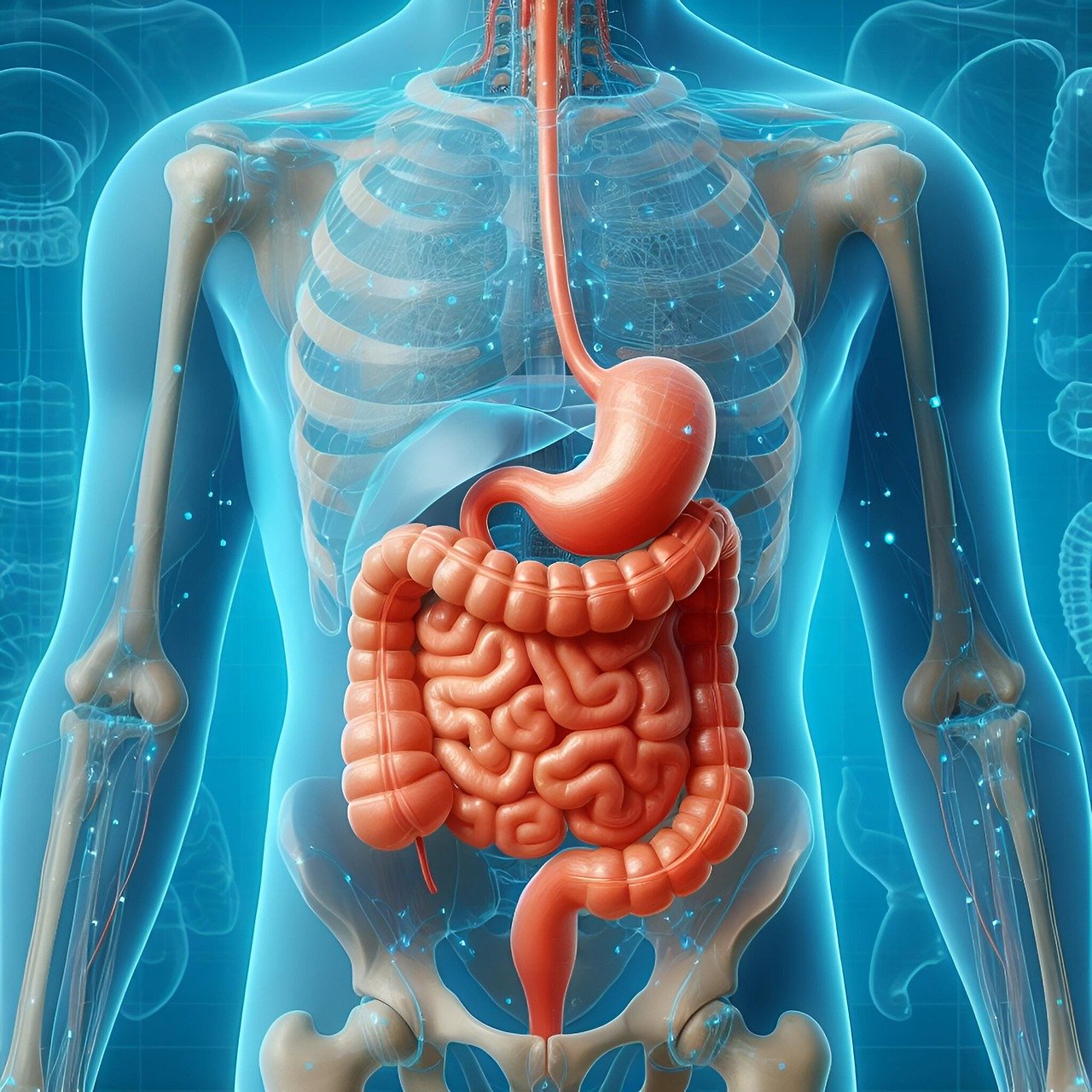
When the Tests Find Something, but We Still Have to Find the Answers
An update on my wife’s worsening gastrointestinal problems, the objectively demonstrated delayed intestinal transit, what has been excluded, what still needs investigation, and why it feels wrong that we are being left to work out the next steps ourselves.

Open Letter to Zachary Grin, DPT
An open letter addressing the removal of a disputed cartoon, clarifying what was—and was not—claimed, and reaffirming FND Nope’s commitment to open and critical discussion of the FND framework.
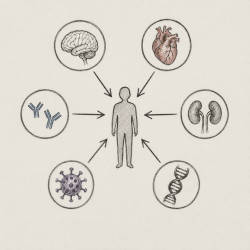
The Common Phenotypes Hypothesis
An exploration of FND, positive rule-in signs, comorbidity, predictive processing, diagnostic closure, and whether functional symptoms may reflect common phenotypes arising from multiple underlying conditions.

The Belief Prerequisite: How FND Treatment Echoes Faith Healing
One of the most striking things you notice when you first start reading the literature on FND is how crucial it is considered for patients to accept and believe in the diagnosis. Without that belief, treatment is often regarded as futile. They simply will not get better.

What Makes a Doctor a Good Doctor?
A reflection on what makes a good doctor in the context of complex chronic illness, focusing on collaboration, systems thinking, and clinical humility.
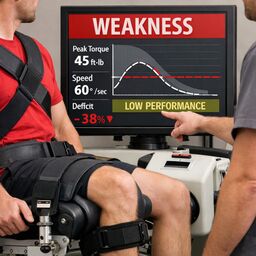
Fatigable Weakness vs Functional Weakness: Why Hoover’s Sign Can Mislead When Isokinetic Testing Shows Otherwise
Examines Hoover's sign in a patient with true fatigable weakness. Highlights how objective isokinetic testing better captures performance deficits than traditional clinical signs, preventing misinterpretation as functional weakness.

When Diagnosis Becomes Doctrine: Questioning FND and Clinical Authority
When I started this website in July 2025, I received a lot of pushback from FND proponents. Some felt that the website was highly offensive and disrespectful, and urged me to please take the website down, which I obviously did not do.

FND's Flawed Analogy: When 'Software' Problems can Hide Undetected Hardware Damage
One of the most common analogies that you would come across within FND literature is the software/hardware analogy.

If FND Scepticism Feels Like a Personal Attack, It Might Be Time for Introspection
FND patient communities provide support but risk echo chambers: illness becomes identity, criticism feels like attack, closing doors to misdiagnosis & recovery—modern hysteria protected by groupthink.
Comments
53@Copper Comet of Lagoon Just out of interest (I'm not sure what your background is, cons of anonymous comments), based on your comment, am I right in thinking that you consider the CSF leak to have been incidental and the surgery unnecessary? That doesn't appear to be the interpretation of the authors.
If so, and assuming you're a clinician, wouldn't that make you less likely to consider or investigate a CSF leak as a differential diagnosis in a similar patient? That's what concerns me.
@Copper Comet of Lagoon Your comment inadvertently illustrates exactly the point of the post. Even though the patient had remained symptom free for up to three months after the CSF leak was repaired, you preserve the FND diagnosis through explanations like functional overlay, comorbidity, placebo, attention, predictive processing, or by questioning the significance of the repair itself, something the authors of the paper do not question.
One other point is that the paper itself does not treat the CSF leak as an incidental finding or question whether it required repair. Those are additional interpretations. The authors accepted it as a curable underlying pathology, repaired it, and reported complete symptom resolution, yet still retained the FND diagnosis.
So contractures form from severe holding of muscles in FND. Even when you "cure" the FND, it's too late. When we look at these muscles on ultrasound, they are completely damaged and fibrotic. Very different than a stroke or neurological disorder. I work with an orthopedic surgeon pic.twitter.com/R5bIln5pH8
- Paul Winston MD - Restoring Movement is the goal. (@drpaulwinston) June 4, 2026
- Relentlessly progressive course steadily accumulating symptoms over months with no sustained improvement or fluctuation. Classic FND is typically variable, waxing and waning, and often shows periods of spontaneous improvement.
- Prominent encephalopathic features delirium, psychosis, catatonia, and rapid cognitive/personality change. These are not core features of FND and are far more suggestive of underlying organic brain dysfunction, such as autoimmune or inflammatory encephalitis.
- Objective hard neurological signs positive Hoffmann's sign and MRI findings of demyelination described as too much for age. FND is a technically a diagnosis of exclusion that requires symptoms to be incompatible with recognised organic disease.
- Lack of documented positive FND signs for most symptoms only leg weakness appears to have had such signs recorded. Surely a robust FND diagnosis should document specific rule in signs (e.g., Hoover's sign, entrainment, give way weakness, etc.) for each major complaint.
- Clear post infectious trigger plus strong family autoimmune history both are well established risk factors for autoimmune encephalitis and other neuroinflammatory conditions that require proper rule out, not dismissal.
- Psychiatrist explicitly ruled out primary psychiatric disorder this significantly weakens any trauma based or psychogenic explanation for the neurological picture (for those following the CD model that is sometimes still used in FND).
Discussions started
3Initial interview with Christine Aumann, Maddie Aumann’s mother, on REAL TALK 93.3FM, discussing Maddie’s Functional Neurological Disorder (FND) diagnosis, her subsequent medical journey, and the impact the FND diagnosis had on her care.
From https://www.facebook.com/RealTalk933fm/videos/1095299976492411/
You can literally go onto https://fndconnect.org.uk/shop/product/fnd-connect-i-have-seizures-lanyard-and-card
And for £ 4.99 you can buy yourself a lanyard to inform bystanders to effectively discourage appropriate emergency care.
Someone may assume every episode is "just another functional seizure." But seizures can change, suffer a head injury, have a stroke,
low blood sugar, cardiac syncope, or another medical emergency.

Looking back, was there a symptom(s) that should have prompted doctors to investigate further before diagnosis FND?
Yeah, that's the first website most patients diagnosed with FND are directed to, along with https://neurosymptoms.org
It is very strange, isn't it?