Resume drafts Unsaved story and dashboard drafts
Comment drafts Unsaved comment drafts
Christoff profile picture

Christoff

Public profile
Spousal caregiver
38 posts 53 comments 3 discussions Last seen 31 Oct 2026 Member since 02 Jul 2025
Software developer, amateur astronomer, reluctant backyard neurologist by necessity while helping my wife navigate a complex neurological illness, creator of FND Nope (fndnope.org) a resource challenging the Functional Neurological Disorder diagnosis, sharing patient stories, and advocating for better investigation of underlying causes, and professional Trekkie.
Stance towards FND
Questioning or sceptical of FND
Community trophies
Game trophies

Personal Space

Christoff’s Space

For my wife. For answers. For as long as it takes.

Visit Personal Space
Posts
38
I Am Angry
3 weeks ago

I am angry that uncertainty became certainty, that softened language obscures what is actually being claimed, that scepticism is treated as hostility, and that while we argue about FND, my wife keeps getting sicker.
When the Tests Find Something, but We Still Have to Find the Answers
3 weeks ago

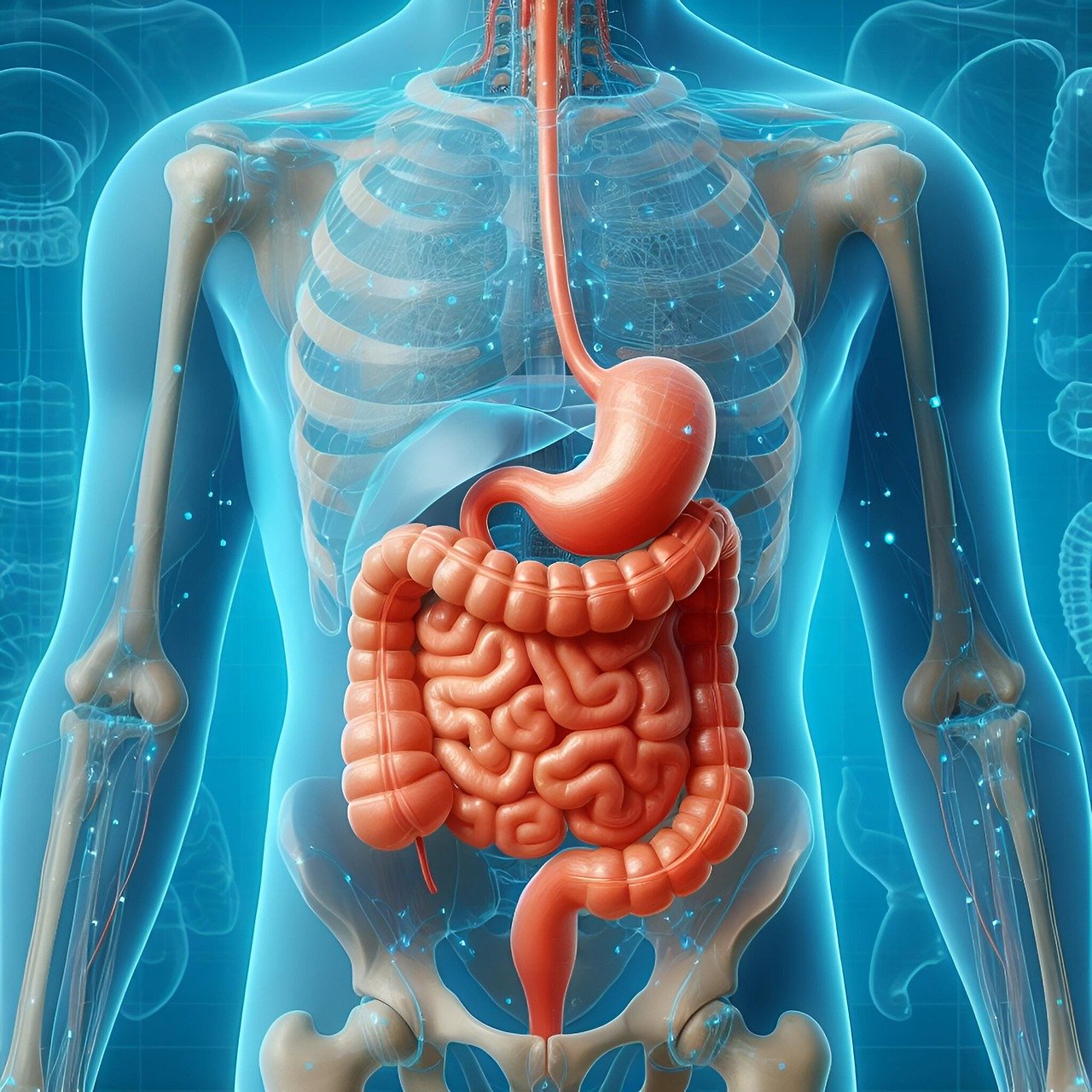
An update on my wife’s worsening gastrointestinal problems, the objectively demonstrated delayed intestinal transit, what has been excluded, what still needs investigation, and why it feels wrong that we are being left to work out the next steps ourselves.

Open Letter to Zachary Grin, DPT
2 months ago

An open letter addressing the removal of a disputed cartoon, clarifying what was—and was not—claimed, and reaffirming FND Nope’s commitment to open and critical discussion of the FND framework.
The Common Phenotypes Hypothesis
4 months ago

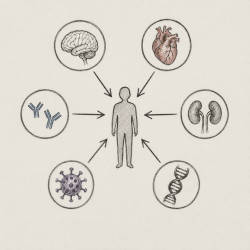
An exploration of FND, positive rule-in signs, comorbidity, predictive processing, diagnostic closure, and whether functional symptoms may reflect common phenotypes arising from multiple underlying conditions.

The Belief Prerequisite: How FND Treatment Echoes Faith Healing
5 months ago

One of the most striking things you notice when you first start reading the literature on FND is how crucial it is considered for patients to accept and believe in the diagnosis. Without that belief, treatment is often regarded as futile. They simply will not get better.

What Makes a Doctor a Good Doctor?
6 months ago

A reflection on what makes a good doctor in the context of complex chronic illness, focusing on collaboration, systems thinking, and clinical humility.
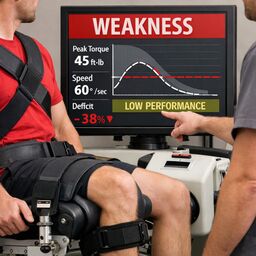
Fatigable Weakness vs Functional Weakness: Why Hoover’s Sign Can Mislead When Isokinetic Testing Shows Otherwise
7 months ago

Examines Hoover's sign in a patient with true fatigable weakness. Highlights how objective isokinetic testing better captures performance deficits than traditional clinical signs, preventing misinterpretation as functional weakness.

When Diagnosis Becomes Doctrine: Questioning FND and Clinical Authority
7 months ago

When I started this website in July 2025, I received a lot of pushback from FND proponents. Some felt that the website was highly offensive and disrespectful, and urged me to please take the website down, which I obviously did not do.

FND's Flawed Analogy: When 'Software' Problems can Hide Undetected Hardware Damage
7 months ago

One of the most common analogies that you would come across within FND literature is the software/hardware analogy.

If FND Scepticism Feels Like a Personal Attack, It Might Be Time for Introspection
8 months ago

FND patient communities provide support but risk echo chambers: illness becomes identity, criticism feels like attack, closing doors to misdiagnosis & recovery—modern hysteria protected by groupthink.

Comments
53
Hi Anonymous Thank you for your feedback. Although it is quite negative (and, to be blunt, somewhat insulting), it does give the reader valuable insight into the attitude that those who are skeptical of a diagnosis like this often seem to "enjoy." This email was sent to me on 21 January 2026. I shared his story in good faith, kept his name anonymous, and have no reason to believe any of his statements are fabricated. You will note that his medical story does not conclude with any concrete diagnosis or resolution. He is simply not convinced by the diagnosis he received, which is the best approach in the interest of his health, and he shares his own speculation and hypotheses. There is no need for ad hominem attacks of this kind. At no point does the author claim expert knowledge; he clearly states that he is a student. I have no idea who you are. Are you involved in pro-FND advocacy? I have to assume you are. Are you a medical professional? I hope not, because it will become clear that you are projecting. You accuse the author of this email of things you are clearly guilty of yourself. This is overreaching. You do not have access to his blood tests, his MRIs, nor have you physically examined him. You have no concrete evidence to make any assumptions about his condition. This is false, this is literally called "hemibody/hemisensory numbness" (Hemibody refers to one half of the body), you can read more about it over here | and here The author never stated that muscle relaxants heal organic lesions, that is a strawman. Furthermore, muscle relaxants do improve hypertonia and spasticity in organic conditions, such as MS, stroke, or spinal cord injury, without "healing" the lesion. They work by reducing excessive tone, spasms, and stiffness through central and peripheral mechanisms. Read more about it over here And Tone CAN switch/fluctuate between hypertonia and hypotonia in organic diseases: e.g., early spinal shock (hypotonia) evolves to spasticity (hypertonia); mixed/fluctuating tone occurs in cerebral palsy, some neurodegenerative cases, or evolving lesions. Read more about it over here: Here | And here The claim is false as well. Organic neurological conditions do cause symptoms to evolve, spread, and change drastically over time, including from speech issues to gait problems. Here | Here | and here I believe I have clearly demonstrated that it is you who is lacking clinical knowledge.

That is true, unfortunately if you’re battling debilitating symptoms and don’t have someone fighting in your corner, you’re forced to navigate a complex, dismissive system while already impaired. When your cognition, balance, or energy are compromised, you can’t advocate effectively, and that’s when you become a lamb to the slaughter.

Thank you for this, I will definitely have a closer look at your notes. My current working hypothesis is around Dynamic spinal compression. We're in the process of talking to a doctor that has the facilities to perform a dynamic MRI. Her symptoms tend to get worse as the day progresses, and some of her symptoms manifest when certain mechanical actions are performed, e.g. turning her neck in a certain way causes her face to distort, so definitely some biokinetic/mechanical going on as well. In addition we are also looking into Myasthenia Gravis as a possibility, e.g. her rehab over the last few years actually made her sicker, that is why we are considering that as an option as well. Not completely ruling out MS, but like you said, there is no lesions after 2 years of imaging, would be interesting if we could somehow investigate the myelin or like in CMT disease other parts of the cells that can present like myelin damage. But yes, all of this said, clinically isolated MS generally takes 2-5 years to show lesions, some 5-10 years (less common), even cases of up to 20+ years, so we're keeping it in the back of our heads for now (so to speak 😄), dynamic spinal compression and MG is still the current focus though, sigh.... As for her mental health, that is a challenge, I must admit, she is a very strong woman, but things are getting to her, so we are trying to set goals, live our life, but yes tough!

Replied to Using medication as a diagnostic tool · 24 Jan 2026
Lyme disease and Bartonella are both valid differential diagnoses for FND. We have pursued both in the past and completed a number of workups. I found it rather odd that our neurologists did not even consider Bartonella, especially given that we mentioned we have eleven cats, which is clearly relevant in that context. We involved other specialties to carry out those investigations, and everything came back clean. That said, thank you for mentioning this to everyone. It is definitely something worthwhile and important to check for.

Hysteria is something they understandably want to distance themselves from. However, as with hysteria, its modern FND label is still used in much the same way, and even conditions that were previously bagged and tagged under that label continue to persist to this day. The reality is that diagnosis is not always as easy or clear cut as clinicians would like it to be. That is why I consistently advocate for honesty. There is nothing wrong with acknowledging an agnostic position in medicine. It should be encouraged. I would rather call a shovel a shovel than have everyone walking around calling it a spoon. I am not sure when honesty about ignorance became a sin.

I doubt that anyone would have been held accountable. There is a great deal of diagnostic shielding and protection for clinicians. For example, labelling something as comorbid with another condition can easily and quickly become a defence, effectively a get out of jail free card.

Thank you for taking the time to leave comments and for sharing the link to the TED talk. I will have a look at it. I believe it is quite dangerous to treat a functional disorder as a primary diagnosis. It is far safer to treat unknowns as unknowns and to view these symptoms as a trigger or reflex of an underlying condition. By doing so, we keep diagnostic doors open. I also find it absurd that some proponents believe organic misdiagnosis and functional misdiagnosis are equally dangerous. Treating FND as a primary diagnosis gives both the patient and the doctor a false sense of security. It is like a metaphorical monster living under your bed. If you refuse to acknowledge its existence, sooner or later you risk becoming its meal.

Your reaction to l-dopa is interesting, that might be indicative (like you mentioned) of YOPD, wrote about it over here as well Using medication as a diagnostic tool

I’m so sorry to hear that. Did your neurologist(s) reach a diagnostic impasse, or did they jump straight to that diagnosis? Are they planning to monitor the situation? Did they discuss a way forward? I know that, generally at this stage, they involve other specialties. Sorry for all the questions, I’m just trying to take in as much information as I can. What we try to do at this point is keep a symptom diary, which we share with our neurologist from time to time. It is prudent to monitor the situation rather than blindly assign all symptoms to one label. Especially with an FND diagnosis, you often find yourself on the fringes of neurology; regardless of what neurologists believe, it is always good practice to keep questioning and keep diagnostic doors open. Doctors are only human, prone to bias and often boxed in by what they were taught. And this is your health — you don’t want to play around with it. E.g. in the context of my wife, her hair started falling out, not something that can be attributed to functional causes, and there is clear mechanical reproducible causes - so we literally build a case that warrants further investigation.

Thank you, I was not anticipating all the negative feedback I received online from the FND community, but it was illuminating to see how easily something can become a holy cow.

Discussions started
3


Initial interview with Christine Aumann, Maddie Aumann’s mother, on REAL TALK 93.3FM, discussing Maddie’s Functional Neurological Disorder (FND) diagnosis, her subsequent medical journey, and the impact the FND diagnosis had on her care.


From https://www.facebook.com/RealTalk933fm/videos/1095299976492411/


You can literally go onto https://fndconnect.org.uk/shop/product/fnd-connect-i-have-seizures-lanyard-and-card

And for £ 4.99 you can buy yourself a lanyard to inform bystanders to effectively discourage appropriate emergency care.

Someone may assume every episode is "just another functional seizure." But seizures can change, suffer a head injury, have a stroke,

low blood sugar, cardiac syncope, or another medical emergency.


Started Red flags on 22 Jun 2026
3 replies

Looking back, was there a symptom(s) that should have prompted doctors to investigate further before diagnosis FND?