Hoping one day we each will recover
 Anonymous Parent
Parental caregiver
Anonymous Parent
Parental caregiver
An 18-year-old developed severe neurological symptoms after a concussion, was diagnosed with FND after inconclusive testing, and later found to have tethered cord syndrome requiring surgery.

Fatigable Weakness vs Functional Weakness: Why Hoover’s Sign Can Mislead When Isokinetic Testing Shows Otherwise
 Christoff Trüter
Spousal caregiver
Christoff Trüter
Spousal caregiver
Examines Hoover's sign in a patient with true fatigable weakness. Highlights how objective isokinetic testing better captures performance deficits than traditional clinical signs, preventing misinterpretation as functional weakness.
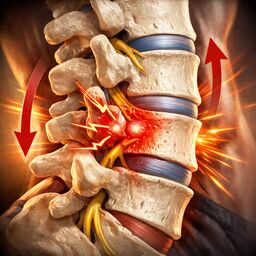
Current working hypothesis: Dynamic cord compression mistaken for FND
Christoff Trüter
Spousal caregiver
Over the years, along with various doctors, we have considered many hypotheses regarding my wife's medical condition, ranging from Parkinson's, Wilson's disease, Multiple Sclerosis (MS), hepatic encephalopathy, B12 deficiencies, CMT (Charcot-Marie-Tooth), and even, briefly, FND, until we realised how speculative such a diagnosis truly is (in essence, no diagnosis, MUS in sheep clothing)
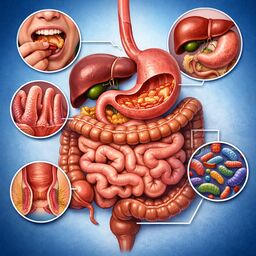
Kairos moment: Gastrointestinal system
Christoff Trüter
Spousal caregiver
A short summary about my wife's gastroenterological journey that possibly led to her current neurological distress.
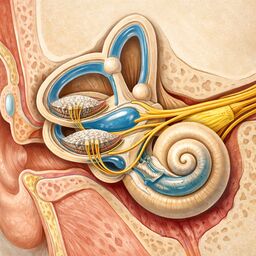
Kairos moment: Vestibular system
Christoff Trüter
Spousal caregiver
When observing my wife’s medical condition retrospectively, I try to identify what my late father used to call Kairos moments. In other words, identifying the tipping points, the moments in time that brought us to where we are now.

Progression Demands Further Investigation
Christoff Trüter
Spousal caregiver
As soon as an FND diagnosis is made, the patient is thrust into a multidisciplinary treatment approach, which can include psychologists, psychiatrists, physiotherapists, and sometimes speech or occupational therapists, depending on how the disorder presents itself.
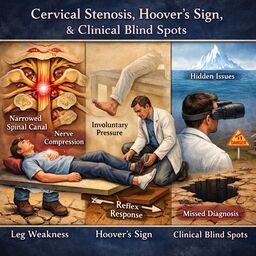
Cervical Stenosis, Hoover’s Sign, and Clinical Blind Spots
Christoff Trüter
Spousal caregiver
In Functional Neurological Disorder (FND), standard brain imaging (e.g. MRI, CT) usually appears normal, showing no structural damage, lesions, tumours, or other typical neurological signs, except when FND is comorbid with an organically confirmed neurological condition, such as multiple sclerosis, stroke, or epilepsy (like saying pain occurs alongside a bone fracture).

Using medication as a diagnostic tool
Christoff Trüter
Spousal caregiver
Over the centuries, doctors have devised a magnitude of methods to diagnose illnesses, from early clinical observations and skin prick tests, all the way through to X-rays, blood tests, ECGs, lumbar punctures, biopsies, mammograms, ultrasounds, endoscopies, stress tests, genetic testing, CT scans, MRIs, and functional imaging like PET scans, just to name a few.