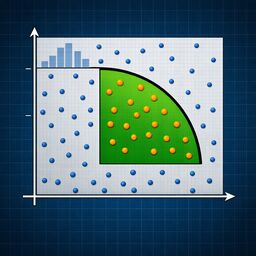
Is FND a diagnosis of exclusion? A Monte Carlo simulation
 FND Nope
Moderator
FND Nope
Moderator
This post explores how DSM-5 criteria for FND expand diagnoses compared with DSM-4 Conversion Disorder, using a simulation to show the impact of positive signs, comorbidities, and Dr Allen Frances’ concerns about diagnostic inflation.

When Diagnosis Becomes Doctrine: Questioning FND and Clinical Authority
 Christoff Trüter
Spousal caregiver
Christoff Trüter
Spousal caregiver
When I started this website in July 2025, I received a lot of pushback from FND proponents. Some felt that the website was highly offensive and disrespectful, and urged me to please take the website down, which I obviously did not do.
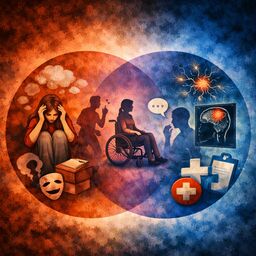
Is Conversion Disorder the same as Functional Neurological Disorder?
FND Nope
Moderator
It is commonly understood that FND historically evolved from Conversion Disorder (CD), which in turn emerged from Hysteria.
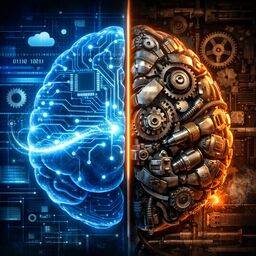
FND's Flawed Analogy: When 'Software' Problems can Hide Undetected Hardware Damage
Christoff Trüter
Spousal caregiver
One of the most common analogies that you would come across within FND literature is the software/hardware analogy.

If FND Scepticism Feels Like a Personal Attack, It Might Be Time for Introspection
Christoff Trüter
Spousal caregiver
FND patient communities provide support but risk echo chambers: illness becomes identity, criticism feels like attack, closing doors to misdiagnosis & recovery—modern hysteria protected by groupthink.

Why Calling It FND Can Be Misleading and Potentially Dangerous
Christoff Trüter
Spousal caregiver
As you might have noticed by now, I am not particularly convinced of the legitimacy of FND as a standalone diagnosis. I believe it is more likely a CNS knee-jerk reaction or referral to underlying causes, rather than a primary cause in itself. In other words, it may be something commonly observed as a consequence of an underlying illness (as pain is to fractures), not something that should automatically be treated or diagnosed as the illness itself, as is increasingly common practice these days.

Closing diagnostic doors : The Problem of Psychologisation
Christoff Trüter
Spousal caregiver
The idea that physical health problems could be caused by psychological factors, that is mind, emotion, or behaviour, rather than by physical pathology, is hardly new. Its roots trace back to ancient civilisations, from Egypt, 1900 to 1500 BCE, to classical Greece, 5th to 4th century BCE, where hysteria-like symptoms were first described. These early ideas strongly influenced the development of medical psychologisation, later formalised in the DSM.

Hysteria, a rose by any other name
Christoff Trüter
Spousal caregiver
The act of relabelling is ancient, but it surged in the 20th century as an euphemistic attempt to appear more humane and sensitive, aiming to destigmatize the meanings certain labels carry.

What Would Convince You to Accept FND?
Christoff Trüter
Spousal caregiver
A critical take on FND, emphasising the need for objective, falsifiable evidence and warning against dismissing measurable medical conditions.

FND and the replication crisis
Christoff Trüter
Spousal caregiver
Back in the 1990s, some psychologists were already raising concerns that many studies weren’t holding up when tested again. At first, these warnings didn’t get much attention, but they planted the seeds of what would later be called the replication crisis.