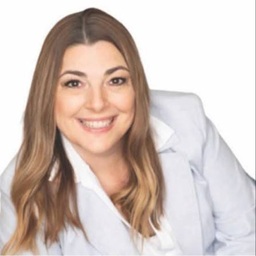
State Rep. Tricia Byrnes Is Looking for the Filmmaker Who’ll Investigate FND
 Facebook Stories
Social media
Facebook Stories
Social media
Missouri State Rep. Tricia Byrnes is seeking a filmmaker to investigate Functional Neurological Disorder. She says hundreds of families report children were labeled with FND before doctors fully checked seizures and loss of mobility, and that second opinions were blocked.
Maddie Aumann: From an FND Diagnosis to Maddie’s Law
 FND Nope
Moderator
FND Nope
Moderator
Maddie Aumann was diagnosed with FND before genetic testing identified a rare SCN9A disorder. Her mother, Christine Aumann, describes how the FND label continued to affect Maddie’s care even after that discovery, ultimately helping inspire Maddie’s Law.
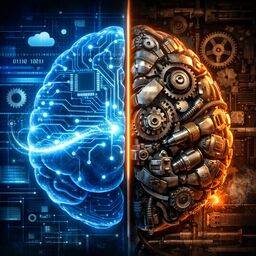
FND's Flawed Analogy: When 'Software' Problems can Hide Undetected Hardware Damage
 Christoff Trüter
Spousal caregiver
Christoff Trüter
Spousal caregiver
One of the most common analogies that you would come across within FND literature is the software/hardware analogy.

If FND Scepticism Feels Like a Personal Attack, It Might Be Time for Introspection
Christoff Trüter
Spousal caregiver
FND patient communities provide support but risk echo chambers: illness becomes identity, criticism feels like attack, closing doors to misdiagnosis & recovery—modern hysteria protected by groupthink.
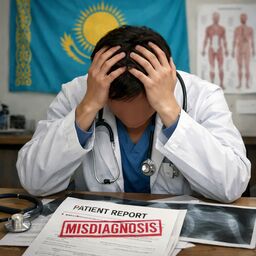
Personal Account of Misdiagnosed Neurological Condition by a Medical Student
 Anon. Kazakh Med Student
Medical student
Anon. Kazakh Med Student
Medical student
Email from a 21-year-old medical student in Kazakhstan sharing their detailed experience with neurological symptoms diagnosed as FND, highlighting objective signs of an organic lesion, diagnostic history, and concerns about misdiagnosis.
Advice from an FND Sceptic for Those Newly Diagnosed
Christoff Trüter
Spousal caregiver
What advice would I give to anyone newly diagnosed with this disorder? Advice that I wish I had received back then?

Why Calling It FND Can Be Misleading and Potentially Dangerous
Christoff Trüter
Spousal caregiver
As you might have noticed by now, I am not particularly convinced of the legitimacy of FND as a standalone diagnosis. I believe it is more likely a CNS knee-jerk reaction or referral to underlying causes, rather than a primary cause in itself. In other words, it may be something commonly observed as a consequence of an underlying illness (as pain is to fractures), not something that should automatically be treated or diagnosed as the illness itself, as is increasingly common practice these days.

Differential Diagnosis: Multiple Sclerosis (MS)
Christoff Trüter
Spousal caregiver
When my wife's condition initially began to escalate, one of the first diseases considered was Multiple Sclerosis (MS). The neurologist at the time quickly concluded it was functional, ruling out MS due to the absence of appropriate MRI lesions and stating that the clinical signs were insufficient for a definitive MS diagnosis.

Closing diagnostic doors : The Problem of Psychologisation
Christoff Trüter
Spousal caregiver
The idea that physical health problems could be caused by psychological factors, that is mind, emotion, or behaviour, rather than by physical pathology, is hardly new. Its roots trace back to ancient civilisations, from Egypt, 1900 to 1500 BCE, to classical Greece, 5th to 4th century BCE, where hysteria-like symptoms were first described. These early ideas strongly influenced the development of medical psychologisation, later formalised in the DSM.
When Dramatic Symptoms Are Dismissed: The Problem with Rule-In FND Diagnosis
Christoff Trüter
Spousal caregiver
In the world of FND diagnosis, observation is the primary tool used to positively identify cases caused by non-organic "functional" factors, rather than by physical damage to the spinal cord, nerves, or brain.

Hysteria, a rose by any other name
Christoff Trüter
Spousal caregiver
The act of relabelling is ancient, but it surged in the 20th century as an euphemistic attempt to appear more humane and sensitive, aiming to destigmatize the meanings certain labels carry.

What Would Convince You to Accept FND?
Christoff Trüter
Spousal caregiver
A critical take on FND, emphasising the need for objective, falsifiable evidence and warning against dismissing measurable medical conditions.