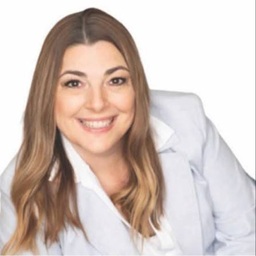
State Rep. Tricia Byrnes Is Looking for the Filmmaker Who’ll Investigate FND
 Facebook Stories
Social media
Facebook Stories
Social media
Missouri State Rep. Tricia Byrnes is seeking a filmmaker to investigate Functional Neurological Disorder. She says hundreds of families report children were labeled with FND before doctors fully checked seizures and loss of mobility, and that second opinions were blocked.
Maddie Aumann: From an FND Diagnosis to Maddie’s Law
 FND Nope
Moderator
FND Nope
Moderator
Maddie Aumann was diagnosed with FND before genetic testing identified a rare SCN9A disorder. Her mother, Christine Aumann, describes how the FND label continued to affect Maddie’s care even after that discovery, ultimately helping inspire Maddie’s Law.

Hoping one day we each will recover
 Anonymous Parent
Parental caregiver
Anonymous Parent
Parental caregiver
An 18-year-old developed severe neurological symptoms after a concussion, was diagnosed with FND after inconclusive testing, and later found to have tethered cord syndrome requiring surgery.
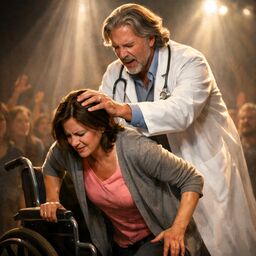
The Belief Prerequisite: How FND Treatment Echoes Faith Healing
 Christoff Trüter
Spousal caregiver
Christoff Trüter
Spousal caregiver
One of the most striking things you notice when you first start reading the literature on FND is how crucial it is considered for patients to accept and believe in the diagnosis. Without that belief, treatment is often regarded as futile. They simply will not get better.

Living in France, stuck in the FND Trap
 vi_toka
Sufferer
vi_toka
Sufferer
Miranda’s health collapsed almost overnight, progressing from difficulty walking to seizures, psychosis, and rapid neurological decline. Despite abnormal findings and worsening symptoms, she was quickly labelled with Functional Neurological Disorder, and further testing was repeatedly refused. Her story raises serious concerns about missed conditions like Autoimmune encephalitis and the risks of diagnostic overshadowing blocking proper care.

What Makes a Doctor a Good Doctor?
Christoff Trüter
Spousal caregiver
A reflection on what makes a good doctor in the context of complex chronic illness, focusing on collaboration, systems thinking, and clinical humility.

The FND quacks think that bringing a list of written notes to your appointment is near-certain proof that you have a psychosomatic disorder
 jakovmrc
Person with Long Covid
jakovmrc
Person with Long Covid
A critical examination of the evidence behind so-called “rule-in signs” for Functional Neurological Disorder, focusing on the claim that bringing written notes to an appointment strongly indicates a psychosomatic condition.

Case Study: FND After Spine Surgery
FND Nope
Moderator
A critical look at a case of postoperative paralysis labelled as FND, questioning whether pre-existing neurological instability and predictive processing may better explain the presentation than a purely functional diagnosis.
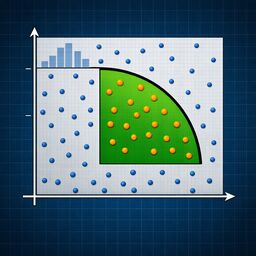
Is FND a diagnosis of exclusion? A Monte Carlo simulation
FND Nope
Moderator
This post explores how DSM-5 criteria for FND expand diagnoses compared with DSM-4 Conversion Disorder, using a simulation to show the impact of positive signs, comorbidities, and Dr Allen Frances’ concerns about diagnostic inflation.

Fatigable Weakness vs Functional Weakness: Why Hoover’s Sign Can Mislead When Isokinetic Testing Shows Otherwise
Christoff Trüter
Spousal caregiver
Examines Hoover's sign in a patient with true fatigable weakness. Highlights how objective isokinetic testing better captures performance deficits than traditional clinical signs, preventing misinterpretation as functional weakness.

When Diagnosis Becomes Doctrine: Questioning FND and Clinical Authority
Christoff Trüter
Spousal caregiver
When I started this website in July 2025, I received a lot of pushback from FND proponents. Some felt that the website was highly offensive and disrespectful, and urged me to please take the website down, which I obviously did not do.
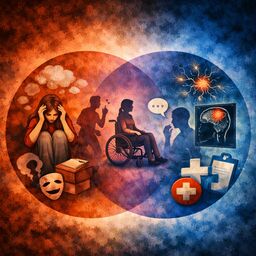
Is Conversion Disorder the same as Functional Neurological Disorder?
FND Nope
Moderator
It is commonly understood that FND historically evolved from Conversion Disorder (CD), which in turn emerged from Hysteria.